Talking to Children About Difficult Things
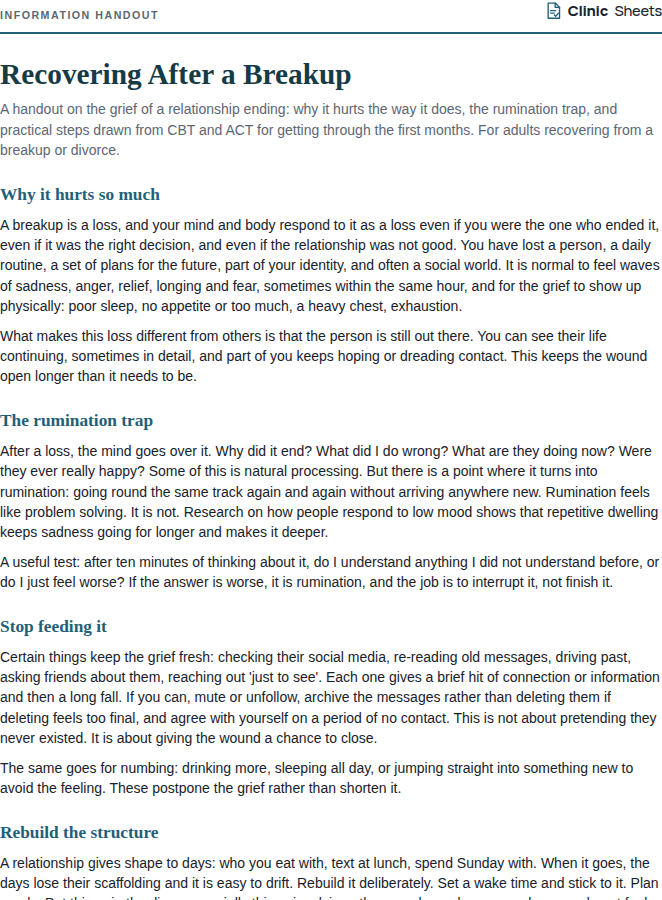
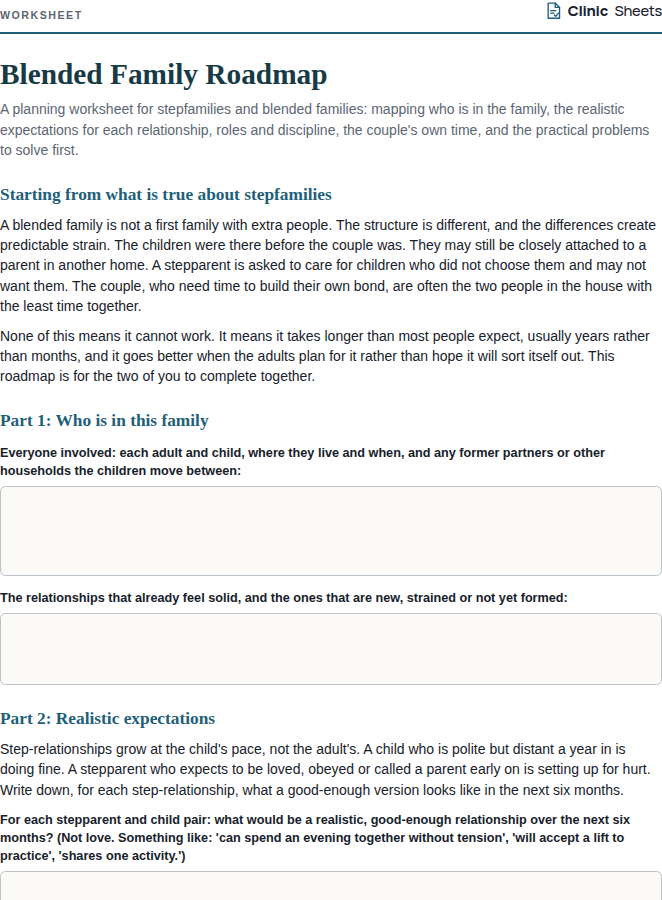
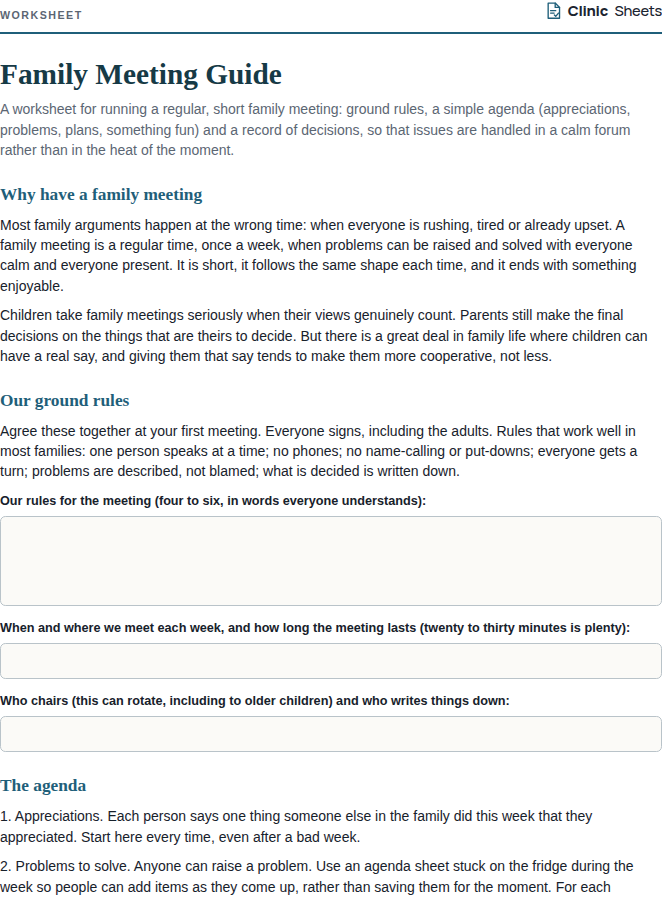
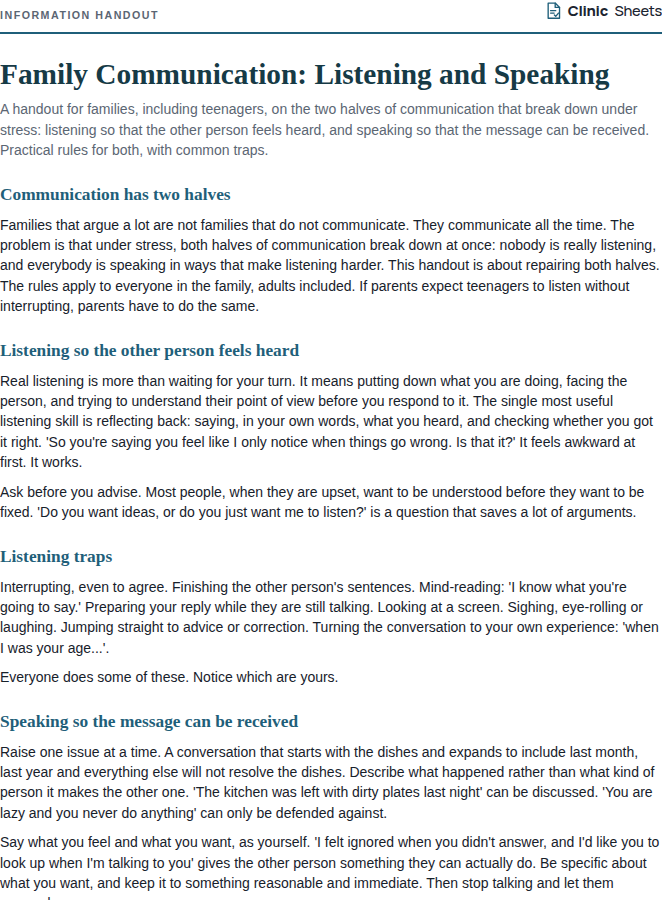
A handout for parents on how to talk with children about hard news such as a death, a serious illness, a separation or a frightening event: what to say, how much to say for the child's age, and how to handle the questions and feelings that follow.
About this resource
Parents facing a difficult conversation with their child, whether about a death in the family, a diagnosis, a separation, a job loss or a frightening event in the news, commonly ask two questions: should I tell them, and what should I say? The evidence from the child bereavement literature and from clinical work with families is consistent. Children cope better with honest, age-appropriate information given by a trusted adult than with silence, and they almost always know that something is wrong. When they are not told, they fill the gap with their own explanations, which are often worse than the truth and frequently involve blaming themselves.
This handout gives parents a simple structure: choose the time and place, start with what the child already knows, use plain and truthful words (including the word 'died' rather than euphemisms that young children take literally), give information in small pieces and let the child set the pace, answer the three questions children most often have (Did I cause it? Will it happen to me or to you? Who will look after me?), and expect the conversation to be repeated many times. It also normalises the wide range of children's reactions, including apparent indifference, and gives guidance on what to watch for that suggests extra support is needed.
The professional version adds notes on developmental understanding of death and permanence, on preparing a parent who is themselves grieving or frightened, on talking with children about a parent's mental illness, and on when a child's response warrants referral. It is not a guide to disclosure of abuse or to safeguarding conversations, which need a different approach.
How to use it
- Establish what the parent is facing and what they have already said. Many parents have said nothing, or have said something vague, and are now worried about how to correct it. Reassure them that it is never too late to have a clearer conversation.
- Help the parent decide on the plain words they will use, and rehearse the opening sentence or two in session. The first sentence is usually the hardest.
- Anticipate the child's likely questions with the parent, especially the three core worries, and plan honest answers, including 'I don't know' where that is the truth.
- Prepare the parent for the child's reaction, which may be tears, anger, a shrug, or an immediate question about dinner. All of these are normal.
- Follow up. Ask the parent at the next session how the conversation went, what the child asked afterwards, and whether the child's behaviour, sleep or mood has changed.
References
- Worden, J. W. (1996). Children and Grief: When a Parent Dies. Guilford Press.
- Dyregrov, A. (2008). Grief in Children: A Handbook for Adults (2nd ed.). Jessica Kingsley Publishers.
- Pedro-Carroll, J. (2010). Putting Children First: Proven Parenting Strategies for Helping Children Thrive Through Divorce. Avery.