Understanding Autism (for Teens)
A plain-language handout for autistic adolescents explaining what autism is, what it is not, and how to think about their own profile of strengths and needs. Psychoeducation for use after diagnosis or when a teen is exploring the possibility.
About this resource
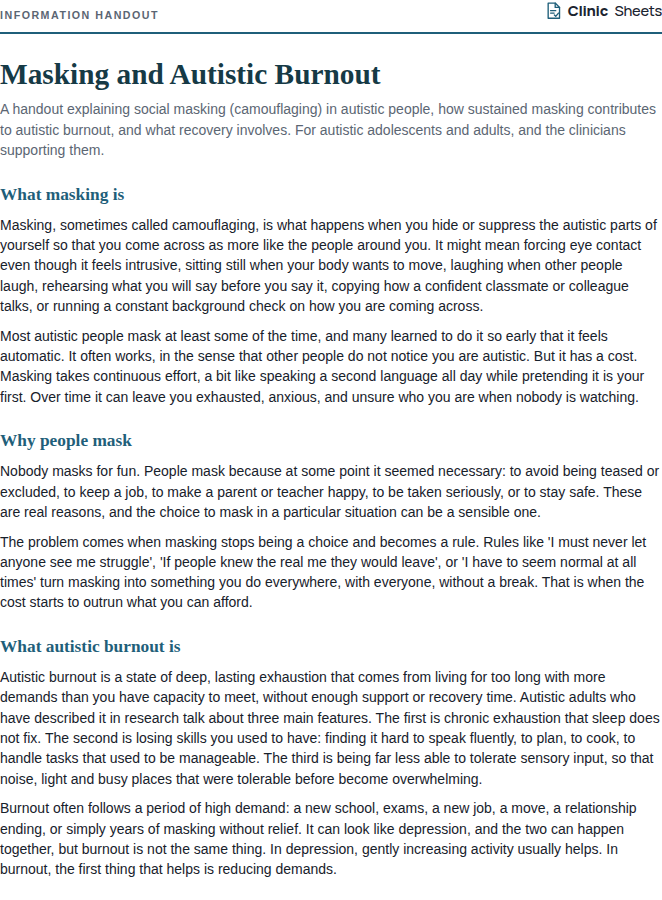
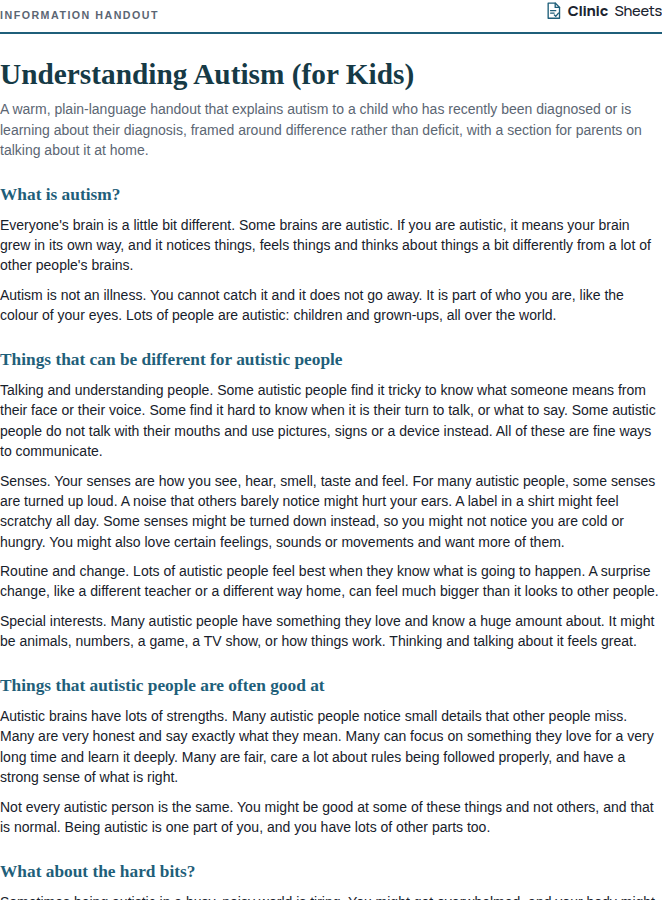
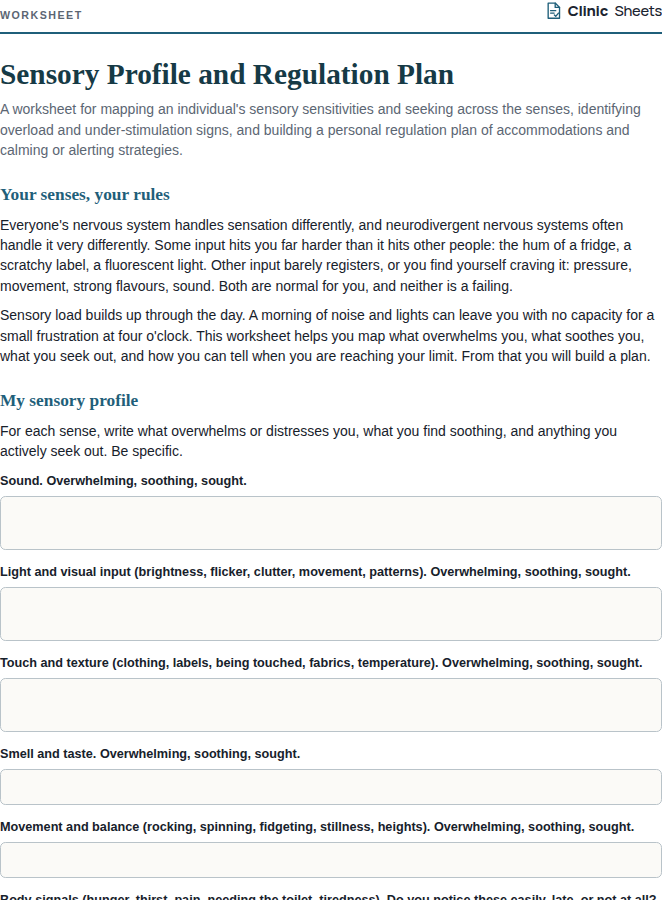
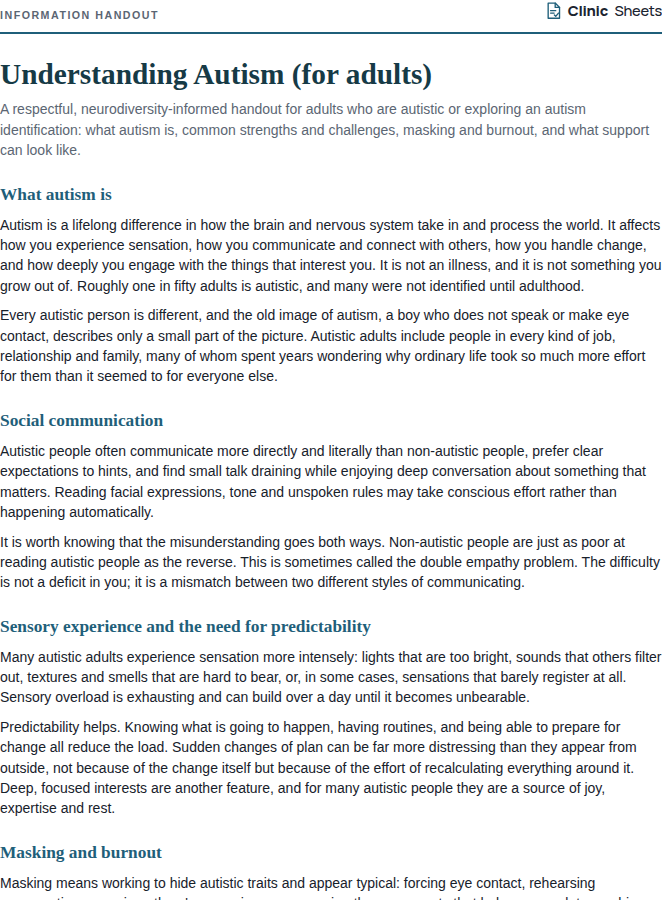
Adolescents who receive an autism diagnosis, or who begin to suspect they are autistic, often arrive with a mix of relief, confusion and second-hand stereotypes. Much of what they have heard comes from film, social media or younger children's experiences and does not match their own. This handout offers an accurate, respectful description of autism as a neurodevelopmental difference: differences in social communication, sensory processing, focused interests and a preference for predictability, present from early life and varying widely from one person to the next.
The handout uses a strengths-and-needs framing rather than a deficit model. It is deliberately neutral about language (identity-first and person-first) and invites the teen to decide what fits. It does not promise that diagnosis solves problems, but it does name the practical benefits: self-understanding, access to accommodations, and a community of people with similar experiences.
The professional version adds notes on pacing this conversation across sessions, on the common co-occurrence of anxiety and ADHD, and on discussing disclosure decisions with the teen rather than for them.
How to use it
- Offer this handout once the teen has some space to think, not in the same session as a formal diagnostic feedback if that session was already long.
- Read the section on strengths and needs together and ask the teen which descriptions fit and which do not. Disagreement is useful information about their self-concept.
- Ask what the teen had heard about autism before and gently correct stereotypes with the content here rather than by argument.
- Use the reflection fields to open a conversation about what the teen wants others (school, family, friends) to know, and who decides that.
- Follow with resources on sensory needs, masking, or anxiety according to what the teen identifies as most pressing.
References
- Lai, M.-C., Lombardo, M. V., & Baron-Cohen, S. (2014). Autism. The Lancet, 383(9920), 896-910.
- American Psychiatric Association. (2022). Diagnostic and Statistical Manual of Mental Disorders (5th ed., text rev.). American Psychiatric Publishing.
- Attwood, T. (2007). The Complete Guide to Asperger's Syndrome. Jessica Kingsley Publishers.