Understanding Cannabis Use and Mental Health
A balanced, non-judgemental handout for adults and adolescents on how cannabis interacts with mood, anxiety, sleep, psychosis risk and motivation, with lower-risk use guidance and prompts for weighing up change.
About this resource
Cannabis is legal for adults in Canada and widely used, and many clients arrive with mixed views about it: some see it as harmless or medicinal, some as the cause of all their difficulties, and many use it to manage anxiety, sleep or low mood while suspecting it is making those problems worse. A lecturing stance loses these clients quickly. This handout takes the motivational interviewing position: it gives accurate information about the evidence, respects the client's own experience and reasons for use, and leaves the decision with them.
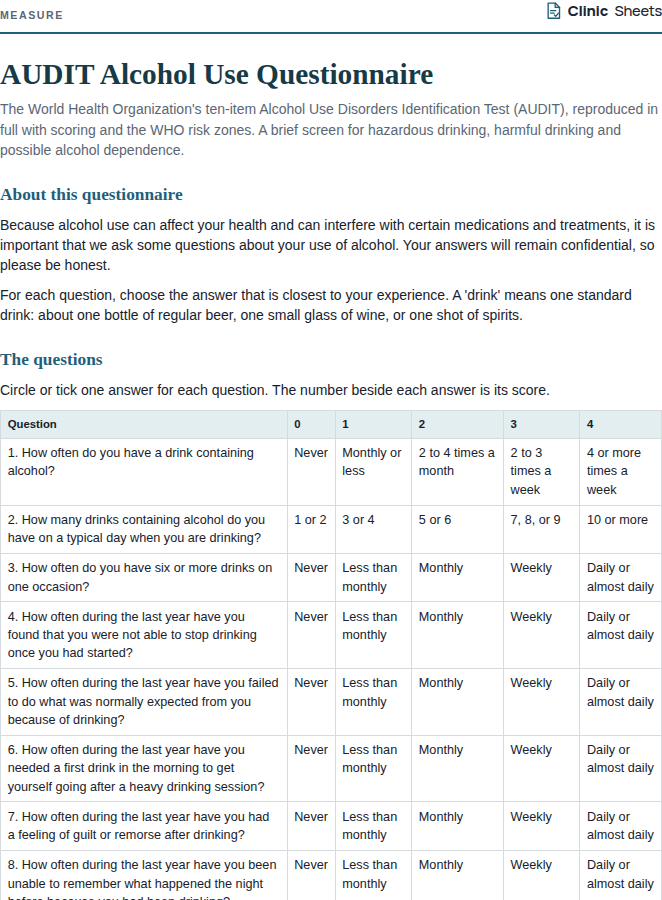
Content is drawn from the Lower-Risk Cannabis Use Guidelines and from major reviews of cannabis and health. It covers what cannabis does in the short term, the difference between occasional and frequent use, the associations with anxiety, depression, psychosis and motivation, the pattern of using cannabis to cope, cannabis use disorder and withdrawal, and the guidelines for reducing risk. It avoids exaggeration in either direction.
The professional version adds notes on the higher risks for adolescents and for people with a personal or family history of psychosis, on screening for cannabis use disorder, and on using the reflection fields to open a decisional balance conversation without pushing for a conclusion.
How to use it
- Ask about cannabis use routinely and without judgement: what, how much, how often, by what route, and what it does for the client.
- Offer the handout as information rather than as a verdict. Ask the client which parts match their experience and which do not.
- Use the 'Using cannabis to cope' section to explore the function of use. Clients who use for sleep or anxiety usually need a plan for those problems before they will consider change.
- For adolescents or clients with psychosis risk, be clearer about the evidence while still respecting autonomy. Involve family where appropriate and with consent.
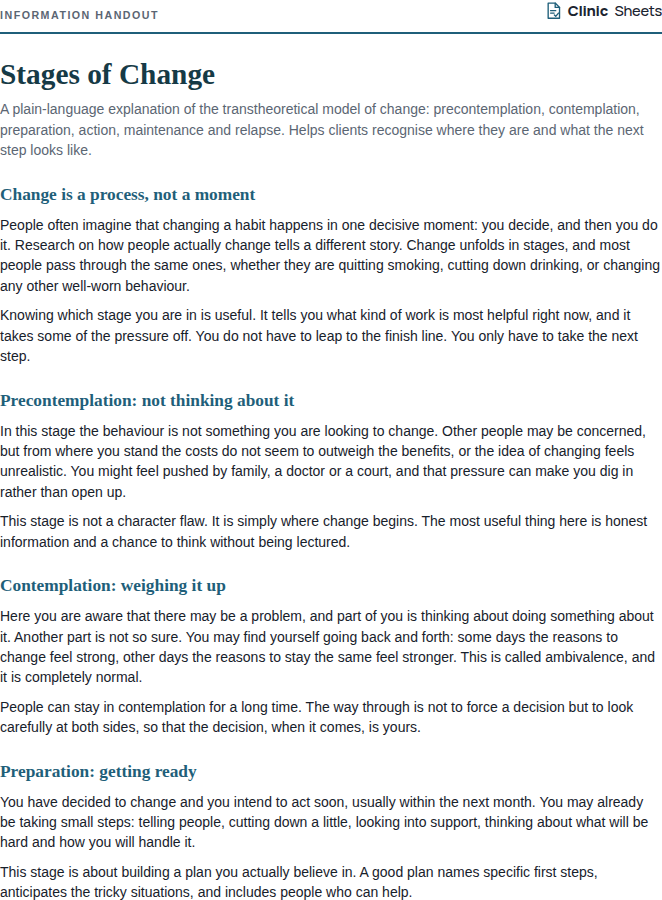
- Follow with a decisional balance or a change plan if the client expresses interest in cutting down. Do not assume abstinence is the only acceptable goal.
References
- Fischer, B., Russell, C., Sabioni, P., et al. (2017). Lower-Risk Cannabis Use Guidelines: A comprehensive update of evidence and recommendations. American Journal of Public Health, 107(8), e1-e12.
- Volkow, N. D., Baler, R. D., Compton, W. M., & Weiss, S. R. B. (2014). Adverse health effects of marijuana use. New England Journal of Medicine, 370(23), 2219-2227.
- Miller, W. R., & Rollnick, S. (2013). Motivational interviewing: Helping people change (3rd ed.). Guilford Press.