Substance Use: Making Informed Choices (for Teens)
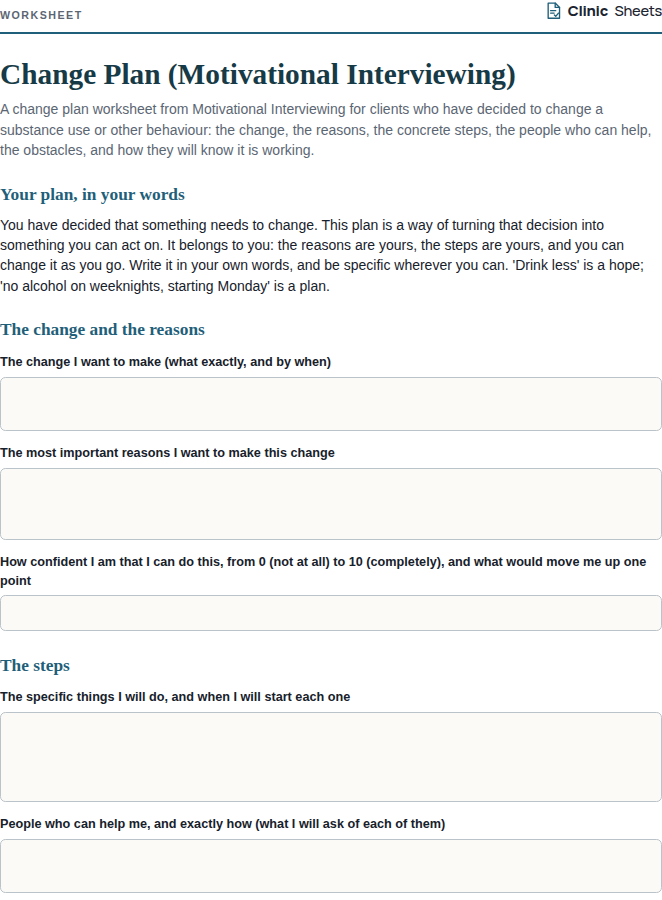
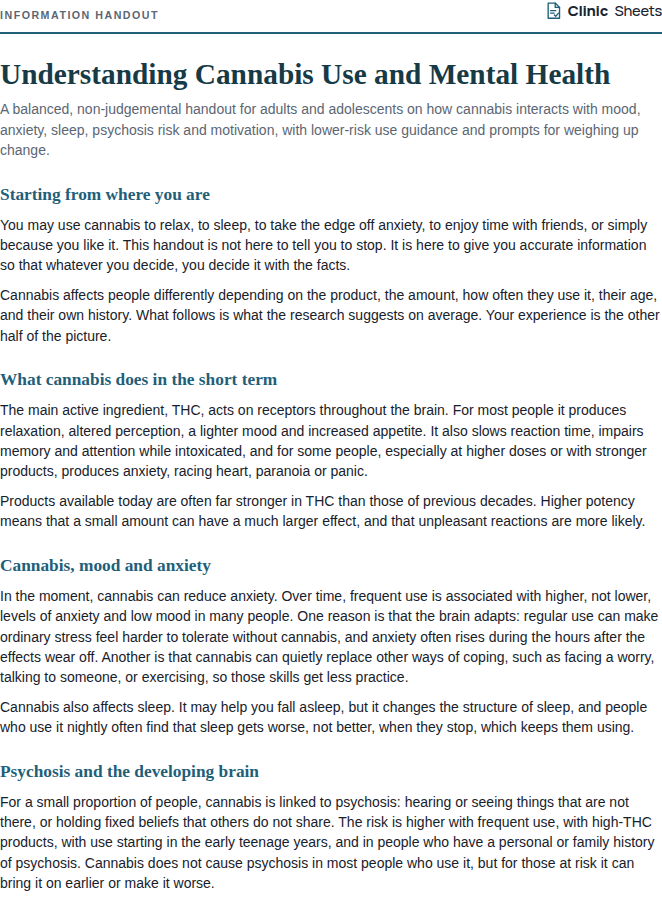
A non-judgemental handout for adolescents about alcohol, cannabis and other substances, using a motivational interviewing stance: accurate information, an honest look at the reasons for using and the costs, and space for the teen to decide what they want. Not a lecture.
About this resource
Adolescents tune out quickly when substance use is discussed in a warning or scare-tactic register, and the research on drug education supports this: information delivered as a lecture tends to be discounted, while approaches that respect autonomy and invite the young person to weigh their own goals against their behaviour are more effective. Motivational interviewing (Miller and Rollnick, 2013), adapted for adolescents by Naar-King and Suarez (2011), provides the stance for this handout: curious, non-confrontational, and explicitly leaving the decision with the teen.
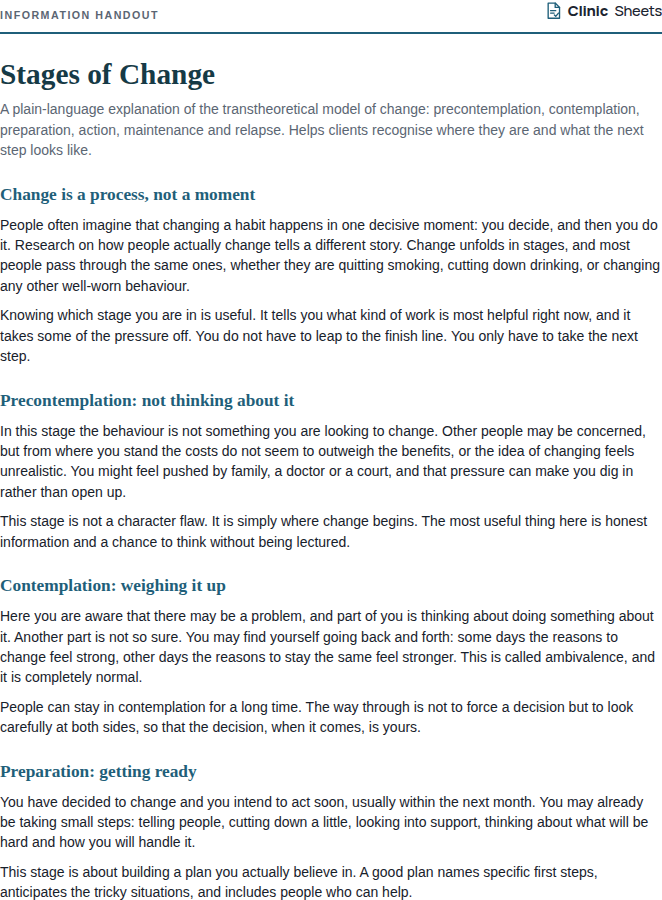
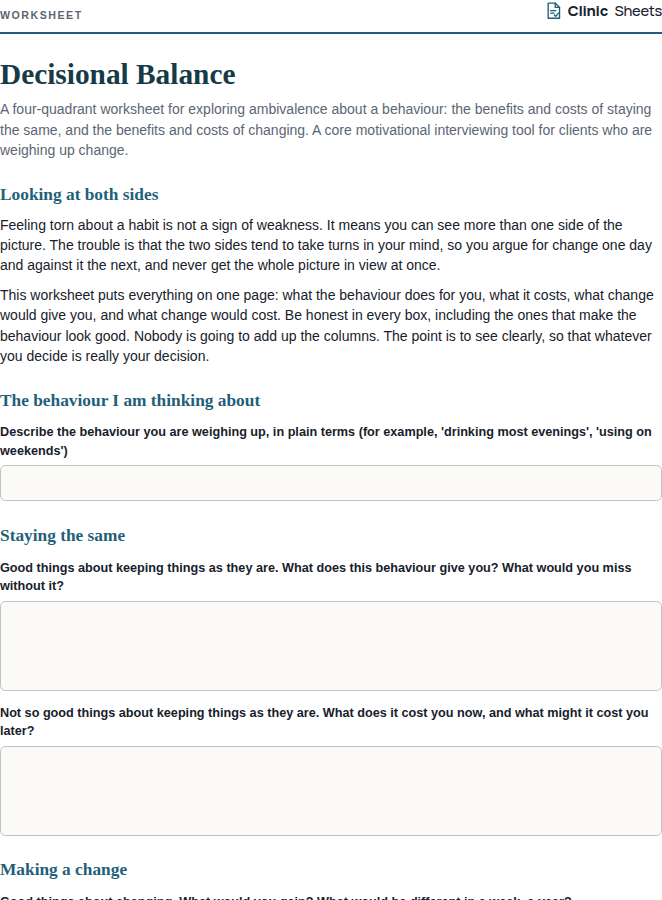
The handout gives accurate, non-inflated information on why adolescence is a higher-risk period for substance use (ongoing brain development, and the consistent finding that earlier and heavier use is linked to a greater likelihood of later problems), describes harm reduction principles drawn from Canadian guidance on alcohol and cannabis, and then walks the teen through a decisional balance: what using does for them, what it costs, and what they would want to be different. It ends with an invitation to set their own limits or goals.
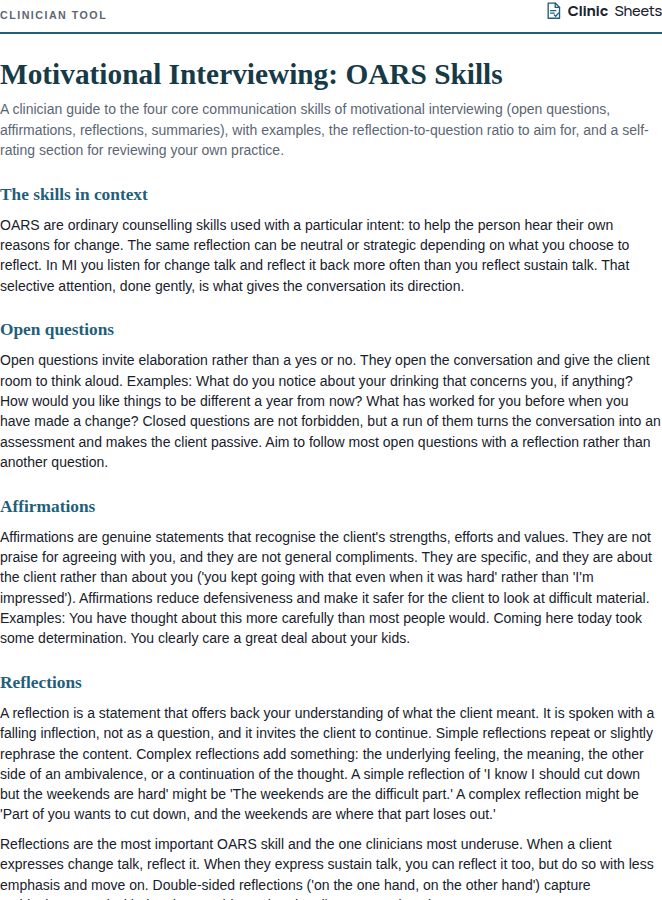
The professional version adds guidance on eliciting change talk, on the teen who has been sent by a parent and does not see a problem, on when use warrants referral to youth addiction services, and on confidentiality conversations with parents.
How to use it
- Establish the stance before handing this over: you are not here to tell them what to do, and the handout is not a trap. Say so.
- Ask the teen to read the information sections and tell you what, if anything, was new or surprising. Do not quiz them.
- Complete the 'both sides' fields together. Spend genuine time on what use does for them; skipping this loses credibility and misses the function of the behaviour.
- Listen for change talk (reasons, desire, ability, need, commitment) and reflect it back. Avoid arguing with sustain talk.
- Let the teen set the goal, even if it is smaller than you would choose. A goal they own is more likely to be kept.
- Where use is frequent, escalating, or linked to risk (driving, mixing substances, use to manage distress), discuss referral to a youth-specific substance use service and consider safety planning.
References
- Miller, W. R., & Rollnick, S. (2013). Motivational Interviewing: Helping People Change (3rd ed.). Guilford Press.
- Naar-King, S., & Suarez, M. (2011). Motivational Interviewing with Adolescents and Young Adults. Guilford Press.
- Fischer, B., Russell, C., Sabioni, P., van den Brink, W., Le Foll, B., Hall, W., Rehm, J., & Room, R. (2017). Lower-Risk Cannabis Use Guidelines: A comprehensive update of evidence and recommendations. American Journal of Public Health, 107(8), e1-e12.