Making and Keeping Friends
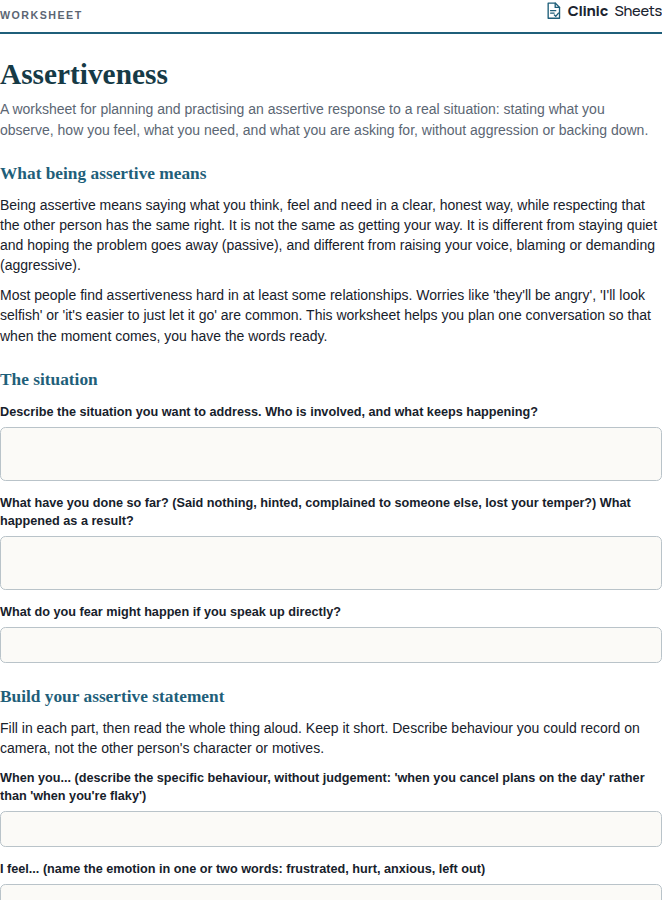
A worksheet for children who find friendships hard, covering the concrete skills of joining in, starting a conversation, being a good friend, and handling a falling-out, with a plan for one friendship step to practise this week.
About this resource
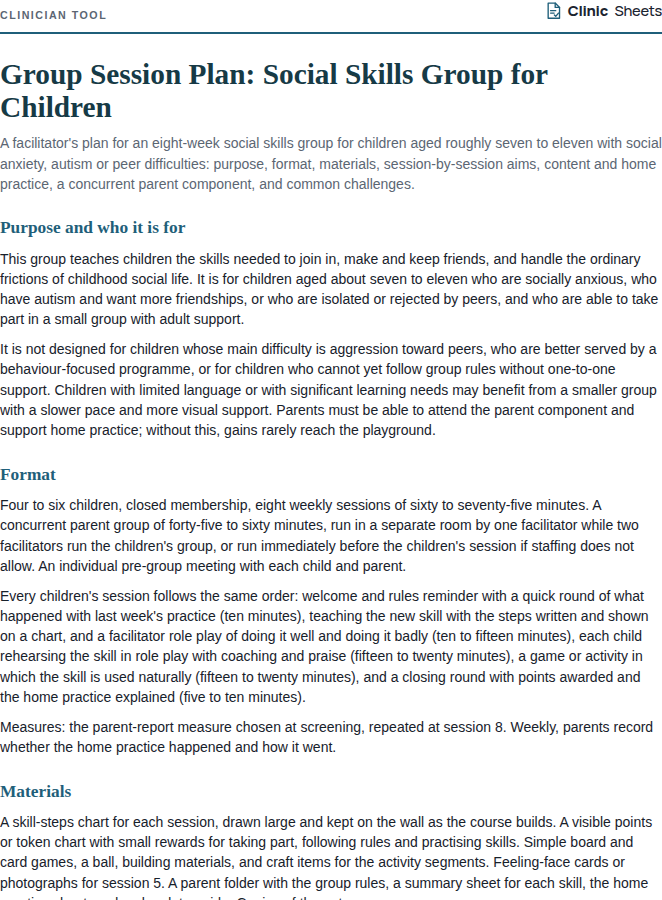
Children who are socially anxious, lonely or unsure how friendships work often know that they want friends but not what to actually do. Social skills training breaks friendship down into observable behaviours (approaching a group, asking a question, taking turns, repairing after a disagreement) that can be taught, rehearsed and practised in real settings. Reviews of social skills training with children show modest but reliable gains, and the gains are strongest when skills are practised between sessions in real peer situations rather than only role-played in the clinic.
This worksheet is built around four skills that children commonly get stuck on: joining a game or group that is already underway (watch, wait for a gap, do what they are doing), starting and keeping a conversation going (questions and follow-ups), being the kind of friend others want to be around (sharing, taking turns, being kind when someone loses), and handling a falling-out without ending the friendship. Each skill has a short explanation and a writing prompt, and the final section asks the child to choose one small step to try before the next session.
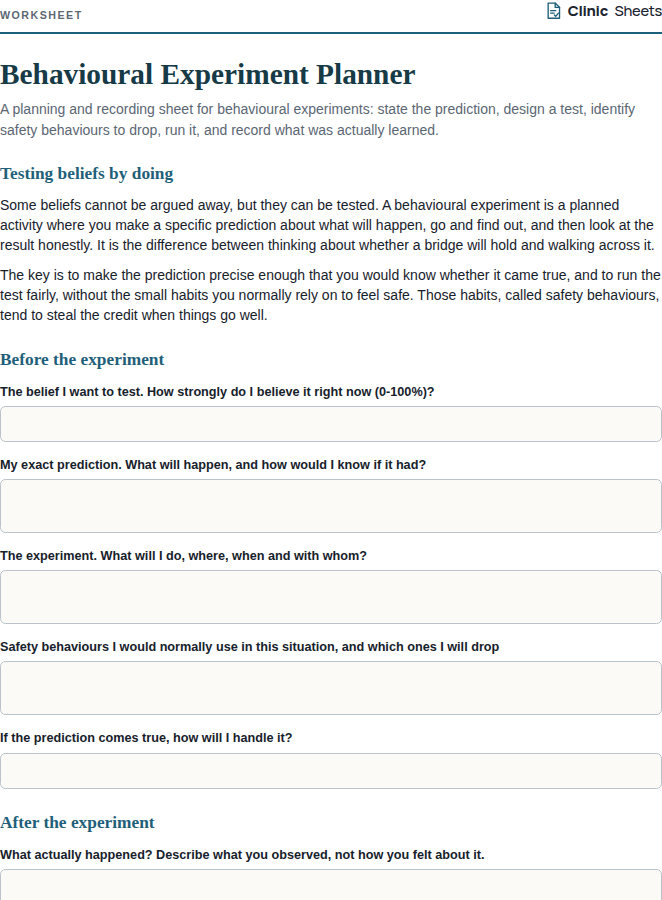
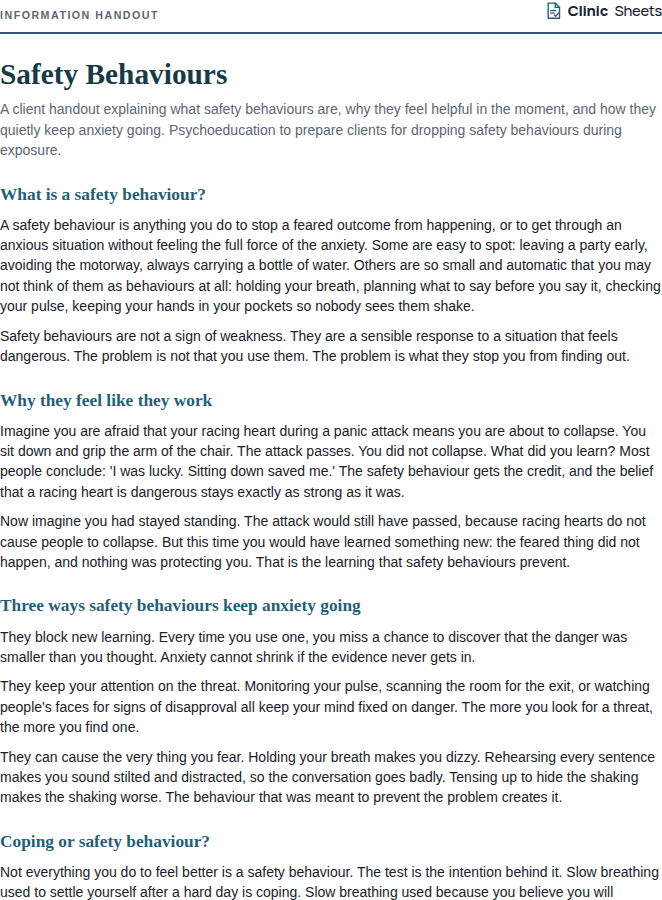
The professional version notes that socially anxious children often have adequate skills but avoid using them, in which case the worksheet functions as a graded exposure plan rather than skills teaching. It also flags that children who are being excluded or bullied need a different response, and that the clinician should check for this before framing the problem as a skills deficit.
How to use it
- Before using the worksheet, find out what is actually happening: does the child lack the skills, avoid using them because of anxiety, or face exclusion or bullying that no skill would fix? The worksheet suits the first two.
- Work through one skill section per session or two if the child is engaged. Explain the skill, model it, then have the child role-play it with you before writing their answer.
- Choose the practice step together. It should be small and specific: 'ask one person one question at lunch on Tuesday' is a good size.
- Ask a parent or teacher to know about the step so they can set it up (for example, arranging a playdate) and praise the attempt afterwards.
- Review the step at the start of the next session. Treat what happened as information, not as pass or fail, and set the next step.
References
- Spence, S. H. (2003). Social skills training with children and young people: Theory, evidence and practice. Child and Adolescent Mental Health, 8(2), 84-96.
- Frankel, F., & Myatt, R. (2003). Children's Friendship Training. Brunner-Routledge.
- Rapee, R. M., Wignall, A., Spence, S. H., Cobham, V., & Lyneham, H. (2022). Helping Your Anxious Child: A Step-by-Step Guide for Parents (3rd ed.). New Harbinger.