Overcoming Panic: A Guide
A complete client guide to cognitive behavioural treatment of panic disorder: understanding the panic cycle, identifying catastrophic misinterpretations, dropping safety behaviours, interoceptive exposure to feared sensations, behavioural experiments, and facing avoided situations.
About this resource
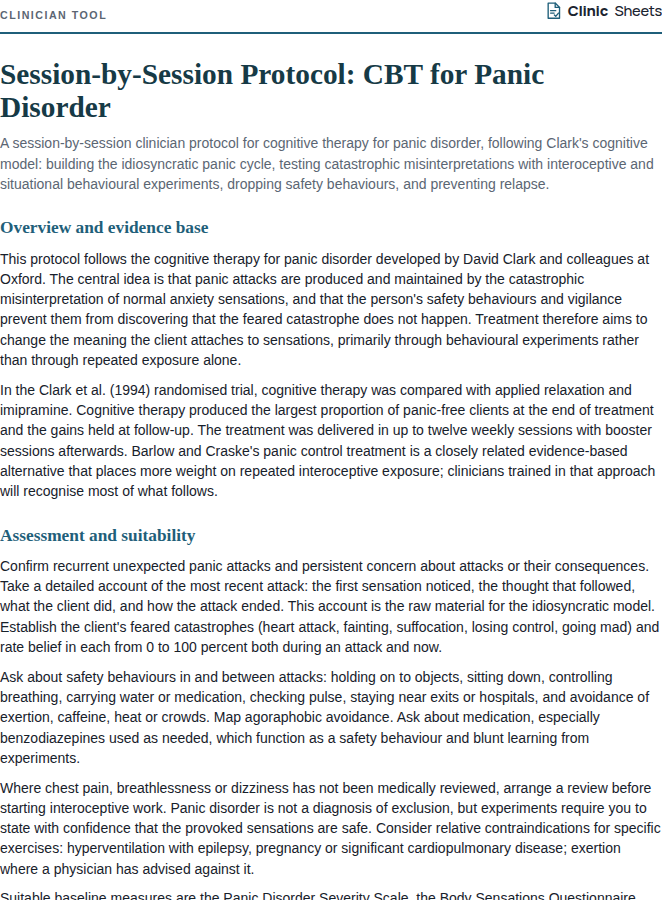
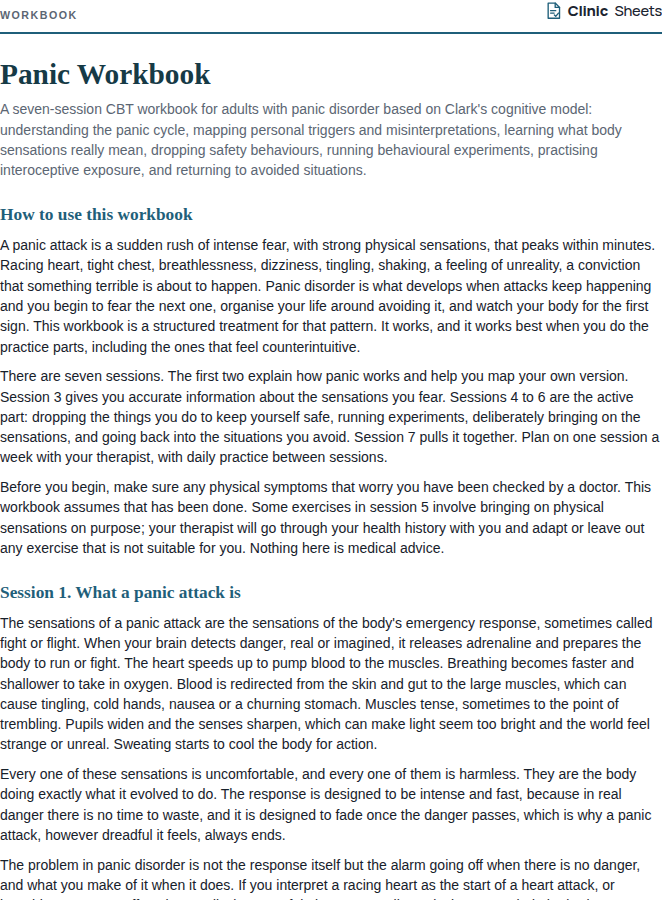
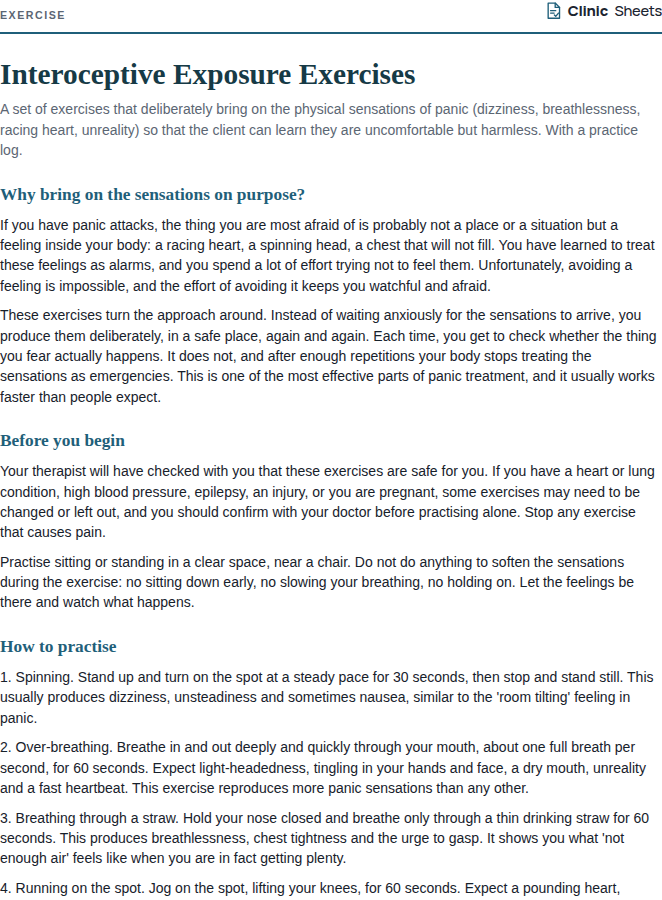
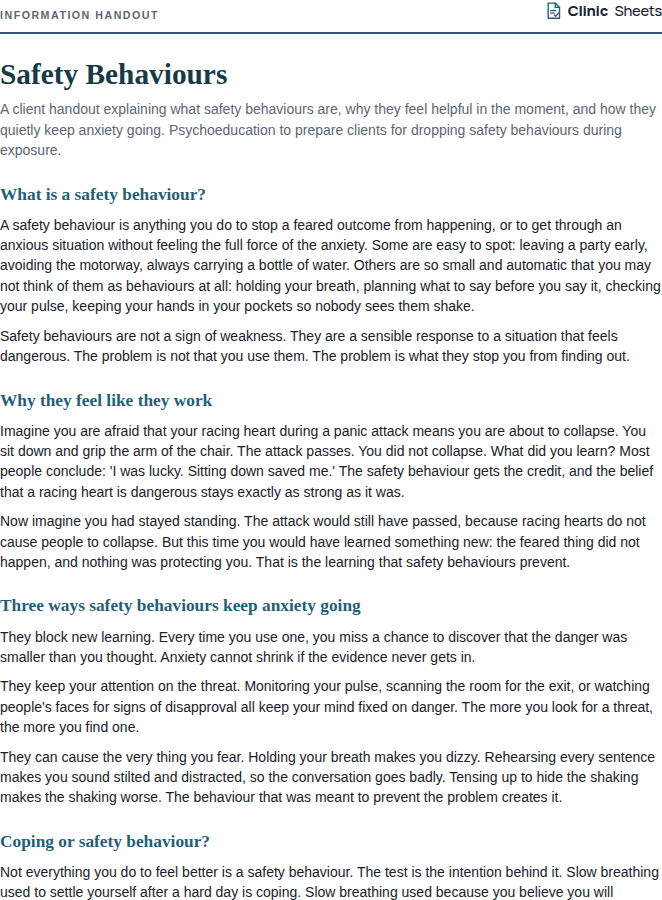
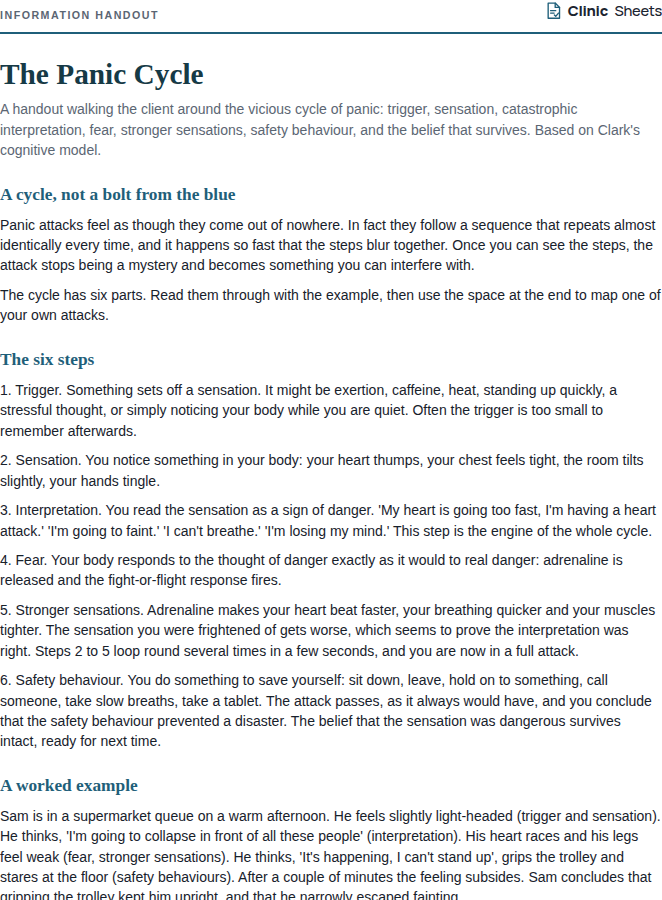
Clark's cognitive model proposes that panic attacks result from the catastrophic misinterpretation of normal bodily sensations: a racing heart is read as a heart attack, dizziness as imminent collapse, breathlessness as suffocation, unreality as going mad. The misinterpretation increases fear, which intensifies the sensations, which confirms the misinterpretation. Safety behaviours (sitting down, holding on, carrying water, avoiding exertion) and avoidance of situations prevent the person from discovering that the sensations are harmless, so the fear persists. Craske and Barlow's treatment programme adds systematic interoceptive exposure, in which the feared sensations are deliberately induced until they lose their threat.
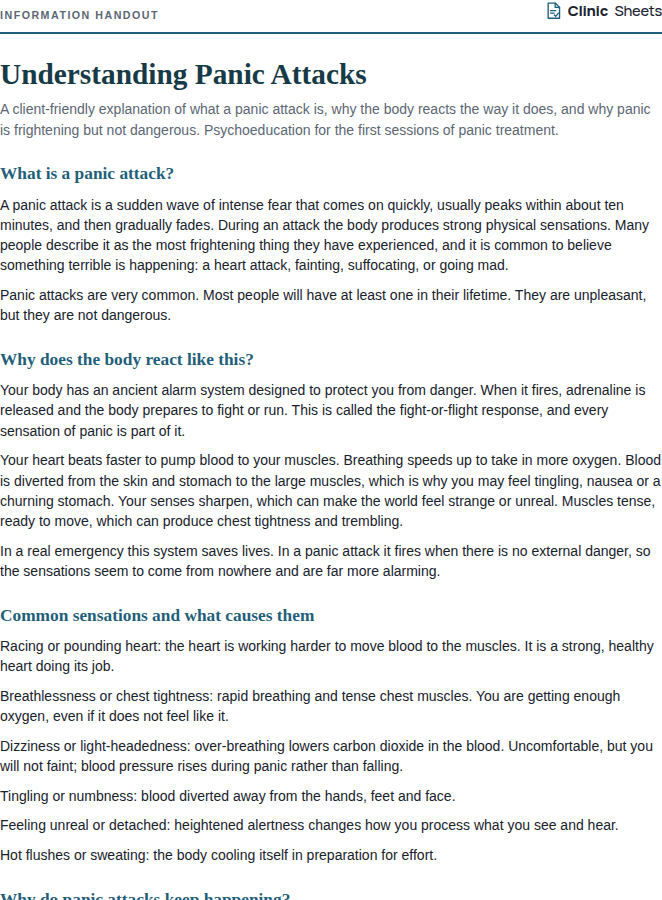
This guide walks the client through the whole treatment sequence: psychoeducation about the fight-or-flight response and the panic cycle, building a personal formulation, identifying and testing catastrophic interpretations, dropping safety behaviours, interoceptive exposure with a graded list of exercises, behavioural experiments that test specific predictions, and situational exposure to avoided places. It is designed to be worked through over eight to twelve sessions and to serve as a reference the client keeps.
The professional version includes the standard interoceptive exercises with typical durations, guidance on medical screening before interoceptive work (cardiac, respiratory, seizure and pregnancy considerations), and notes on distinguishing genuine exposure from exposure carried out with subtle safety behaviours, which is the most common reason treatment stalls.
How to use it
- Confirm that a medical assessment has ruled out physical causes for the symptoms before starting, and check for conditions (asthma, cardiac disease, epilepsy, pregnancy) that require modification of interoceptive exercises.
- Work through the first three sections in session, building the client's personal panic cycle from a recent attack. The formulation should use the client's own words for the feared catastrophe.
- Introduce interoceptive exposure in session, demonstrating each exercise yourself first. Rate similarity to panic and anxiety for each, and build the hierarchy from the ratings.
- Assign interoceptive practice daily between sessions, with the instruction to drop safety behaviours during the exercise. Review the practice log each session.
- Design behavioural experiments around the client's specific predictions (for example, 'if I keep walking with a racing heart I will collapse') rather than generic exposure.
- Move to situational exposure once interoceptive fear has dropped, and combine the two (inducing sensations in avoided places) toward the end of treatment.
References
- Clark, D. M. (1986). A cognitive approach to panic. Behaviour Research and Therapy, 24(4), 461-470.
- Craske, M. G., & Barlow, D. H. (2007). Mastery of Your Anxiety and Panic: Therapist Guide (4th ed.). Oxford University Press.
- Salkovskis, P. M., Clark, D. M., & Gelder, M. G. (1996). Cognition-behaviour links in the persistence of panic. Behaviour Research and Therapy, 34(5-6), 453-458.
- Barlow, D. H. (2002). Anxiety and Its Disorders: The Nature and Treatment of Anxiety and Panic (2nd ed.). Guilford Press.