Panic Workbook
A seven-session CBT workbook for adults with panic disorder based on Clark's cognitive model: understanding the panic cycle, mapping personal triggers and misinterpretations, learning what body sensations really mean, dropping safety behaviours, running behavioural experiments, practising interoceptive exposure, and returning to avoided situations.
About this resource
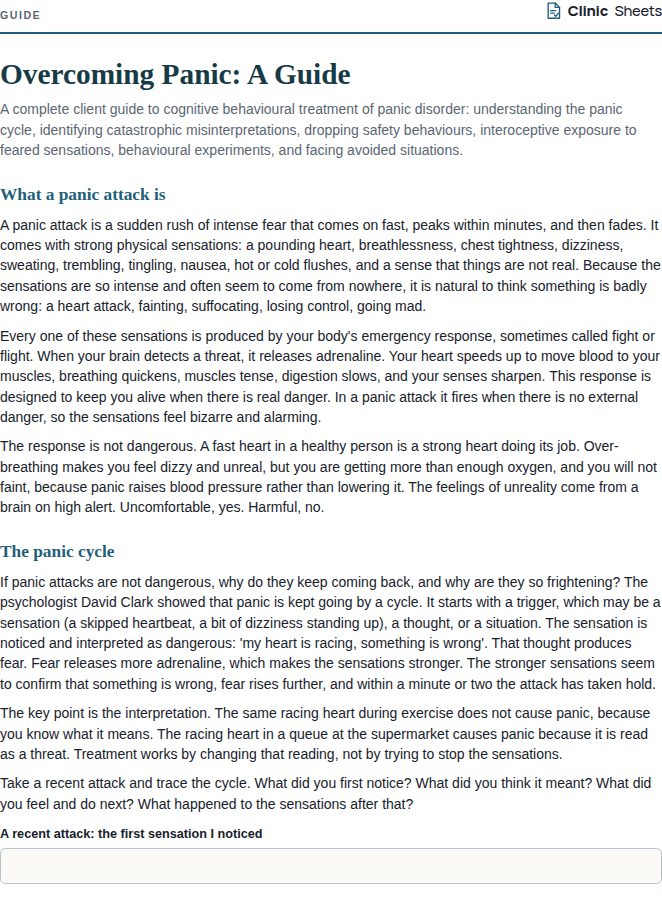
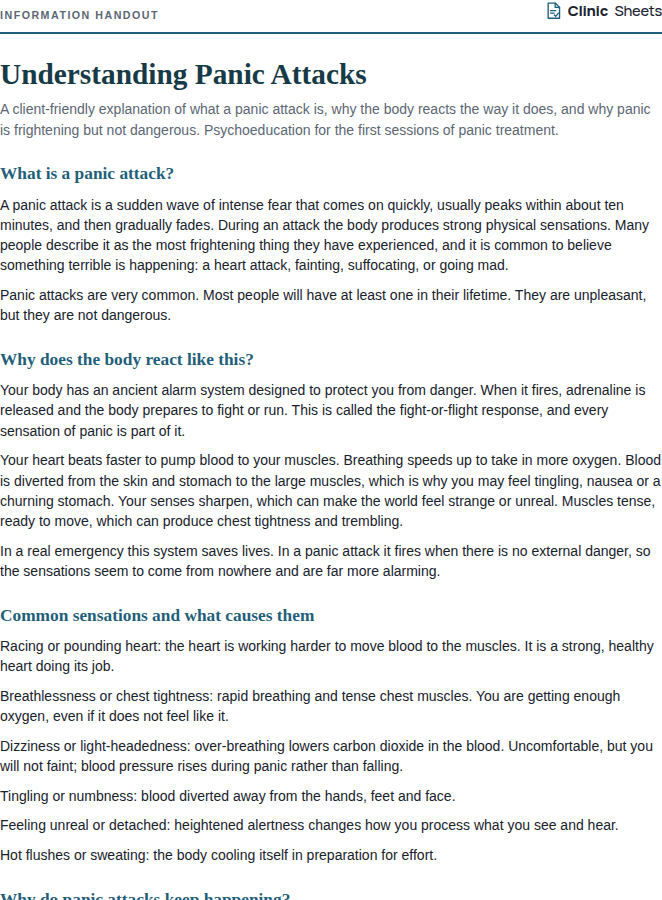
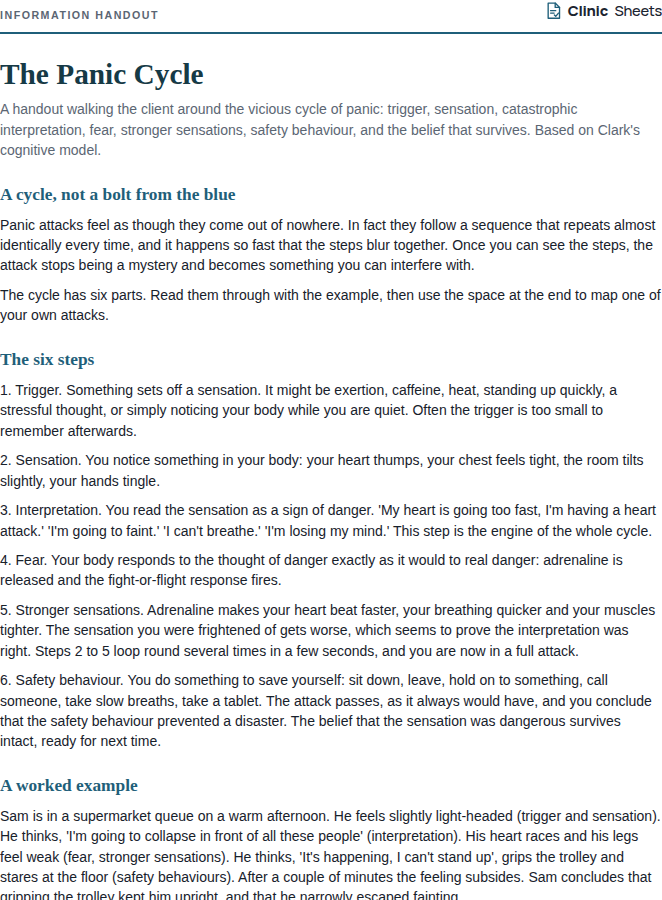
This workbook delivers the core components of cognitive therapy for panic disorder as described by Clark (1986) and elaborated in the Barlow and Craske treatment programme. Panic is understood as a vicious cycle in which normal body sensations are misinterpreted as signs of imminent catastrophe (heart attack, fainting, suffocation, losing control, going mad), the fear response intensifies the sensations, and safety behaviours and avoidance prevent the person from discovering that the catastrophe does not happen. Treatment identifies the specific misinterpretations, provides accurate information about the sensations, and then tests the catastrophic beliefs directly through behavioural experiments and interoceptive exposure.
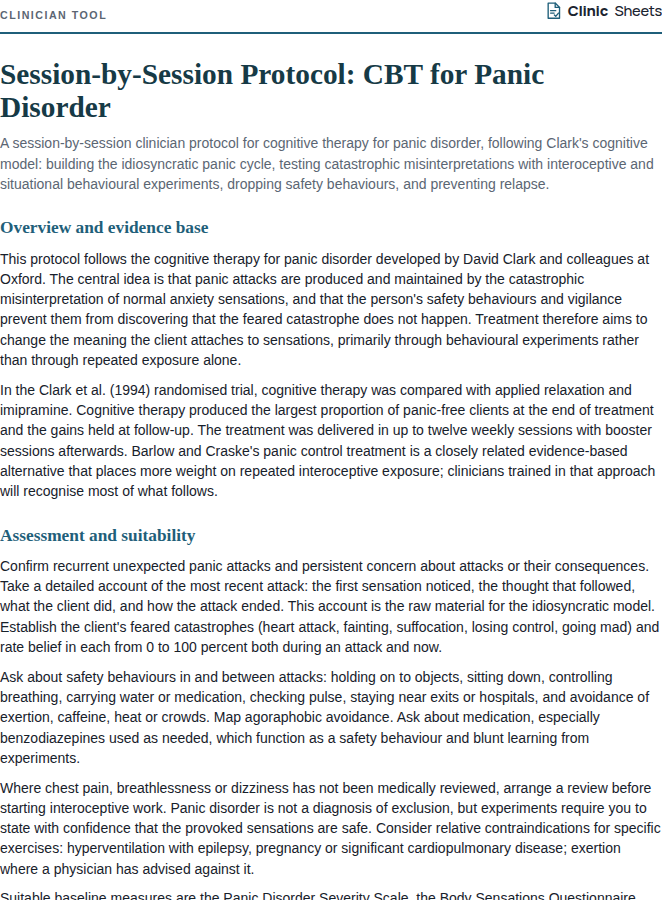
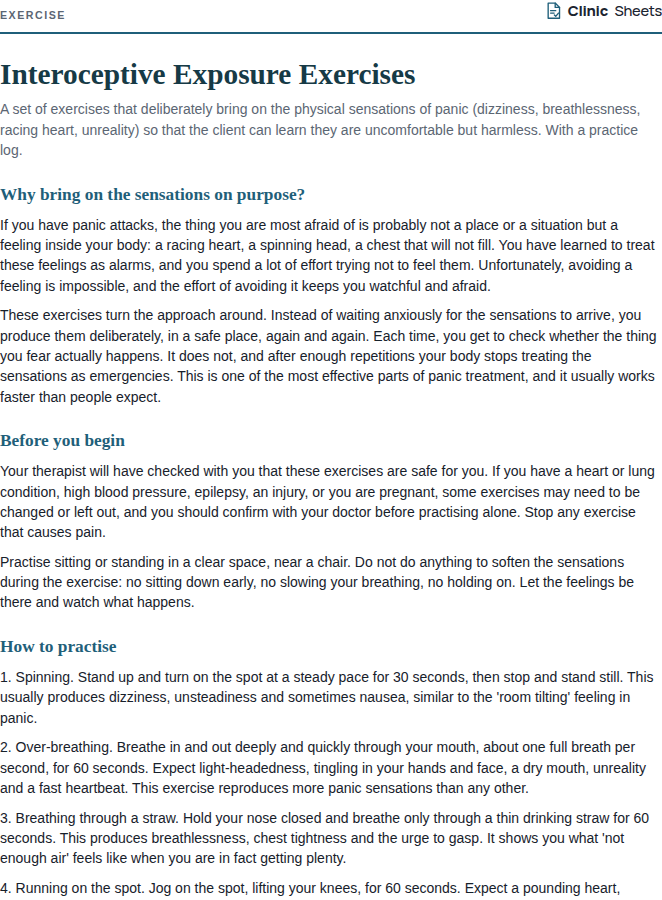
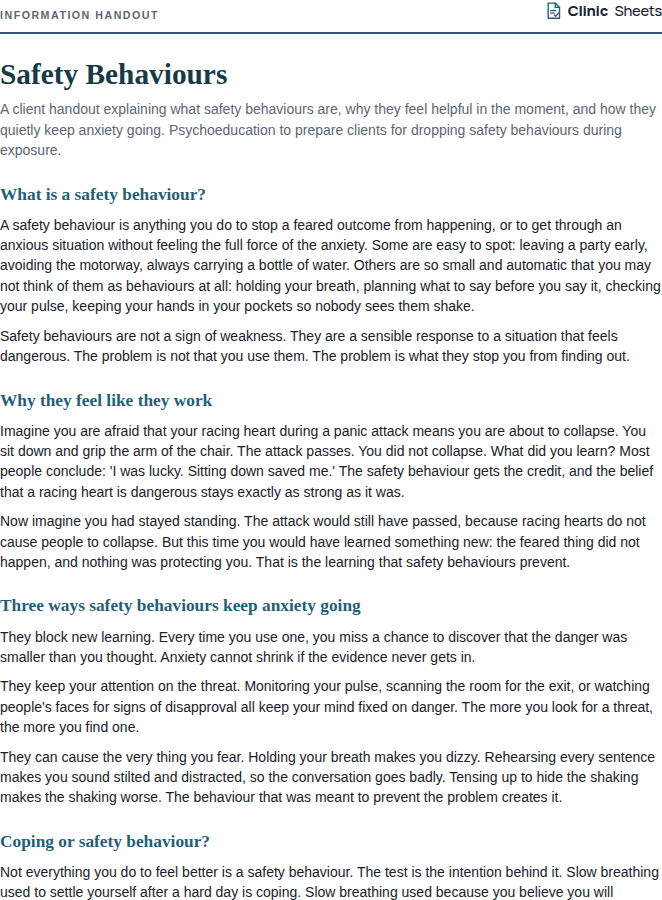
The sessions follow the usual clinical order: psychoeducation and personal formulation (sessions 1 and 2), cognitive work on the meaning of sensations (session 3), identification and dropping of safety behaviours (session 4), interoceptive exposure (session 5), situational exposure for agoraphobic avoidance (session 6), and consolidation (session 7). Interoceptive exposure is presented as an experiment to test beliefs rather than as habituation alone, in line with the cognitive model. Breathing exercises are deliberately not taught as a coping strategy, because they can function as a safety behaviour that maintains the belief that sensations are dangerous.
The professional version adds guidance on medical screening before interoceptive exposure, on tailoring the exercise menu to the client's feared sensations, and on the common pattern in which clients complete exposure while quietly retaining a safety behaviour. Ensure that the client has had appropriate medical assessment of any cardiac, respiratory or neurological concern before starting, and adapt the exercises for pregnancy, asthma, epilepsy, cardiac conditions or other relevant health issues in consultation with the client's physician.
How to use it
- Confirm the diagnosis and that relevant physical causes have been assessed by a physician. Ask specifically about cardiac, respiratory and neurological conditions and pregnancy before planning interoceptive exercises, and adapt or omit exercises accordingly.
- Build the personal panic cycle in session 2 from a recent attack, using the client's own sensations, thoughts and safety behaviours. Refer back to it throughout.
- Do the first interoceptive exercises in session, modelling each one yourself, and rate sensations, anxiety and similarity to panic. Set daily repetition as the between-session task.
- Frame every exposure as a test of a specific prediction, and record the prediction and outcome. Check after each experiment whether any safety behaviour was quietly used.
- Move to situational exposure once the client can tolerate interoceptive exercises without safety behaviours, and combine the two where possible (for example, hyperventilating briefly before entering a feared shop).
- Use the final session to write a relapse plan that treats a future panic attack as expected and survivable rather than as evidence of failure.
References
- Clark, D. M. (1986). A cognitive approach to panic. Behaviour Research and Therapy, 24(4), 461-470.
- Barlow, D. H., & Craske, M. G. (2007). Mastery of Your Anxiety and Panic: Workbook (4th ed.). Oxford University Press.
- Salkovskis, P. M., Clark, D. M., & Gelder, M. G. (1996). Cognition-behaviour links in the persistence of panic. Behaviour Research and Therapy, 34(5-6), 453-458.