Understanding Panic Attacks
A client-friendly explanation of what a panic attack is, why the body reacts the way it does, and why panic is frightening but not dangerous. Psychoeducation for the first sessions of panic treatment.
About this resource
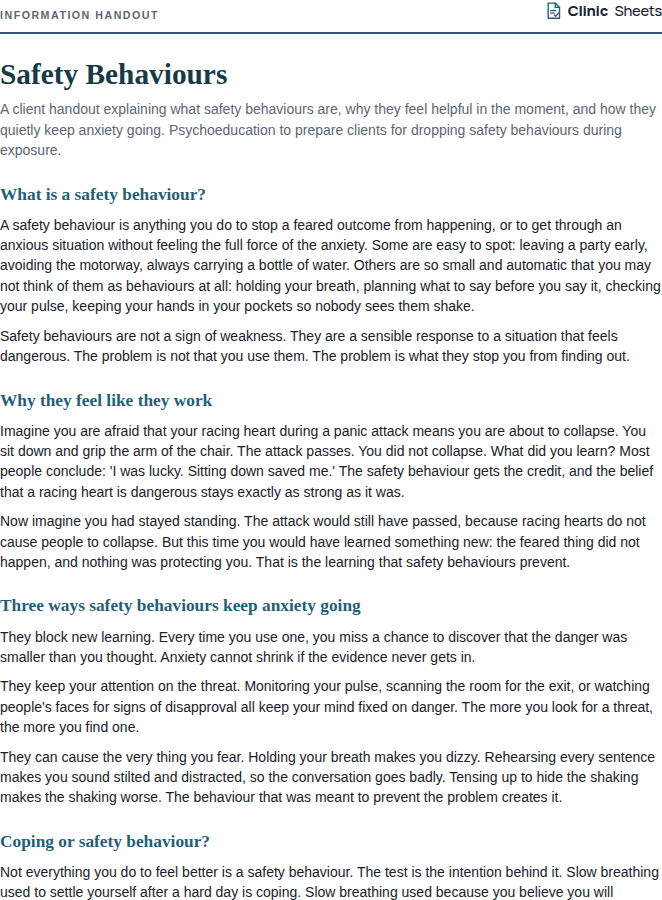
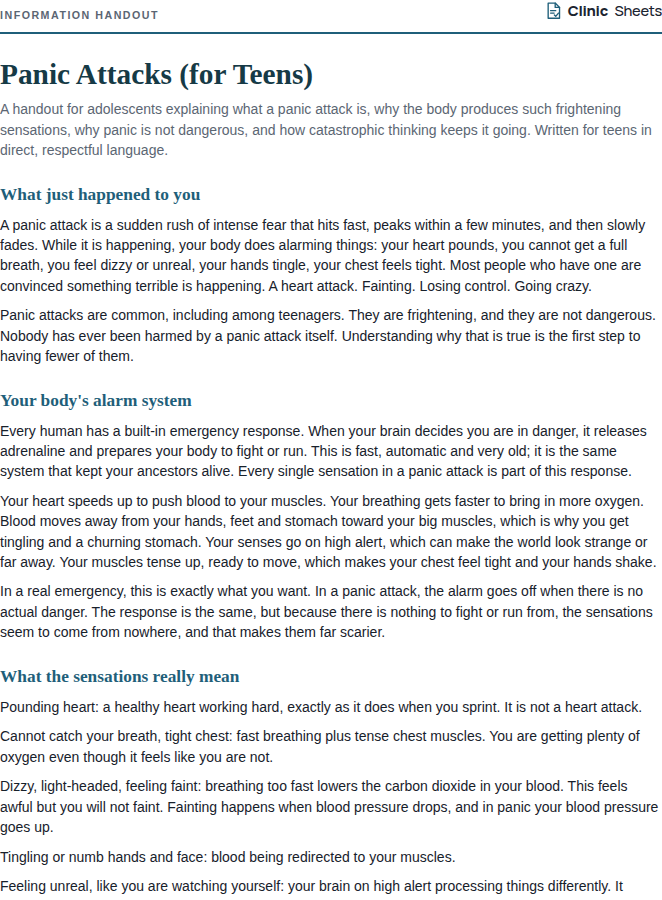
Panic attacks are sudden surges of intense fear that peak within minutes and are accompanied by strong physical sensations: a racing heart, breathlessness, dizziness, chest tightness, tingling, and a sense of unreality. Because these sensations arrive without an obvious external threat, people commonly interpret them as signs of a heart attack, fainting, suffocation, or losing control.
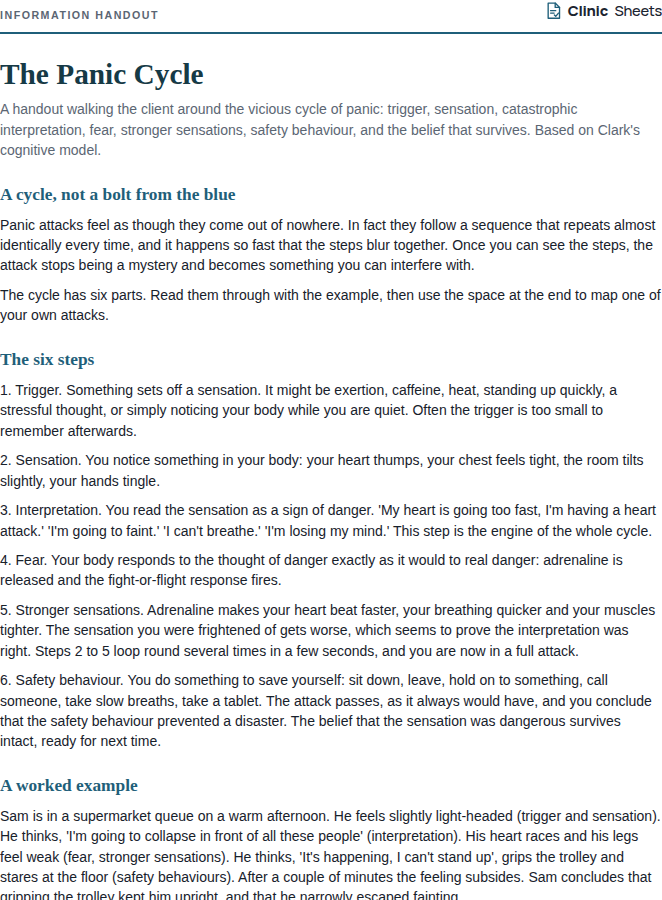
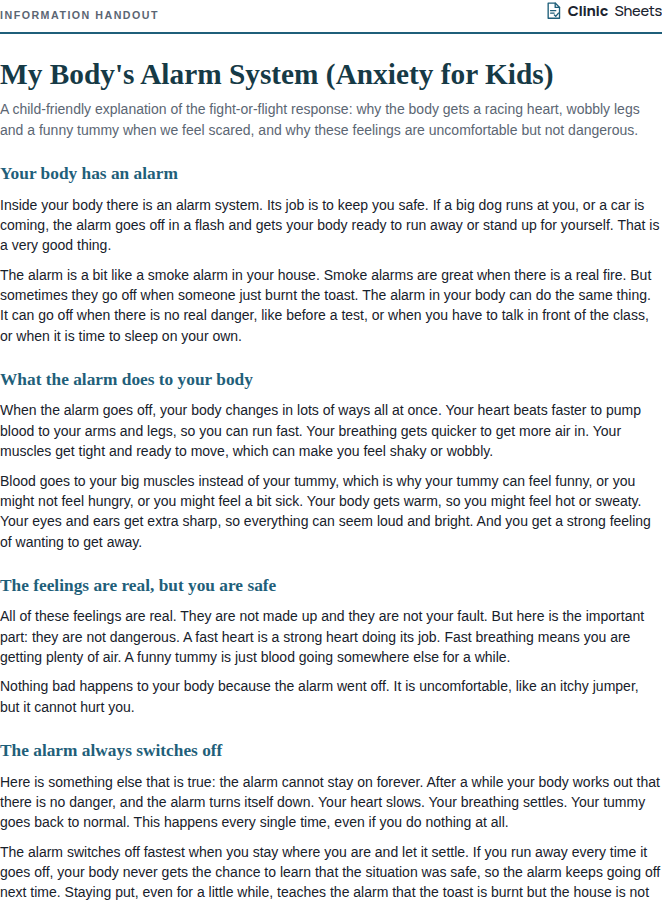
This handout explains the fight-or-flight response, links each common sensation to its physiological cause, and introduces the idea that it is the catastrophic interpretation of sensations, not the sensations themselves, that keeps panic going. It is designed to be read together in session and taken home.
The professional version adds guidance on eliciting the client's own feared catastrophe, and notes on medical screening where indicated.
How to use it
- Use in the first or second session, once the client has described a typical attack.
- Read the sensations table together and ask the client to mark the ones they experience. Ask what they feared each sensation meant at the time.
- Introduce the panic cycle (see The Panic Cycle) as the next step, using the client's own example.
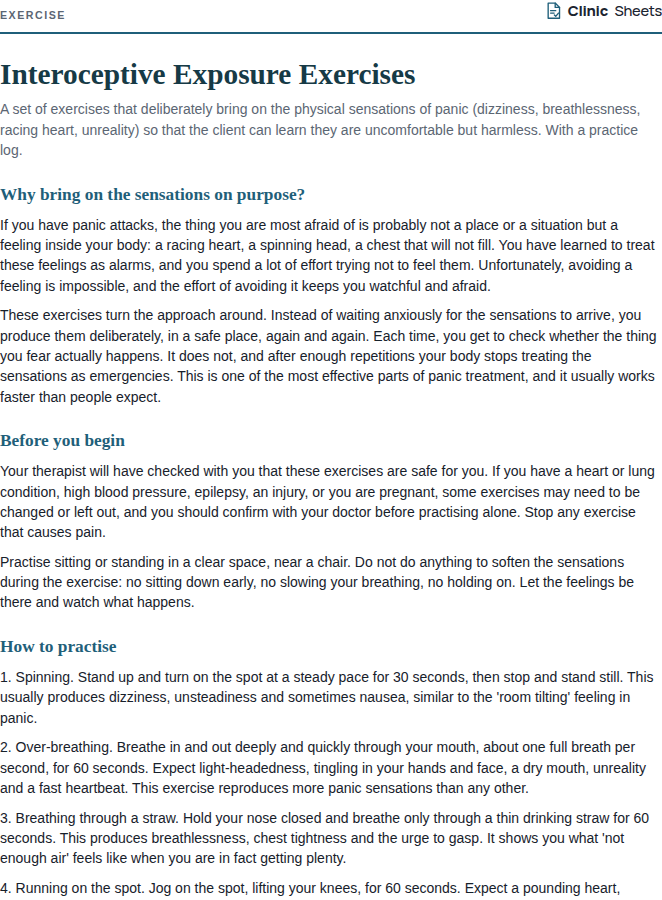
- Follow with interoceptive exposure once the model is understood and agreed.
References
- Clark, D. M. (1986). A cognitive approach to panic. Behaviour Research and Therapy, 24(4), 461-470.
- Craske, M. G., & Barlow, D. H. (2007). Mastery of Your Anxiety and Panic: Therapist Guide (4th ed.). Oxford University Press.
- Salkovskis, P. M., Clark, D. M., & Gelder, M. G. (1996). Cognition-behaviour links in the persistence of panic. Behaviour Research and Therapy, 34(5-6), 453-458.