Returning to Work After Mental Health Leave
A planning worksheet for clients preparing to return to work after time off for depression, anxiety or burnout. Breaks the return into graded steps, anticipates the hardest moments, and plans supports and early-warning signs.
About this resource
Returning to work after a period of mental health leave is a high-risk transition. Anxiety about the return often rises as the date approaches, avoidance is tempting (extending leave, going back and quickly going off again), and the first weeks can feel like proof that the person cannot cope. Yet work is, for most people, good for mental health: it provides structure, purpose, contact and income, and the longer someone is off, the harder the return tends to become. A Cochrane review found that combining clinical treatment with work-focused interventions improved return to work in people with depression more than clinical treatment alone.
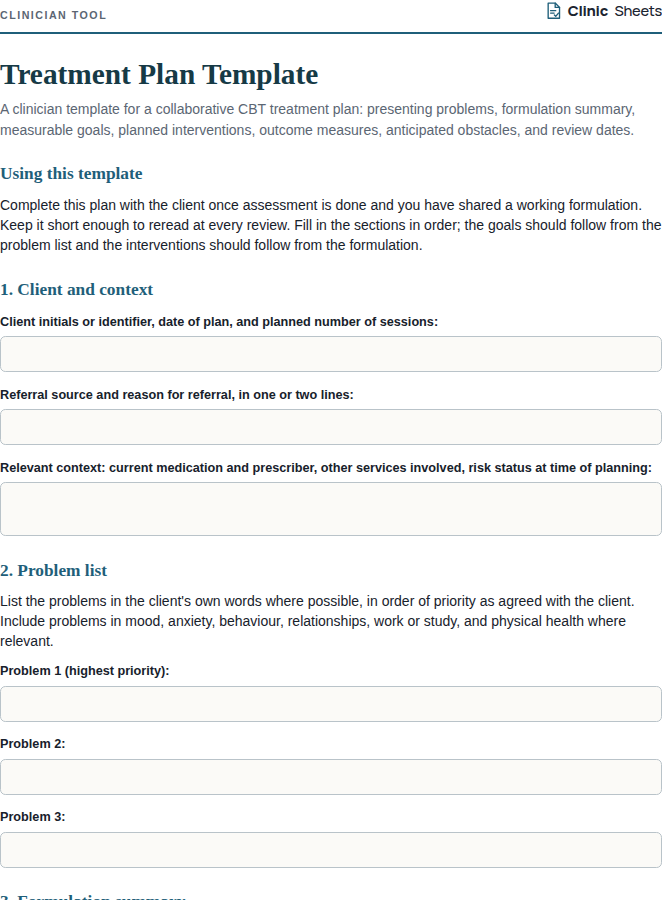
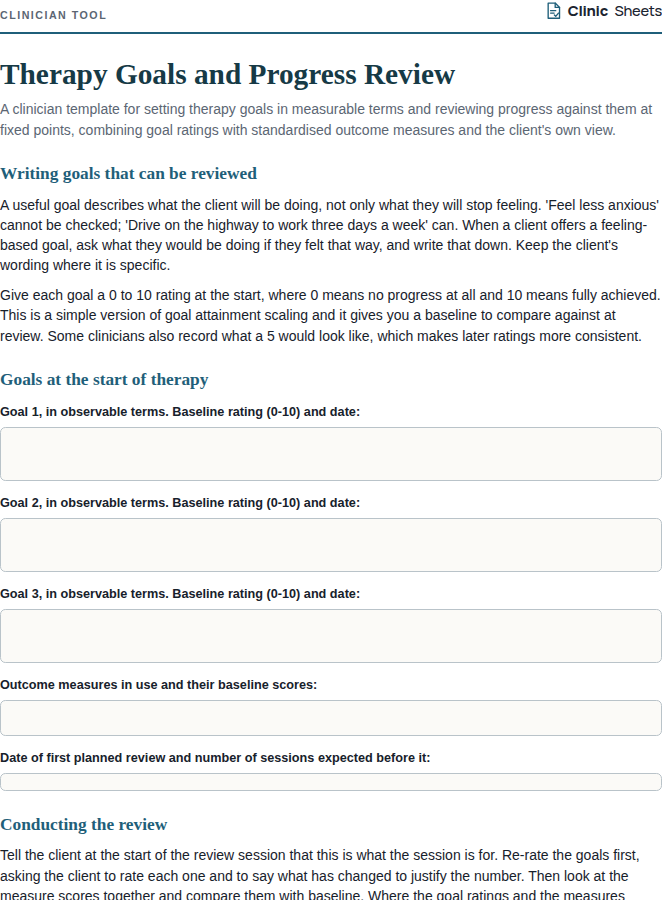
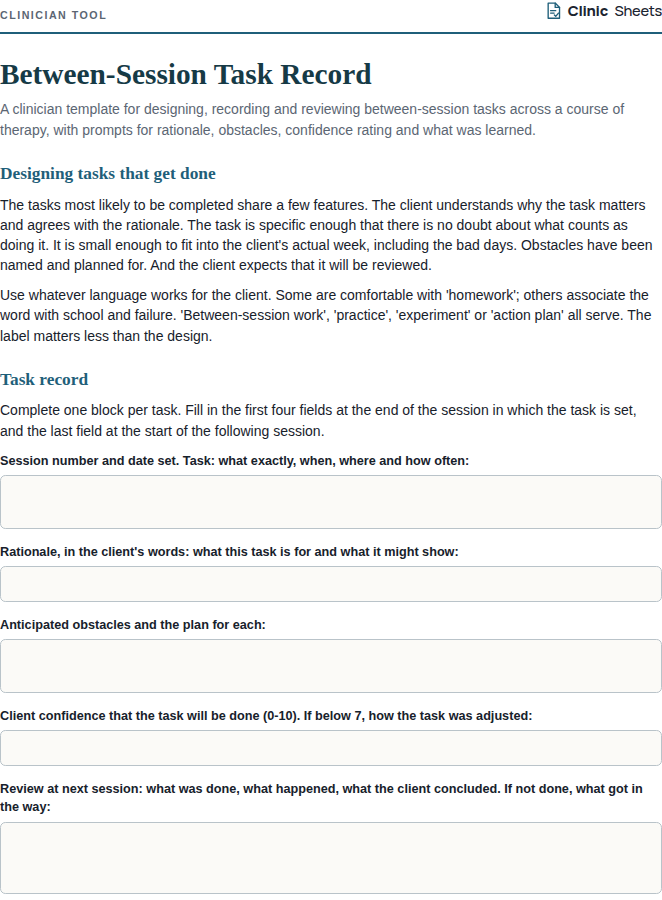
This worksheet applies graded task assignment and goal setting to the return. The client identifies what they are most worried about, breaks the return into steps that start well before the first day back (visiting the workplace, meeting the manager, a phased schedule where available), and plans for predictable hard moments such as the first question about where they have been. It also asks the client to write down the early signs that things are slipping and what they will do about them, so that a bad week does not become a second breakdown.
The professional version notes the importance of coordinating with the workplace where the client consents (occupational health, HR, a graduated return-to-work plan), the role of accommodations, and the need to keep treating the underlying condition during the return rather than treating the return as the end of therapy.
How to use it
- Begin planning at least a few weeks before the expected return date, once the client's symptoms have improved enough that a return is realistic.
- Complete the worries section first and treat each worry as a target for either a graded step, a behavioural experiment or a problem-solving plan.
- Encourage the client to ask about a graduated return (reduced hours or duties for the first weeks) if their employer or insurer offers it. Build the steps around whatever schedule is agreed.
- Rehearse the 'where have you been' conversation in session. Help the client choose a short, honest answer they are comfortable with; they do not owe anyone details.
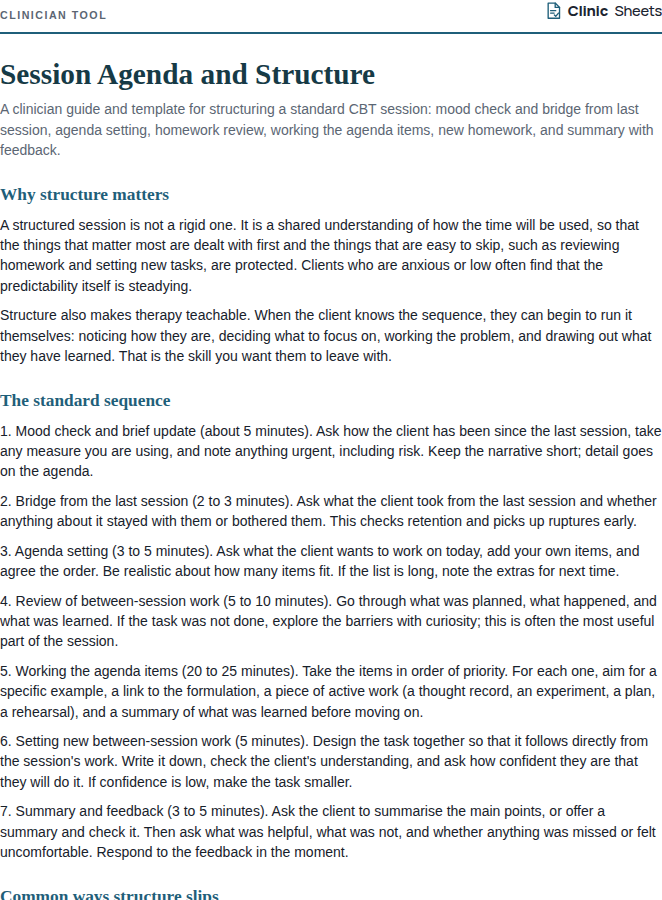
- Keep sessions going through the first month back. Review the early-warning signs and plan at each session, and adjust the pace if needed rather than abandoning the return.
References
- Nieuwenhuijsen, K., Verbeek, J. H., Neumeyer-Gromen, A., Verhoeven, A. C., Bültmann, U., & Faber, B. (2020). Interventions to improve return to work in depressed people. Cochrane Database of Systematic Reviews, 10, CD006237.
- Waddell, G., & Burton, A. K. (2006). Is Work Good for Your Health and Well-being? The Stationery Office.
- Martell, C. R., Dimidjian, S., & Herman-Dunn, R. (2010). Behavioral Activation for Depression: A Clinician's Guide. Guilford Press.