School Worries: Making a Brave Plan
A graded plan for a child who is anxious about school or avoiding parts of it: name the worry, break the scary bits into small brave steps, and agree who helps with each step at home and at school.
About this resource
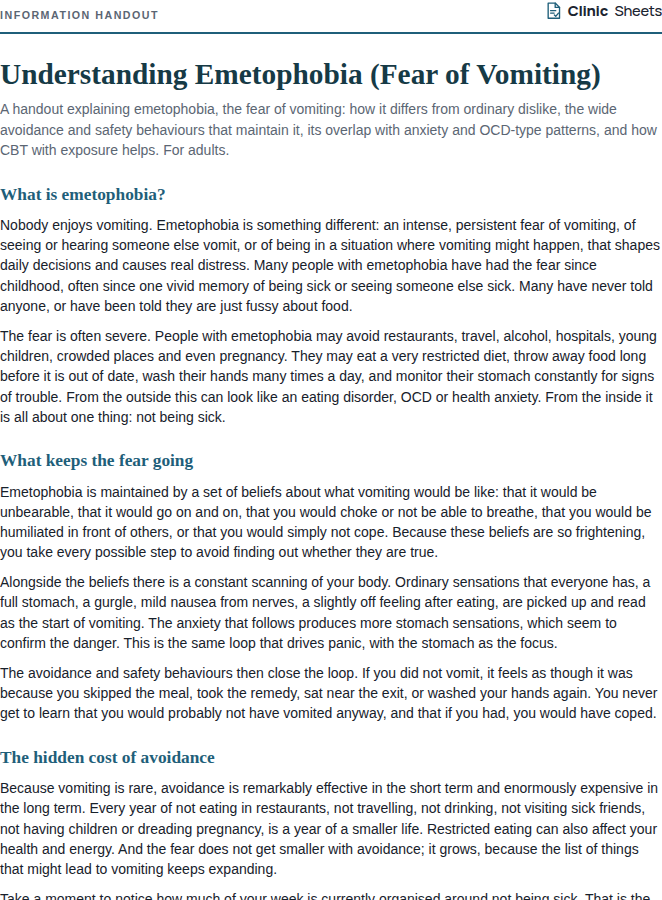
School-related anxiety is one of the most common presentations in child mental health, ranging from dread of a specific class or situation (reading aloud, the cafeteria, a particular teacher) to partial or full school refusal. Kearney and Albano's work on school refusal identifies avoidance of anxiety-provoking situations at school as one of the main functions of refusal, and the treatment for that function is graded exposure with parent and school support. As with any phobic avoidance, each day the child stays away or is allowed to skip the feared part, the belief that it is unmanageable is confirmed. Returning in small, planned steps, with adults coordinating rather than rescuing, reverses this.
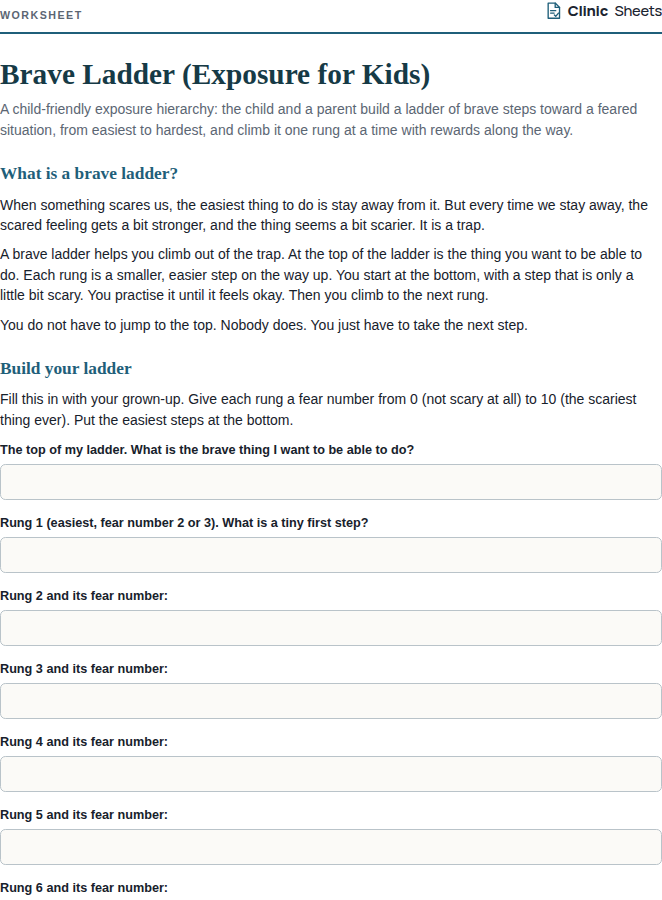
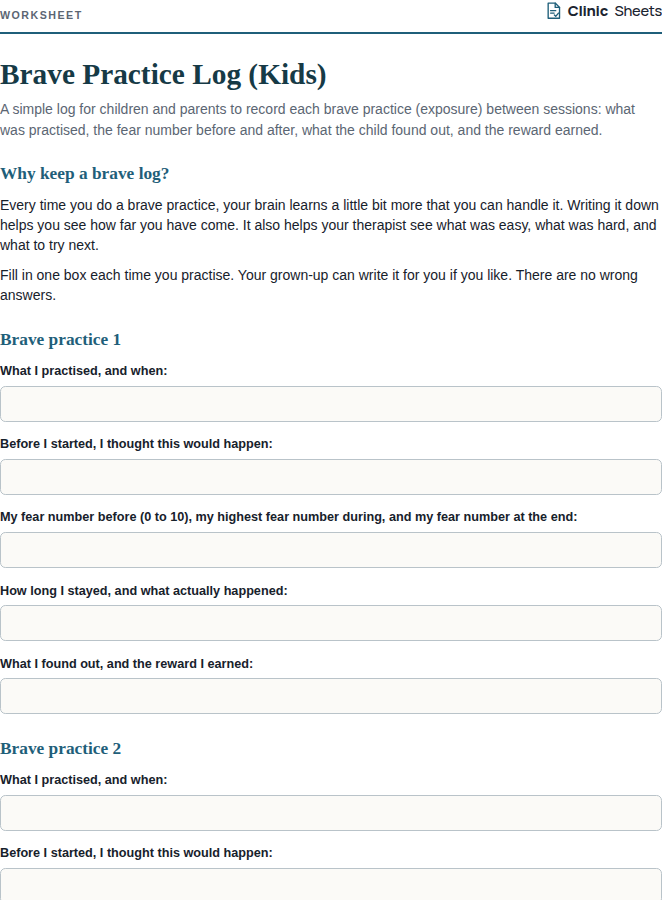
This worksheet is written for the child and a parent to complete together, and is designed to be shared with the school. It first helps the child pinpoint what exactly is scary (children often say 'school' when they mean one classroom, one transition or one social situation), then builds a short ladder of brave steps from easiest to hardest. Each step has a fear number, a helper at home, a helper at school, and a reward for trying. A final section records how each step went. The structure is deliberately the same as the Brave Ladder so that families already using that tool recognise it.
The professional version adds guidance on working with the school (a named contact, a quiet arrival plan, a signal the child can use), on distinguishing anxiety-driven avoidance from other reasons for refusal such as bullying or learning difficulties which need their own response, and on the importance of a rapid return to attendance where a child is missing school entirely, since each week away makes return harder.
How to use it
- Assess what the child is avoiding and why. Ask for specifics: which part of the day, which room, which people. If bullying, a learning difficulty or a physical problem is driving avoidance, address that alongside or before the brave plan.
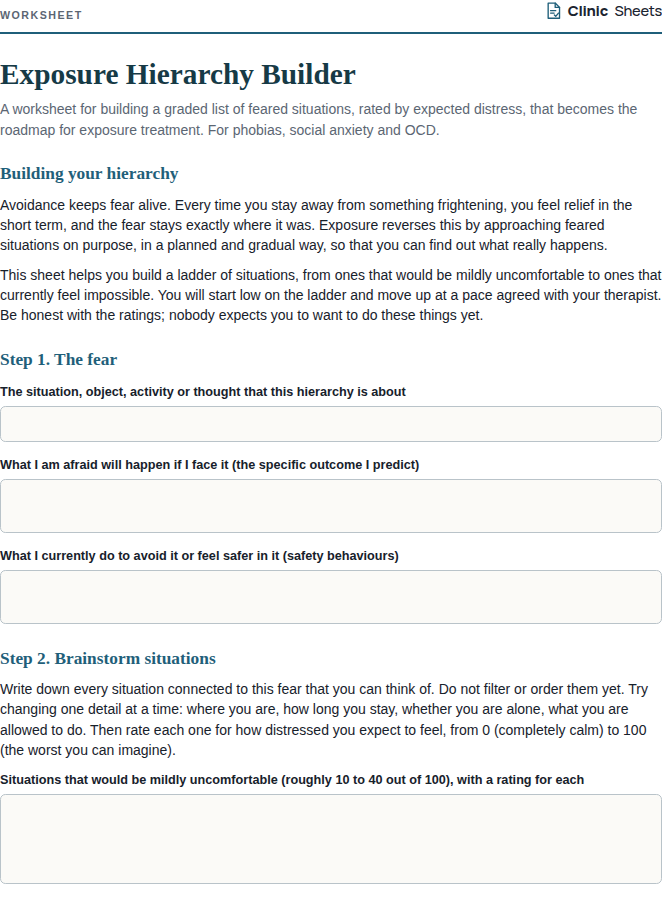
- With the child and parent, agree the goal at the top of the plan in concrete terms (for example: staying for the whole day, eating lunch in the cafeteria, answering a question in class). Then build four to eight steps toward it, each rated with a fear number.
- Identify a school contact and share the plan with them. Agree what the school will do at each step (where the child arrives, who meets them, where they can go if overwhelmed, and for how long). Consistency between home and school is what makes the plan work.
- Make the first step genuinely easy and start within days, not weeks. Where a child is fully out of school, prioritise getting them back on site in some form quickly, even briefly, and build from there.
- Coach parents on calm, brief morning routines: acknowledge the fear, state the plan, and follow through without long negotiation. Rewards are for trying the step, not for feeling calm.
- Review weekly. Move up when a step has been repeated and feels manageable. If a step is stuck, split it, and check whether an adult has been stepping in too early.
References
- Kearney, C. A., & Albano, A. M. (2018). When Children Refuse School: Therapist Guide (3rd ed.). Oxford University Press.
- Kearney, C. A. (2008). Helping School Refusing Children and Their Parents: A Guide for School-Based Professionals. Oxford University Press.
- Rapee, R. M., Wignall, A., Spence, S. H., Cobham, V., & Lyneham, H. (2022). Helping Your Anxious Child: A Step-by-Step Guide for Parents (3rd ed.). New Harbinger.