Brave Ladder (Exposure for Kids)
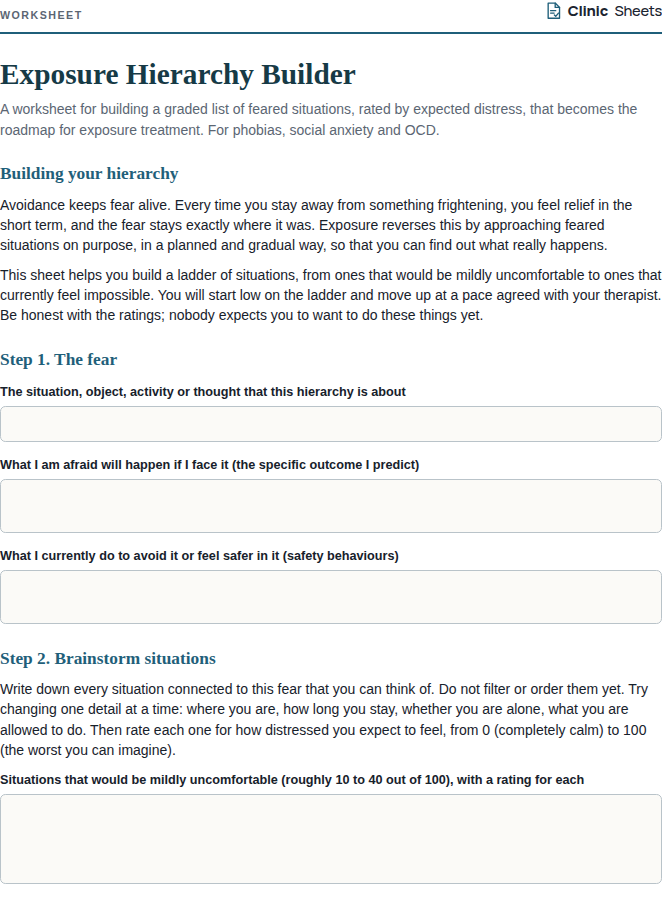
A child-friendly exposure hierarchy: the child and a parent build a ladder of brave steps toward a feared situation, from easiest to hardest, and climb it one rung at a time with rewards along the way.
About this resource
Graded exposure is the most strongly supported treatment component for childhood phobias and anxiety disorders. The child approaches a feared situation in planned steps, stays long enough for fear to reduce or for the feared outcome to fail to happen, and repeats each step until it feels manageable. Avoidance is what keeps childhood fear alive: every time the child escapes or is allowed to skip the feared situation, the belief that it was dangerous is confirmed and the fear grows a little. Exposure reverses this by giving the child repeated, direct evidence that they can cope.
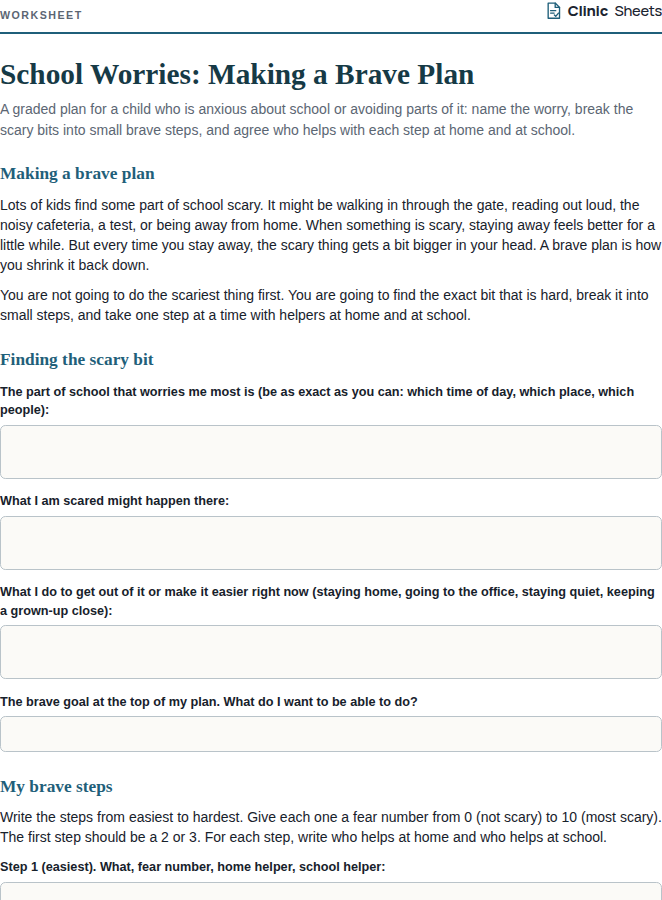
The Brave Ladder puts the hierarchy in a form a child can own. The top of the ladder is the goal (sleeping in my own bed all night, patting a dog, giving a talk in class). The rungs are smaller steps that lead there, each rated with a fear number. The child climbs one rung at a time, with a parent as coach, and earns a small reward for each step tried. This worksheet is written for the child and parent to complete together, and includes a parent section on how to coach without rescuing.
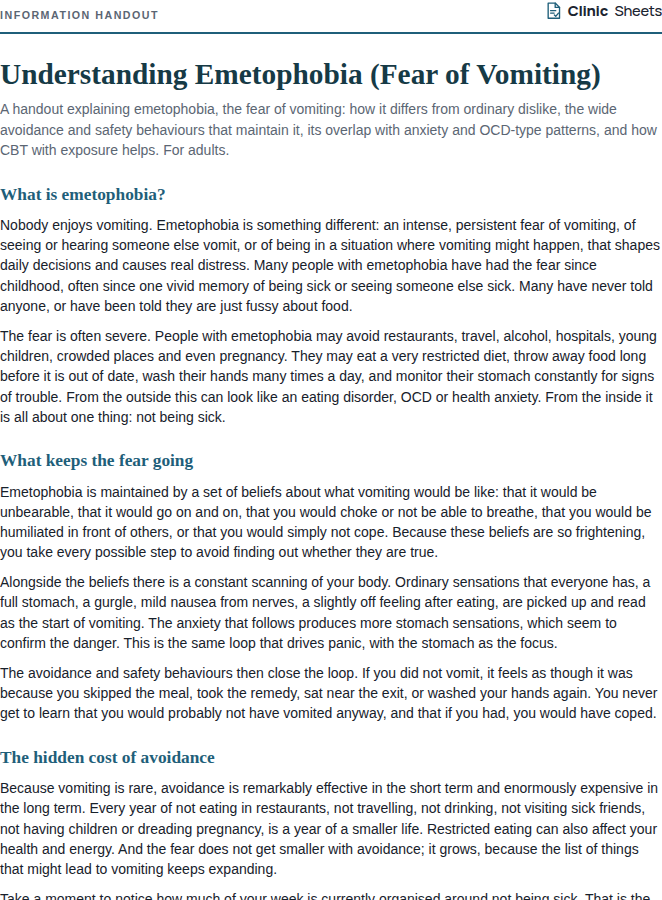
The professional version adds guidance on step size, on building ladders for fears that cannot easily be graded (such as vomiting or thunderstorms), on handling refusal, and on the difference between a supportive parent who stays nearby and an accommodating parent who quietly removes the challenge. It also notes that steps should be repeated until the child predicts they can cope, rather than until fear reaches zero.
How to use it
- Explain to the child and parent how avoidance feeds fear and how brave practice shrinks it. A simple version: 'Every time you do the brave thing, your brain learns a bit more that it is safe.'
- Agree the goal at the top of the ladder in concrete terms. Then brainstorm steps toward it with the child, aiming for six to ten rungs. Ask the child to give each rung a fear number using the feelings thermometer. Reorder so the numbers rise gradually.
- Check that the first rung is genuinely easy (a 2 or 3). The first success matters more than the size of the step. If the gap between two rungs is large, add a rung in between.
- Plan how each step will be practised: how often, for how long, with whom present. The child should stay in the situation until their fear number drops or until they have proved to themselves they can manage. Repeat each rung several times before moving up.
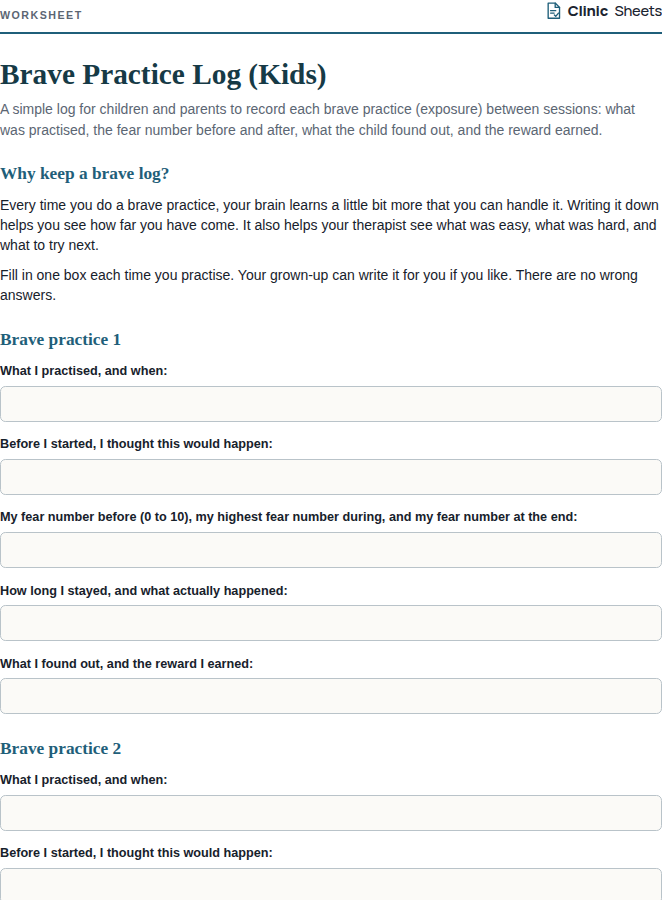
- Agree rewards with the parent: small, immediate, and for trying, not for feeling calm. Praise is the most important reward.
- Review the ladder each session. Celebrate rungs climbed, troubleshoot rungs that are stuck (usually the step is too big or a parent is stepping in too soon), and add new rungs as the child's confidence grows.
References
- Rapee, R. M., Wignall, A., Spence, S. H., Cobham, V., & Lyneham, H. (2022). Helping Your Anxious Child: A Step-by-Step Guide for Parents (3rd ed.). New Harbinger.
- Kendall, P. C., & Hedtke, K. A. (2006). Cognitive-Behavioral Therapy for Anxious Children: Therapist Manual (3rd ed.). Workbook Publishing.
- Whiteside, S. P. H., Sim, L. A., Morrow, A. S., et al. (2020). A meta-analysis to guide the enhancement of CBT for childhood anxiety: Exposure over anxiety management. Clinical Child and Family Psychology Review, 23(1), 102-121.