Understanding Emetophobia (Fear of Vomiting)
A handout explaining emetophobia, the fear of vomiting: how it differs from ordinary dislike, the wide avoidance and safety behaviours that maintain it, its overlap with anxiety and OCD-type patterns, and how CBT with exposure helps. For adults.
About this resource
Emetophobia, a specific phobia of vomiting, is often severe and long-standing, and it is frequently missed or misdiagnosed as an eating disorder, OCD, panic disorder or health anxiety. People with emetophobia fear vomiting themselves, seeing others vomit, or both. To prevent it they may restrict food, avoid restaurants, alcohol, travel, hospitals, children and pregnancy, check food dates obsessively, wash excessively, monitor their body for nausea, and carry anti-nausea remedies. Because vomiting is rare and largely uncontrollable, the avoidance is extensive and the fear is rarely disconfirmed.
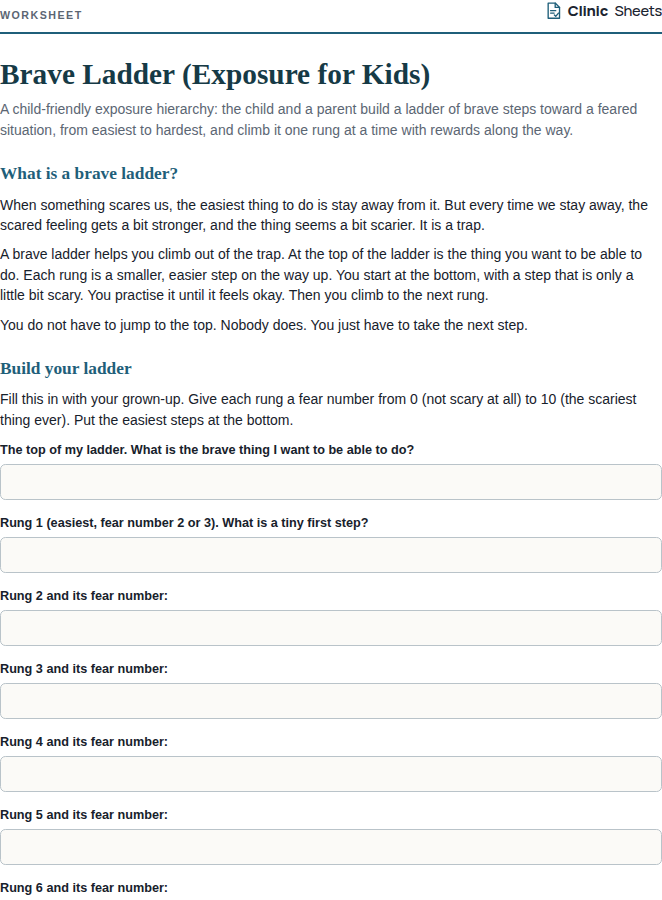
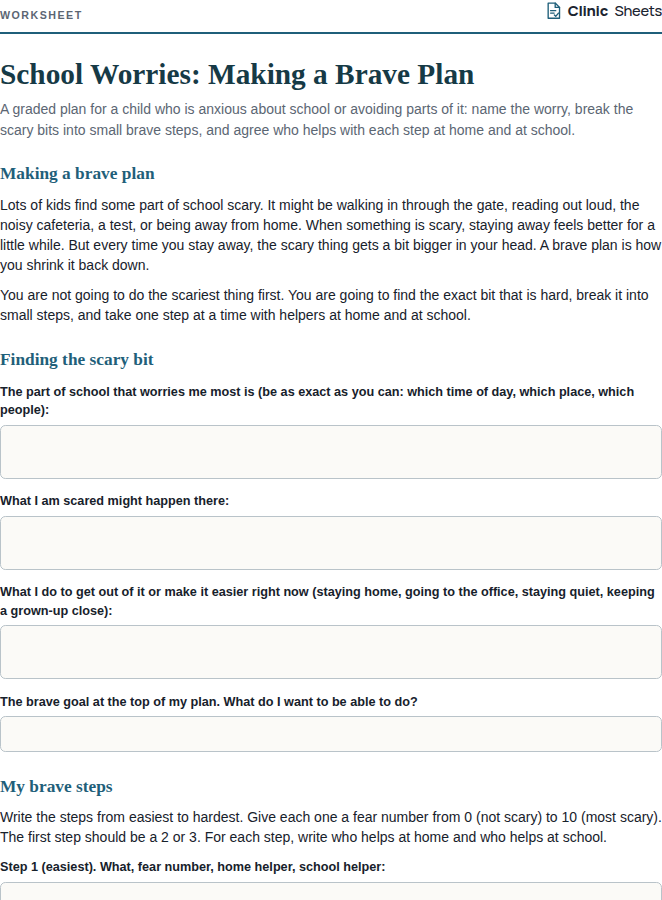
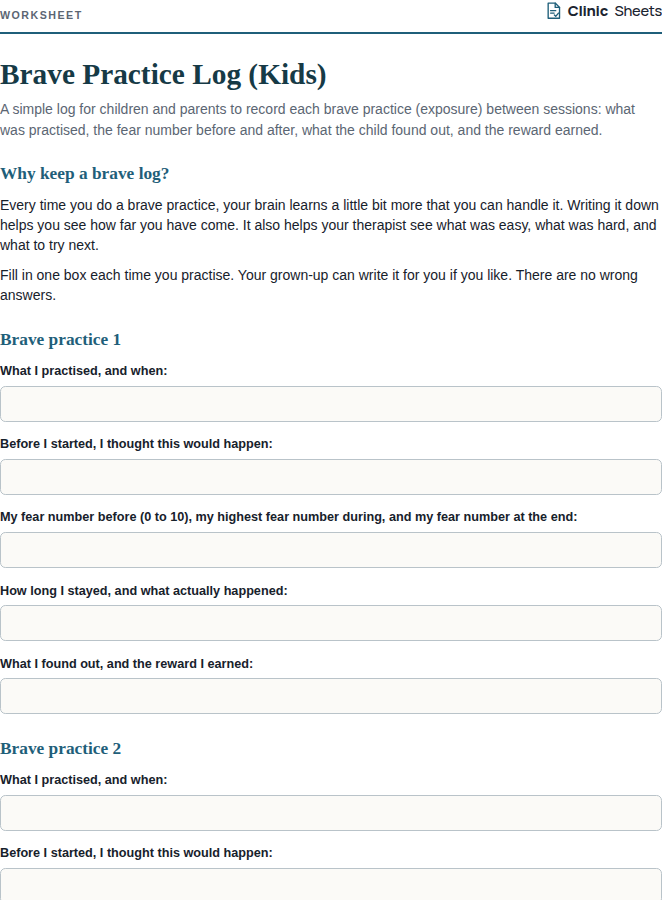
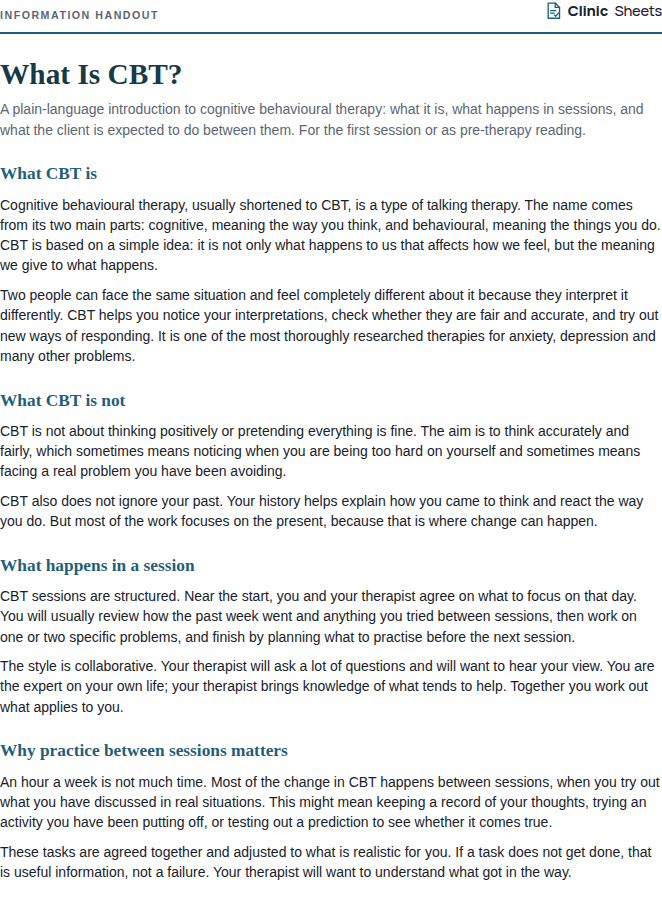
This handout draws on the cognitive-behavioural formulations of emetophobia by Boschen and by Veale, which describe the interaction of catastrophic beliefs about vomiting (that it will be unbearable, endless, humiliating, or dangerous), hypervigilance to bodily sensations, misinterpretation of normal gut activity as impending vomiting, and the avoidance and safety behaviours that keep the beliefs intact. It gives clients a clear model and prepares them for exposure-based treatment, including interoceptive work with nausea-like sensations and graded exposure to cues such as words, sounds, images and video.
The professional version adds guidance on screening for eating disorder and medical causes of restriction, on the role of intolerance of uncertainty, and on sequencing exposures, noting that inducing actual vomiting is not a standard or necessary part of treatment.
How to use it
- Screen for restriction and weight loss. Emetophobia commonly involves reduced eating that can look like an eating disorder; the motivation (fear of vomiting rather than shape and weight concern) is the distinguishing feature. Involve medical care if weight or nutrition is compromised.
- Read the handout together and ask the client to identify their own avoidance and safety behaviours. The list is usually long and clients are often surprised by how much of daily life has been shaped by the fear.
- Identify the specific feared catastrophe. Beliefs vary: that vomiting will go on forever, that they will choke, that they will lose control in public, that they cannot cope with the feeling. The belief guides the exposures.
- Introduce the idea that treatment does not require vomiting. It requires facing the cues (words, sounds, images, nausea-like sensations, foods, places) and dropping the safety behaviours until the fear reduces and the catastrophic beliefs weaken.
- Use the reflection fields to start a hierarchy and to set the first small change in safety behaviours, such as eating a food past its self-imposed cut-off time or leaving anti-nausea medication at home.
References
- Boschen, M. J. (2007). Reconceptualizing emetophobia: A cognitive-behavioral formulation and research agenda. Journal of Anxiety Disorders, 21(3), 407-419.
- Veale, D. (2009). Cognitive behaviour therapy for emetophobia. The Cognitive Behaviour Therapist, 2(4), 272-288.
- Abramowitz, J. S., Deacon, B. J., & Whiteside, S. P. H. (2019). Exposure Therapy for Anxiety: Principles and Practice (2nd ed.). Guilford Press.