Theory A vs Theory B
A worksheet that lays out two competing explanations for a client's problem side by side: Theory A, that the danger is real and must be prevented, and Theory B, that the problem is worry about the danger and the things done to manage it. Salkovskis's method for OCD and health anxiety.
About this resource
Theory A versus Theory B is a formulation and engagement device developed by Salkovskis and colleagues for obsessive-compulsive disorder and health anxiety. Clients with these problems usually arrive with a firmly held explanation of what is wrong: 'I am at risk of contaminating my family', 'I have an undetected illness'. Every symptom, ritual and safety behaviour makes sense under that explanation, which the method labels Theory A. The alternative, Theory B, proposes that the problem is not the danger itself but a worry problem: the person is understandably preoccupied by the possibility of danger, and the checking, washing, reassurance seeking and monitoring they do to manage the worry are keeping it alive.
The value of the method is that it does not ask the client to abandon Theory A. It asks only that both theories be written out, that the evidence for each be reviewed honestly, and that the client consider what each theory would predict and what they would need to do if it were true. Under Theory A the correct response is more vigilance and more rituals, which the client has usually been trying for years without relief. Under Theory B the correct response is to treat it as a worry problem and test that out. The client is invited to run an experiment: live according to Theory B for a set period and see what happens.
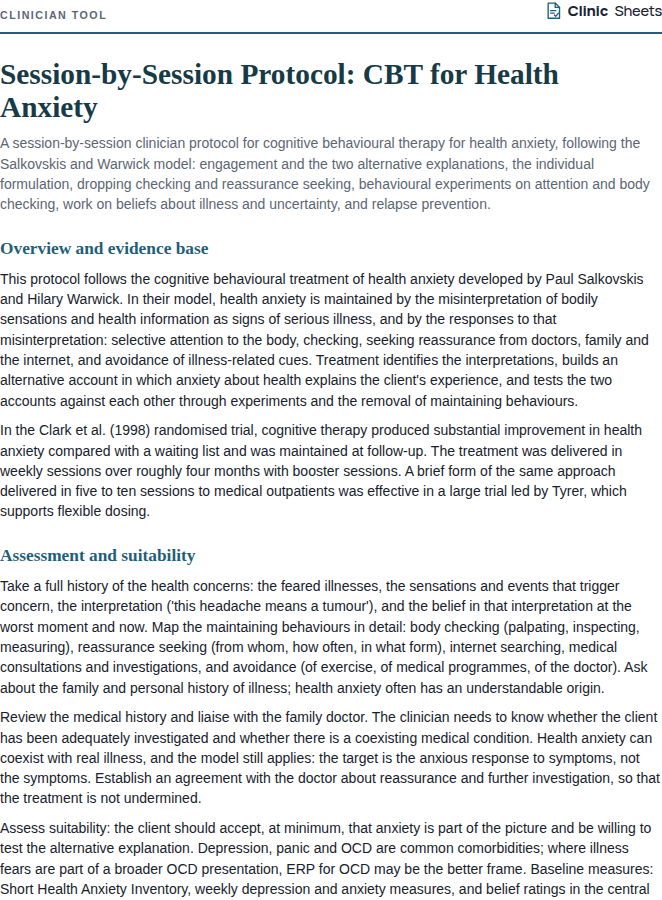
The professional version includes phrasing for introducing the method without seeming to dismiss the client's fear, guidance on gathering evidence for both theories without slipping into reassurance, and notes on using the completed sheet to plan the first behavioural experiments.
How to use it
- Introduce the method after a shared formulation has been drafted. Frame it as a way of being fair to both explanations rather than a way of proving the client wrong.
- Write Theory A in the client's own words, as strongly as they believe it. Then write Theory B, keeping the same feared outcome but reframing the problem as worry about it and the ways of coping with that worry.
- Review the evidence for each. Be careful with Theory A: the aim is not to reassure ('you do not have cancer') but to examine how the client has treated evidence so far. Under Theory B, list the ways in which worry, checking and avoidance have kept attention on the feared problem.
- Ask what each theory would mean for how the client should live. Draw out that Theory A has been tested at length and has not brought relief, while Theory B has never been given a fair trial.
- Agree on an experiment: a defined period during which the client acts as though Theory B is true, dropping rituals and safety behaviours, and records what happens to anxiety, preoccupation and functioning.
- Return to the sheet throughout treatment. Re-rate belief in each theory as evidence from experiments accumulates.
References
- Salkovskis, P. M. (1999). Understanding and treating obsessive-compulsive disorder. Behaviour Research and Therapy, 37(Suppl. 1), S29-S52.
- Salkovskis, P. M., Warwick, H. M. C., & Deale, A. C. (2003). Cognitive-behavioral treatment for severe and persistent health anxiety (hypochondriasis). Brief Treatment and Crisis Intervention, 3(3), 353-367.
- Veale, D., & Willson, R. (2021). Overcoming Obsessive Compulsive Disorder (2nd ed.). Robinson.