Understanding ADHD (for Kids)
A child-friendly explanation of ADHD: what it is, what it is not, why paying attention, sitting still and waiting can be so hard, what helps, and the strengths that often come with it. Includes a section for parents on framing ADHD at home.
About this resource
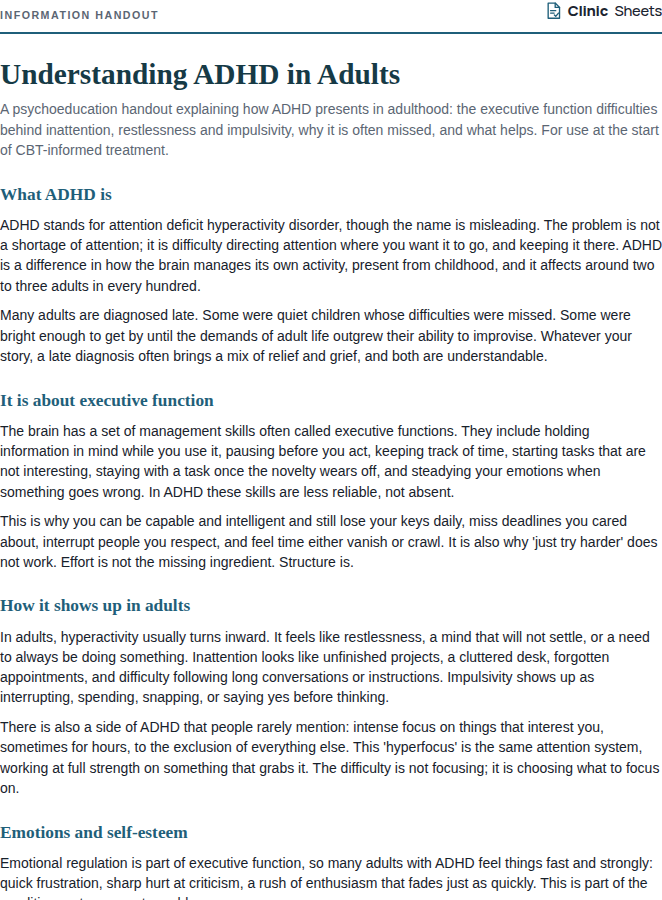
Children with ADHD often receive a great deal of correction and very little explanation. By the time they are assessed, many have concluded that they are lazy, naughty or stupid. Accurate, developmentally pitched psychoeducation is a recommended first step in ADHD care in the Canadian ADHD Practice Guidelines and in Barkley's work with families, because it shifts the child's self-understanding from character to brain, reduces shame, and makes the child a partner in the strategies that follow. Behavioural parent training, classroom behaviour management and organisational skills training, which have the strongest evidence among psychosocial treatments, all work better when the child understands why the supports exist.
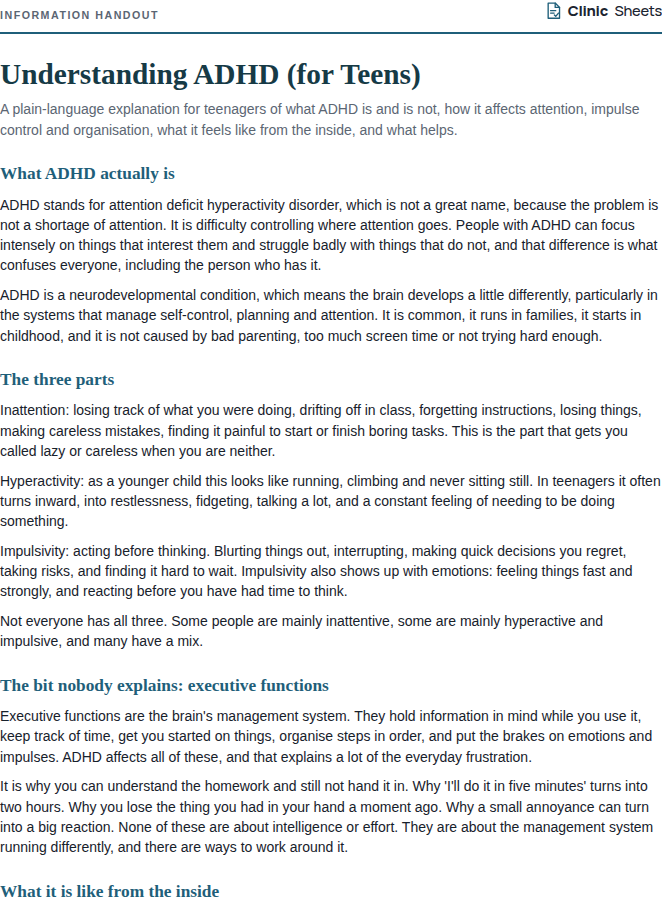
This handout explains ADHD to a child in plain, concrete terms. It describes attention, activity level and impulse control as jobs that a part of the brain does, and explains that in ADHD this part works differently, so that those jobs take more effort. It is clear that ADHD is not caused by being bad or lazy, that it is common, and that it does not affect how clever a child is. It lists everyday things that get harder (finishing tasks, remembering instructions, waiting a turn, sitting still, keeping track of belongings) and everyday things that can help (routines, reminders, movement breaks, breaking tasks into chunks, medication if a doctor recommends it). It closes with strengths, a short reflection, and a parent section.
The professional version adds guidance on adapting the handout to the child's presentation (predominantly inattentive children need a different emphasis from hyperactive-impulsive ones), on discussing medication neutrally and without making promises, on avoiding both catastrophising and minimising ADHD, and on using the handout as a springboard for identifying the two or three supports the child most wants to try at home and school.
How to use it
- Use after assessment and diagnosis, ideally with a parent present, once the family has had their own explanation of the diagnosis. Read a section at a time and ask the child what fits and what does not.
- Adjust the emphasis to the child's presentation. A quiet, daydreaming child does not need much about sitting still; a child who acts before thinking needs more on impulses and waiting.
- When you reach the section on what helps, ask the child which two or three things they would like to try. Their choice increases buy-in for the strategies you and the parent set up.
- If medication is being considered or used, describe it factually as one tool that helps some children with the brain's attention jobs, prescribed and reviewed by a doctor, and leave decisions and dosing to the prescriber.
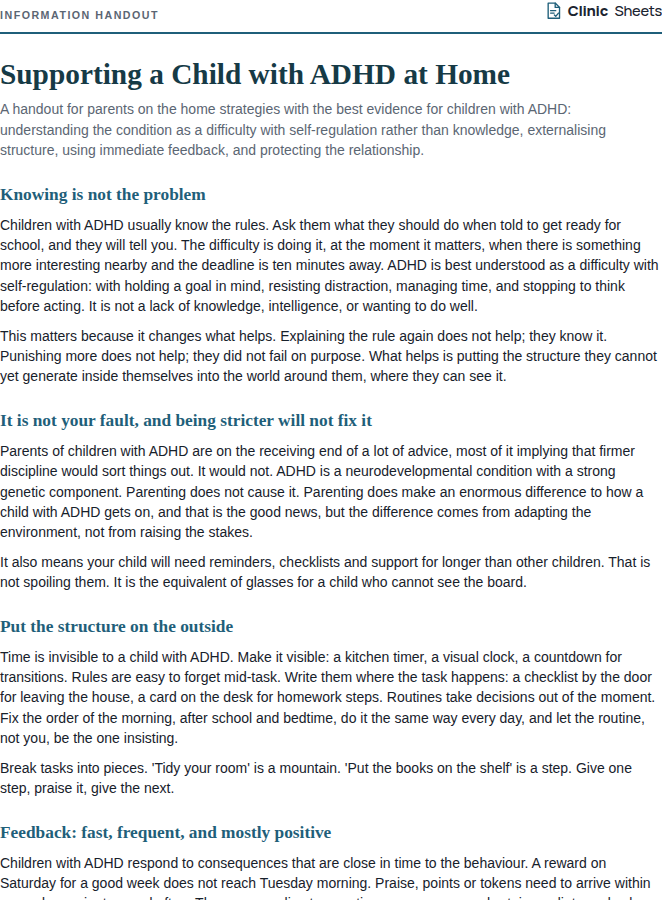
- Go through the parent section with the caregiver. The key shift is from 'won't' to 'has trouble with', paired with clear structure and immediate feedback rather than lowered expectations.
- Return to the strengths section regularly. Children with ADHD hear far more about their deficits than their strengths, and this balance matters for self-esteem.
References
- Barkley, R. A. (2020). Taking Charge of ADHD: The Complete, Authoritative Guide for Parents (4th ed.). Guilford Press.
- Canadian ADHD Resource Alliance (CADDRA). (2020). Canadian ADHD Practice Guidelines (4.1 ed.). CADDRA.
- Pelham, W. E., & Fabiano, G. A. (2008). Evidence-based psychosocial treatments for attention-deficit/hyperactivity disorder. Journal of Clinical Child and Adolescent Psychology, 37(1), 184-214.