Understanding ADHD (for Teens)
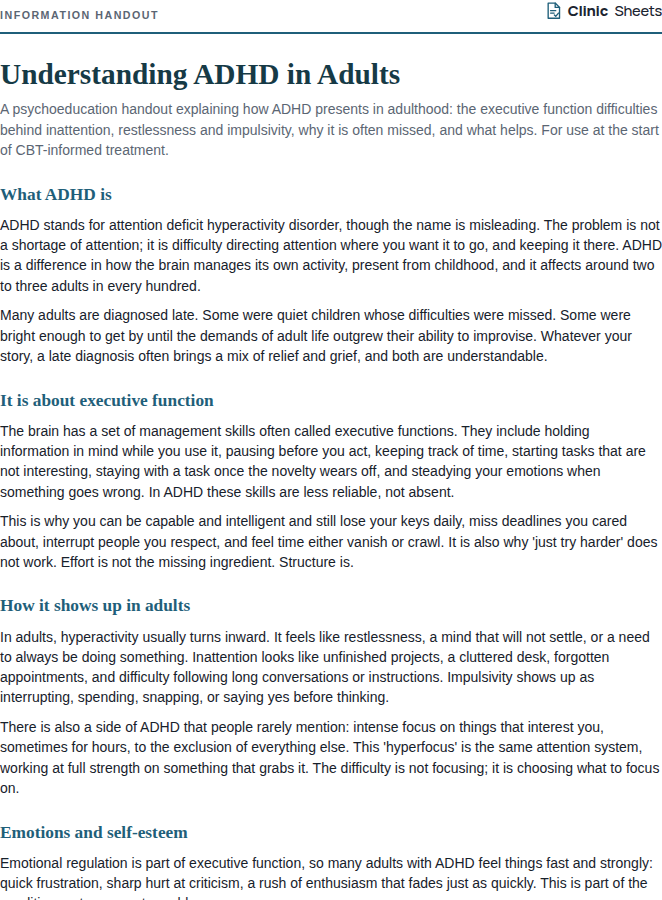
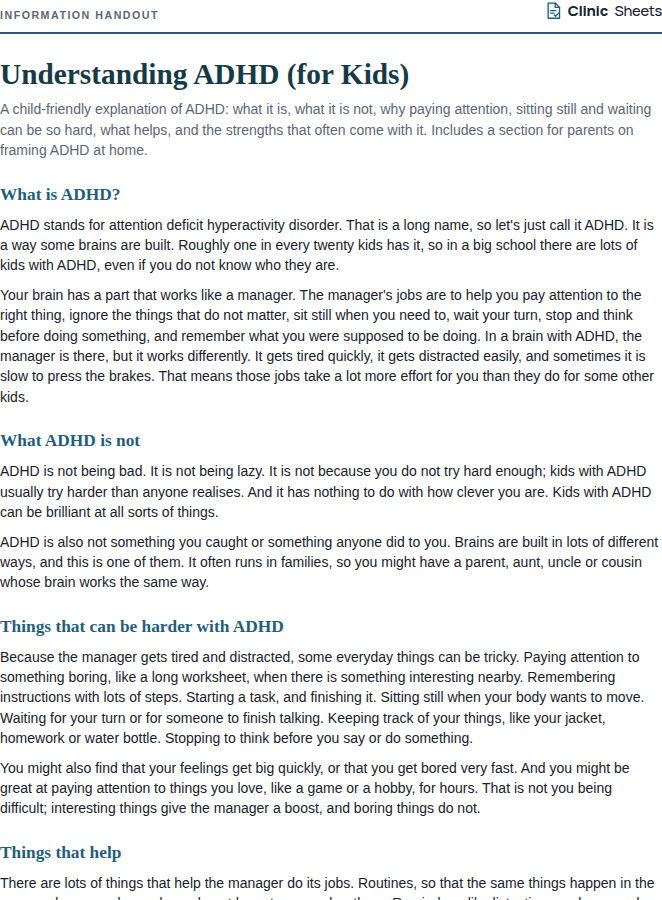
A plain-language explanation for teenagers of what ADHD is and is not, how it affects attention, impulse control and organisation, what it feels like from the inside, and what helps.
About this resource
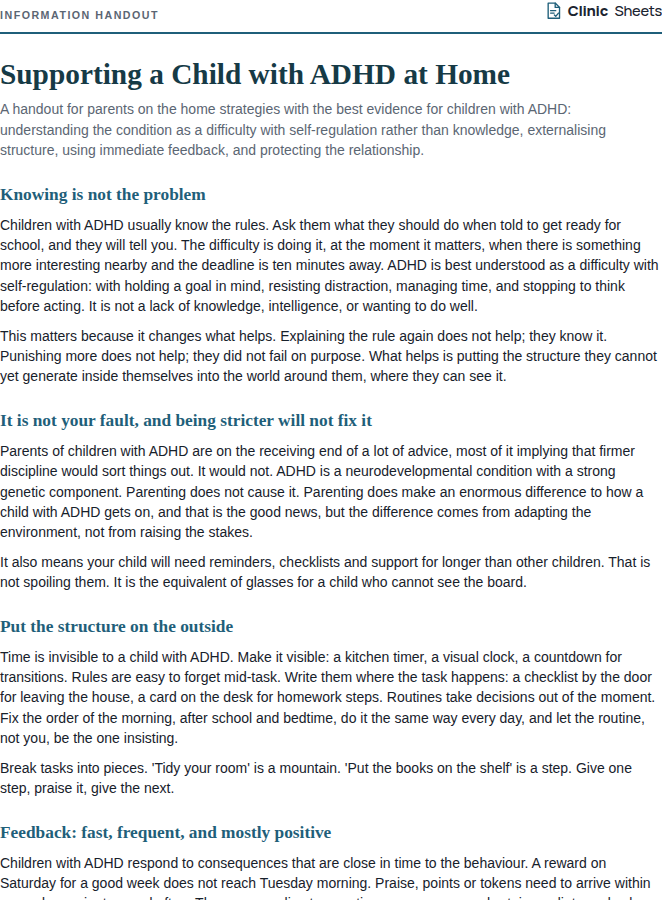
Adolescents with ADHD have usually spent years hearing that they are careless, lazy or not trying, and many arrive at a diagnosis with a self-concept shaped by that feedback. Accurate psychoeducation is therefore both informative and therapeutic: understanding ADHD as a neurodevelopmental difference in the brain's self-regulation and executive function systems, rather than a failure of effort or character, changes how the young person interprets their difficulties and makes them more willing to use strategies.
This handout describes the three symptom areas of inattention, hyperactivity and impulsivity, explains how hyperactivity often becomes inner restlessness in adolescence, and introduces executive functions in everyday terms: working memory, time awareness, task initiation, organisation and emotional regulation. It addresses common myths, notes that ADHD often comes with strengths as well as costs, and gives an honest picture of what helps, including medication as one option among several without giving any dosing or prescribing information.
The professional version adds guidance on delivering the psychoeducation in a way that repairs self-esteem, on involving parents, and on the co-occurring anxiety, depression and learning differences that frequently accompany ADHD in adolescence.
How to use it
- Use after diagnosis or as part of the assessment feedback. Ask first what the young person already believes about ADHD and about themselves.
- Read the handout together and pause at the executive function section. Ask which of the difficulties they recognise and for an example of each.
- Explicitly address the 'lazy' and 'not trying' messages. Ask where they came from and how the young person feels about them now.
- Discuss what helps as a menu, not a prescription. Refer medication questions to the prescribing clinician.
- Complete the reflection fields and use them to prioritise which practical strategies to work on first.
References
- Barkley, R. A. (Ed.). (2015). Attention-Deficit Hyperactivity Disorder: A Handbook for Diagnosis and Treatment (4th ed.). Guilford Press.
- American Psychiatric Association. (2013). Diagnostic and Statistical Manual of Mental Disorders (5th ed.). American Psychiatric Publishing.
- Sprich, S. E., Safren, S. A., Finkelstein, D., Remmert, J. E., & Hammerness, P. (2016). A randomized controlled trial of cognitive behavioral therapy for ADHD in medication-treated adolescents. Journal of Child Psychology and Psychiatry, 57(11), 1218-1226.