Understanding Perinatal Anxiety and Depression
A handout explaining anxiety and depression during pregnancy and the first year after birth: how common they are, how they differ from the normal adjustment to a new baby, what keeps them going, and what helps.
About this resource
Perinatal anxiety and depression affect roughly one in five people during pregnancy or the first year after birth, and are among the most underdiagnosed conditions in that period. Symptoms are frequently dismissed, by the person and by those around them, as normal tiredness, hormones or 'baby blues', and the shame attached to not feeling the way a new parent is 'supposed' to feel keeps many from saying anything. Fathers and non-birthing partners are also affected, at lower but meaningful rates, and are even less likely to be asked.
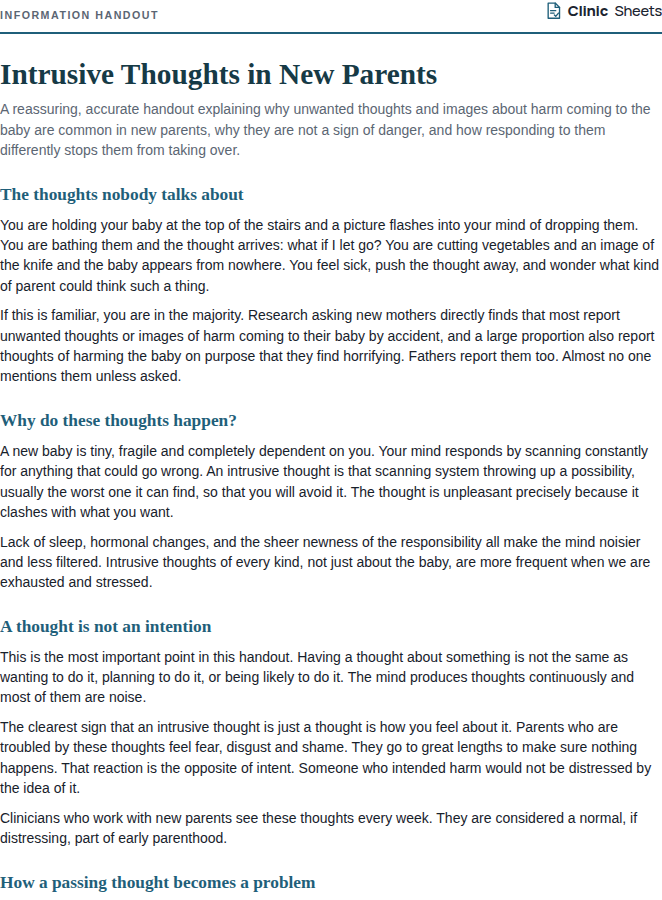
This handout normalises the experience, distinguishes the transient baby blues from a depressive or anxious episode, describes the common presentations (including intrusive thoughts of harm coming to the baby, which are frightening but common and are not a sign of risk to the infant), and outlines the maintaining cycles that CBT targets: withdrawal and loss of positive activity, self-critical thinking about being a bad parent, checking and reassurance seeking in anxiety, and sleep deprivation. It closes with what treatment involves and a brief note on urgent help.
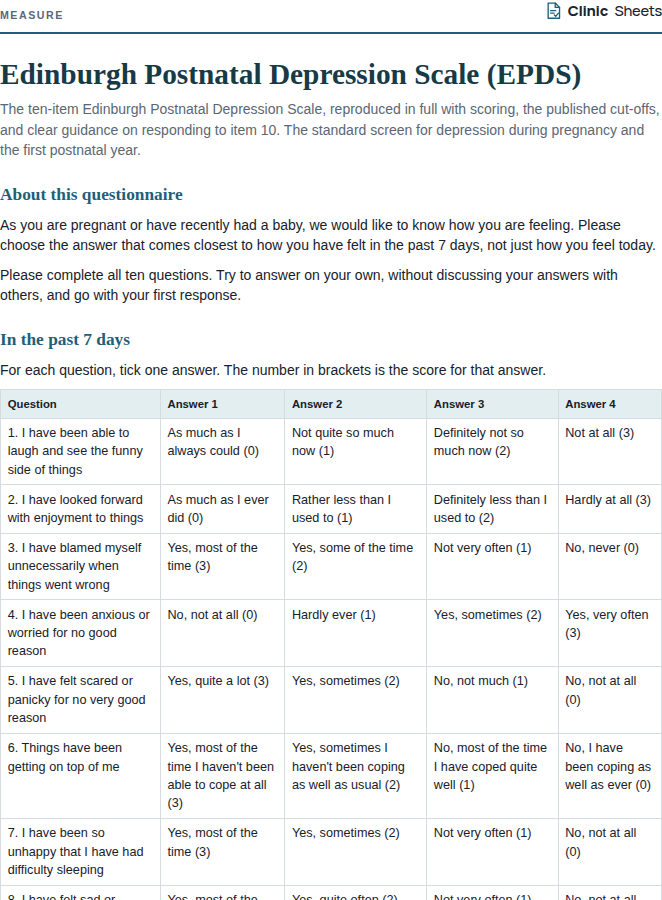
The professional version adds guidance on screening (EPDS, GAD-7), on differentiating intrusive thoughts in perinatal OCD from psychotic symptoms, on the role of partner and family, on the interaction between infant sleep and parental mood, and on adapting standard CBT for the practical constraints of the perinatal period: short sessions, baby present, and between-session tasks that fit around feeding and sleep. It also notes that suicide risk assessment should be routine, and that postpartum psychosis is a medical emergency.
How to use it
- Use in the first or second session, or give at the point of screening, once the client has described what they are experiencing. Read the section on intrusive thoughts together if relevant; many clients have not disclosed these and are relieved to learn they are common.
- Ask the client to mark which experiences fit them. Use their answers to begin a shared formulation of what is keeping the difficulty going.
- Discuss the difference between the adjustment everyone goes through and what they are experiencing, without minimising either. The goal is to reduce shame while confirming that treatment is warranted.
- Involve the partner or a support person where the client consents. Give them the handout too; it often changes how they respond.
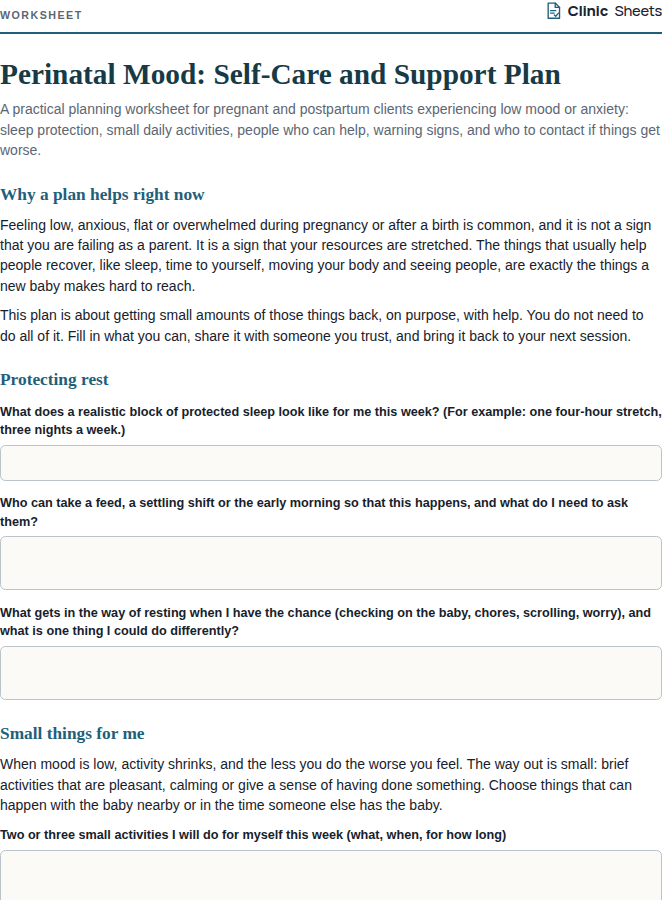
- Move to a specific intervention next: behavioural activation for low mood, worry or reassurance-seeking work for anxiety, or sleep planning where deprivation is driving symptoms.
References
- O'Hara, M. W., & Wisner, K. L. (2014). Perinatal mental illness: Definition, description and aetiology. Best Practice and Research Clinical Obstetrics and Gynaecology, 28(1), 3-12.
- Fairbrother, N., & Woody, S. R. (2008). New mothers' thoughts of harm related to the newborn. Archives of Women's Mental Health, 11(3), 221-229.
- Wenzel, A., & Kleiman, K. (2015). Cognitive Behavioral Therapy for Perinatal Distress. Routledge.
- Cox, J. L., Holden, J. M., & Sagovsky, R. (1987). Detection of postnatal depression: Development of the 10-item Edinburgh Postnatal Depression Scale. British Journal of Psychiatry, 150(6), 782-786.