Beating Procrastination: A Guide
A complete client guide to understanding and overcoming procrastination: why we put things off even when we know better, the role of mood, avoidance and perfectionism, and the skills that work, including breaking tasks down, starting small, implementation intentions, unhooking from thoughts, tolerating discomfort, and acting on values.
About this resource
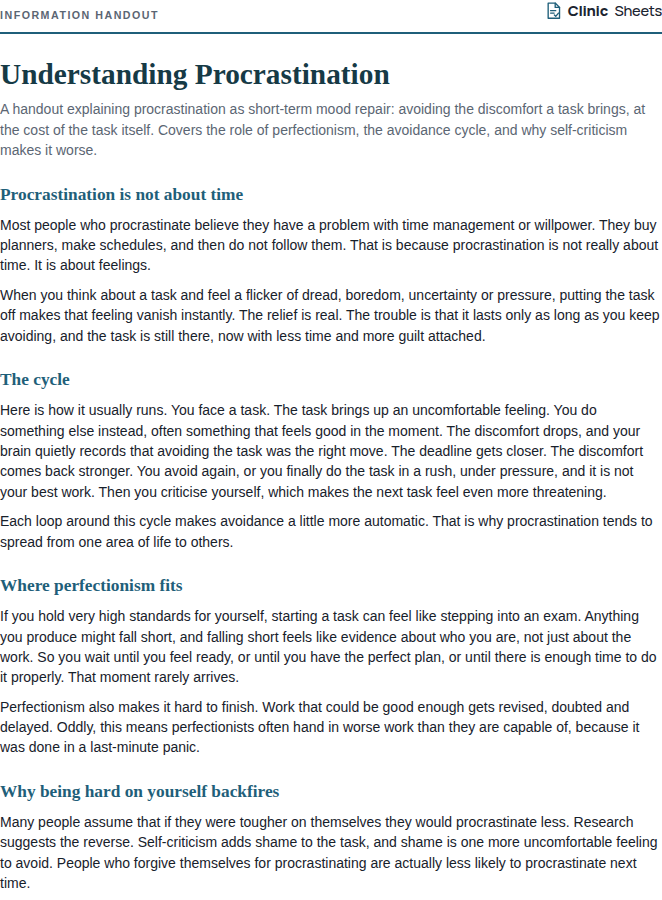
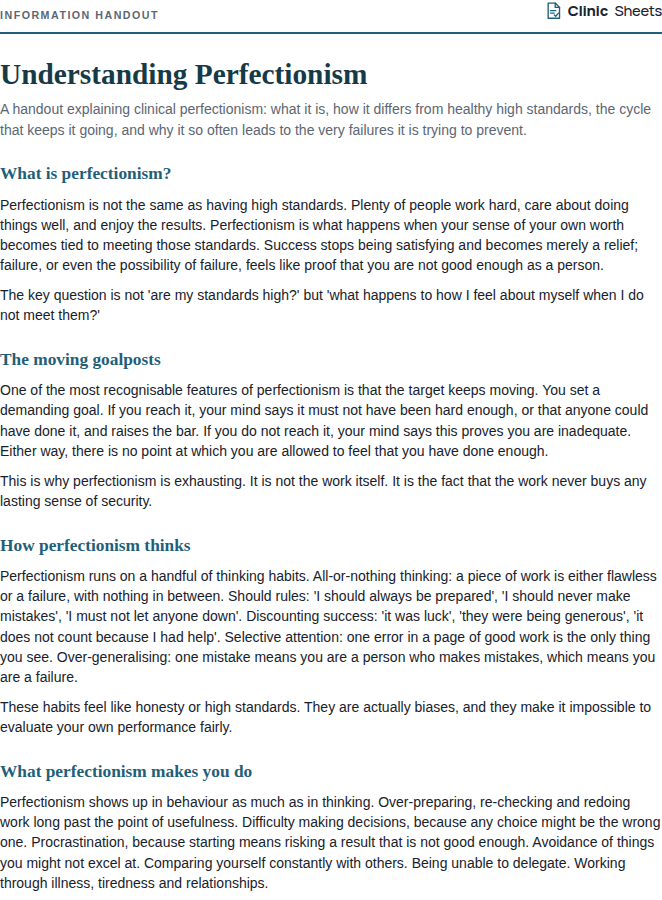
Procrastination is the voluntary delay of an intended action despite expecting to be worse off for the delay. It is common, costly and poorly explained by laziness or bad time management. Contemporary research, notably Sirois and Pychyl's work, frames procrastination as a problem of short-term mood repair: the task evokes an aversive feeling (anxiety, boredom, self-doubt, resentment), the person escapes the feeling by turning away from the task, and the relief reinforces the avoidance. Steel's meta-analytic review identifies task aversiveness, low self-efficacy, impulsiveness and distance of reward as the strongest predictors. Perfectionism, in which the standard for the task is so high that starting feels dangerous, is a common driver, and it is addressed here following Shafran, Egan and Wade's cognitive behavioural model.
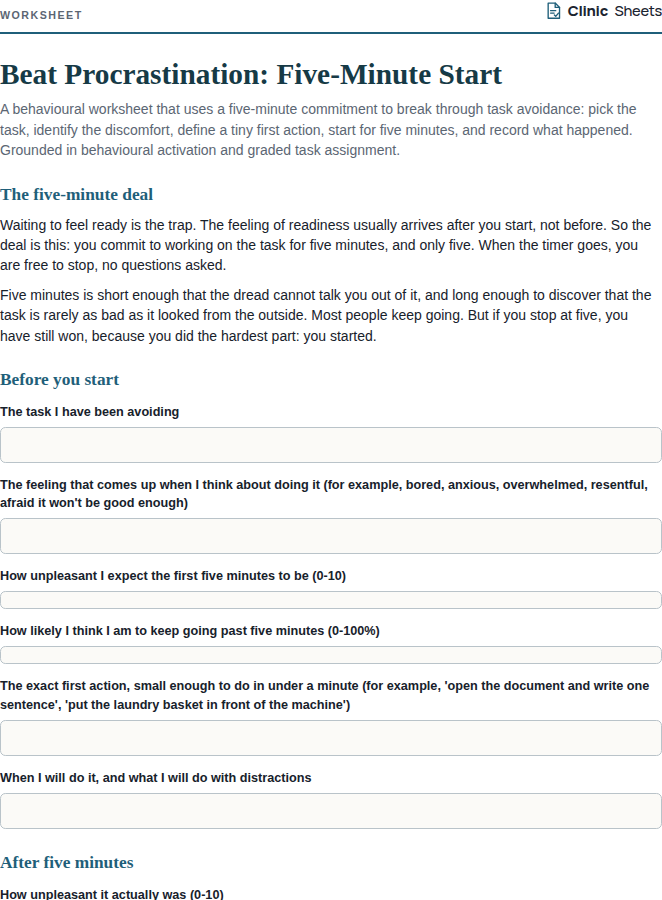
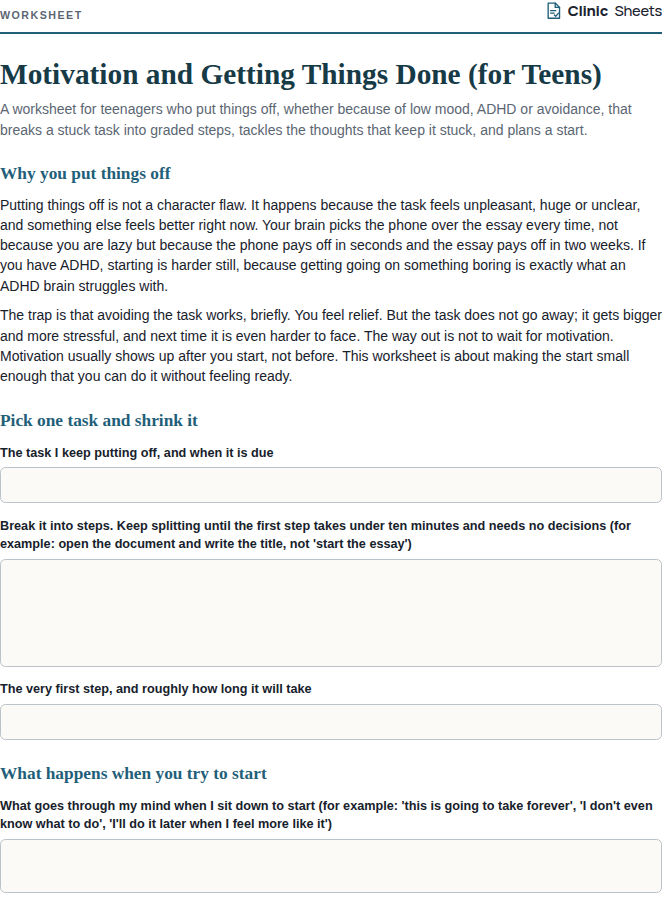
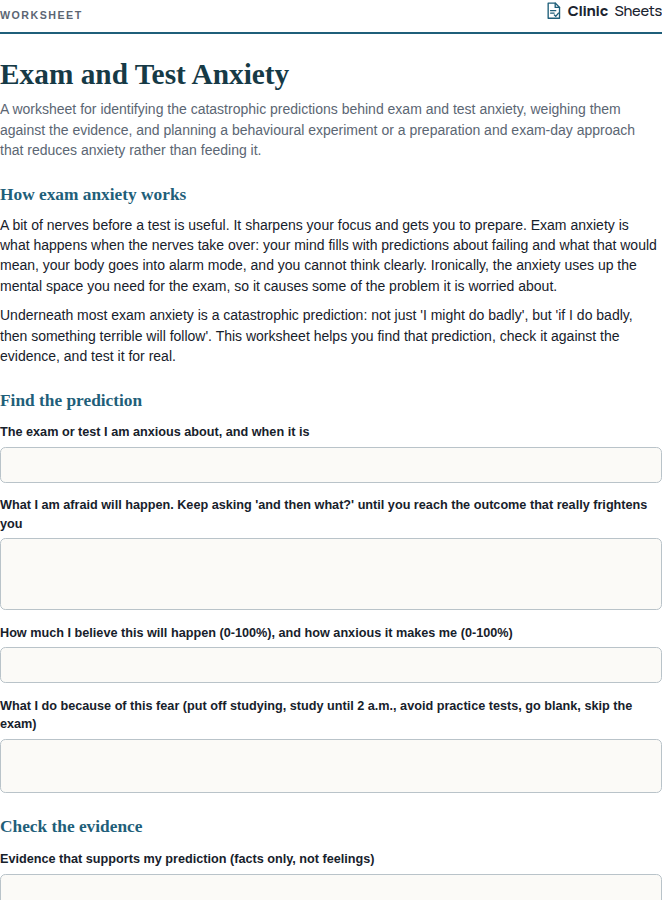
This guide combines cognitive behavioural and acceptance and commitment approaches. It begins with psychoeducation about the avoidance cycle, helps the client identify their personal procrastination pattern and the feelings the delay protects them from, and then works through the skills with the best evidence: breaking tasks into small concrete steps, using implementation intentions (Gollwitzer's if-then plans), lowering the standard to start, unhooking from the thoughts that justify delay, tolerating the discomfort of beginning, addressing perfectionism directly, and reconnecting the task to what the person values. It closes with self-compassion after lapses, since self-criticism after procrastination reliably predicts more procrastination.
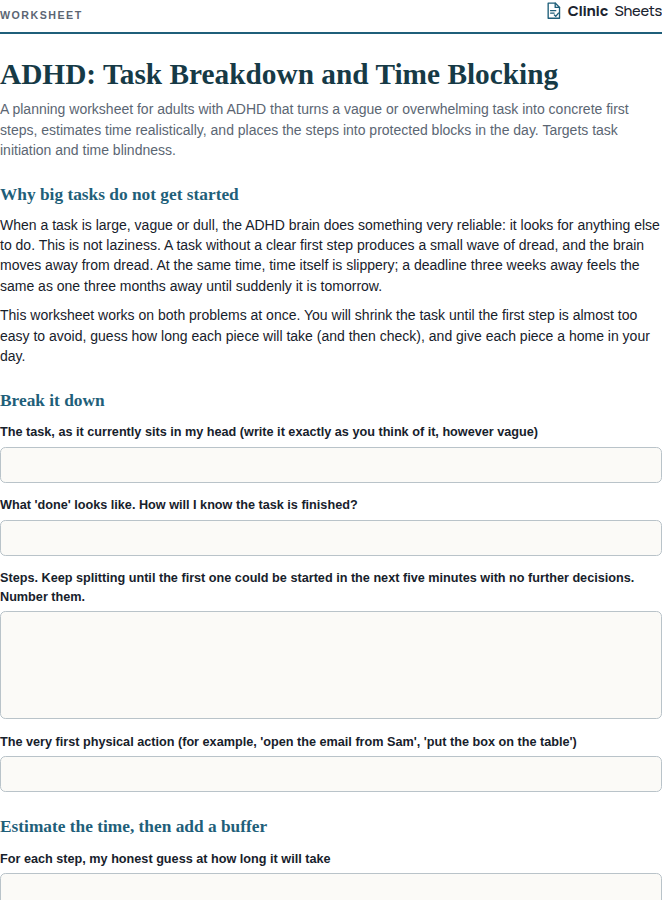
The professional version adds guidance on distinguishing procrastination from depression-related inactivity and ADHD-related executive difficulties, both of which benefit from different emphases, and on the common trap of clients who use the guide itself as a way of putting off the task.
How to use it
- Identify one or two current tasks the client is avoiding and use them as the running example throughout. Abstract discussion of procrastination is itself a form of procrastination.
- Assign the first two sections and the pattern-mapping fields, then review the feelings the client is avoiding; these determine which skills to emphasise.
- Work through task breakdown and implementation intentions in session, ending with a specific first step the client will complete before the next session.
- Introduce the perfectionism section where standards are driving delay, and the defusion and discomfort sections where thoughts and feelings are.
- Review each week what was done, not what was planned, and adjust step size. Treat non-completion as data about the step, not the client.
- Use the 'Keeping it going' section to build a routine that reduces the number of daily decisions about when to start.
References
- Sirois, F. M., & Pychyl, T. A. (2013). Procrastination and the priority of short-term mood regulation: Consequences for future self. Social and Personality Psychology Compass, 7(2), 115-127.
- Steel, P. (2007). The nature of procrastination: A meta-analytic and theoretical review of quintessential self-regulatory failure. Psychological Bulletin, 133(1), 65-94.
- Gollwitzer, P. M. (1999). Implementation intentions: Strong effects of simple plans. American Psychologist, 54(7), 493-503.
- Shafran, R., Egan, S., & Wade, T. (2018). Overcoming Perfectionism: A Self-Help Guide Using Scientific Supported Cognitive Behavioural Techniques (2nd ed.). Robinson.