Understanding Procrastination
A handout explaining procrastination as short-term mood repair: avoiding the discomfort a task brings, at the cost of the task itself. Covers the role of perfectionism, the avoidance cycle, and why self-criticism makes it worse.
About this resource
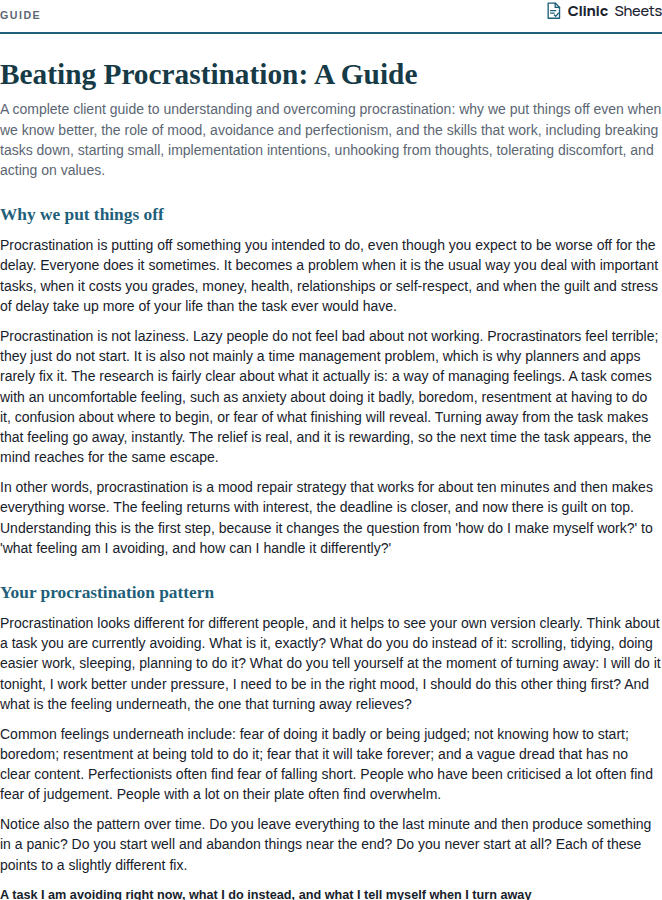
Procrastination is usually understood by the people who do it as a time management problem or a character flaw. The research points elsewhere. Procrastination is best understood as an emotion regulation strategy: the task produces an uncomfortable feeling (boredom, anxiety, uncertainty, resentment, the fear of not doing it well), and putting the task off makes that feeling go away immediately. The relief is real but brief, and it strengthens the avoidance for next time. This is the same negative reinforcement cycle that maintains anxiety disorders.
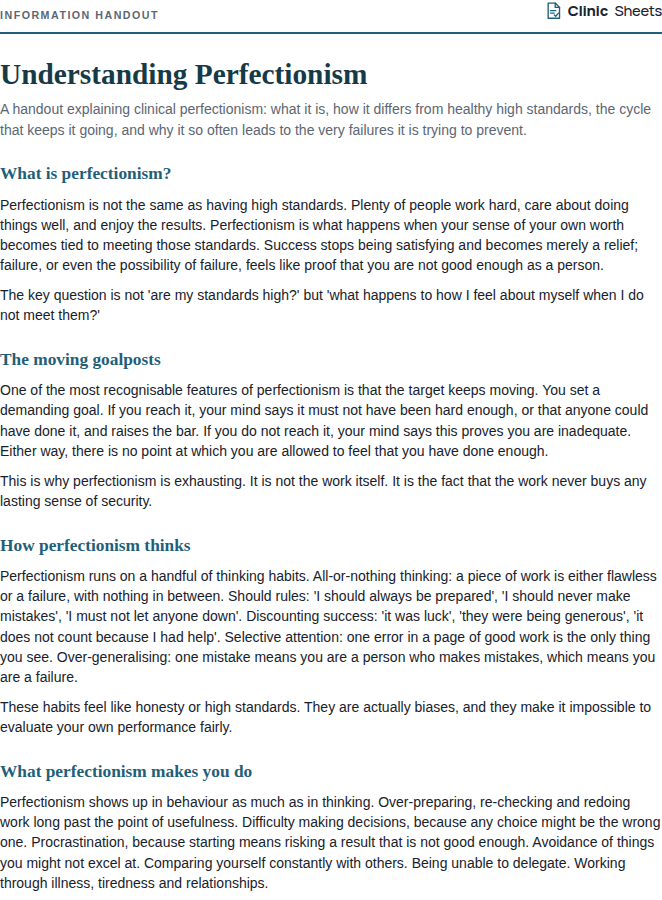
This handout explains that cycle in plain terms, describes the particular role of perfectionism (where the fear of producing something imperfect makes starting feel dangerous), and addresses the self-criticism that typically follows procrastination. Self-criticism is often assumed to be motivating, but the evidence suggests the opposite: shame adds to the aversive load of the task and increases avoidance, whereas self-forgiveness after procrastinating predicts less procrastination on the next occasion.
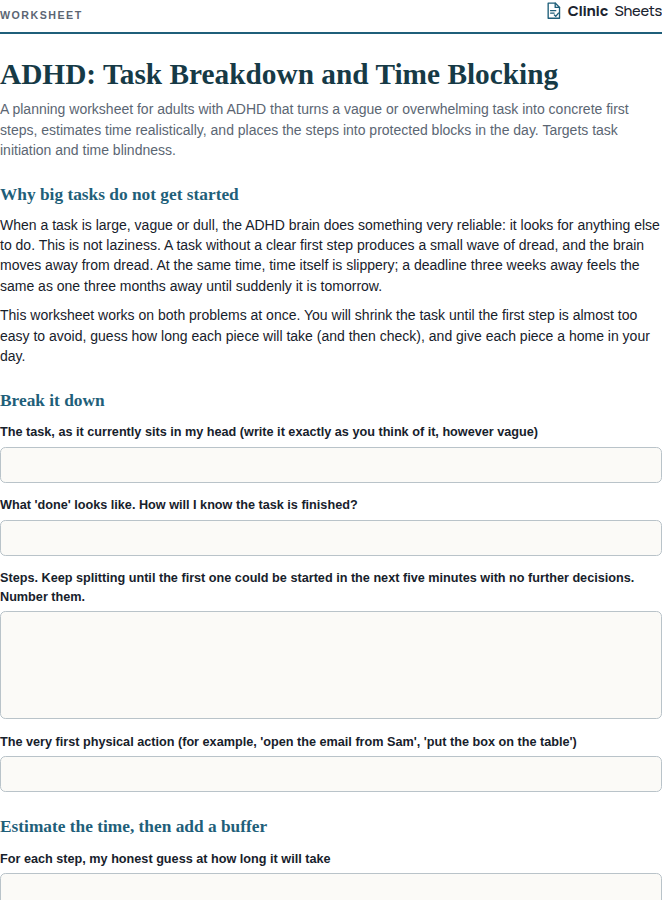
The professional version includes guidance on formulating a client's procrastination pattern (which tasks, which feelings, which avoidance activities, which beliefs about work and worth), and notes on distinguishing habitual procrastination from ADHD-related task initiation problems and from depression-related loss of drive, since the treatment emphasis differs in each.
How to use it
- Use early in work on procrastination or perfectionism, before introducing behavioural strategies, so that the client understands what they are changing and why.
- Ask the client to identify a specific recent example and trace it through the cycle described in the handout: task, feeling, avoidance, relief, consequence, self-criticism.
- Explore the beliefs that make the task feel threatening. With perfectionistic clients, look for standards that make starting feel like a test of worth.
- Discuss the self-criticism section explicitly. Many clients believe they need to be hard on themselves to get things done; invite them to test that belief.
- Follow with a behavioural resource such as the five-minute start worksheet.
References
- Sirois, F., & Pychyl, T. (2013). Procrastination and the priority of short-term mood regulation: Consequences for future self. Social and Personality Psychology Compass, 7(2), 115-127.
- Steel, P. (2007). The nature of procrastination: A meta-analytic and theoretical review of quintessential self-regulatory failure. Psychological Bulletin, 133(1), 65-94.
- Wohl, M. J. A., Pychyl, T. A., & Bennett, S. H. (2010). I forgive myself, now I can study: How self-forgiveness for procrastinating can reduce future procrastination. Personality and Individual Differences, 48(7), 803-808.
- Shafran, R., Egan, S., & Wade, T. (2018). Overcoming Perfectionism (2nd ed.). Robinson.