Calm Corner Plan
A worksheet for a child and parent to design a calm corner at home: a chosen place, the tools that go in it, the body clues that mean it is time to use it, and what happens afterwards. A regulation space, not a punishment.
About this resource
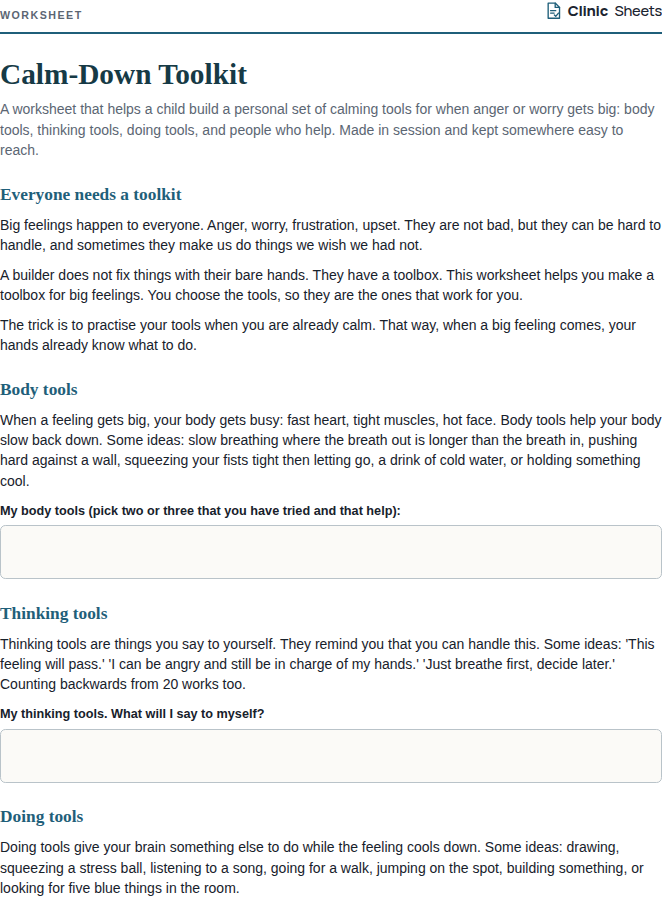
A calm corner (sometimes called a calm-down space or cosy corner) is a designated place where a child can go to settle a big feeling before it becomes a meltdown or an outburst. It is different from a time-out: the child is not sent there as a consequence, they choose to go (or are invited) as a way of helping their body calm, and they can come back when they are ready. Used this way it draws on the emotion regulation logic shared by CBT and DBT for young people: notice the feeling early, change the body's state with a concrete skill, and then, once calm, deal with whatever the problem was. Siegel and Bryson's popular work describes the same idea: a child cannot reason, listen or problem-solve while their emotional brain is flooded, so the first job is to help the body settle.
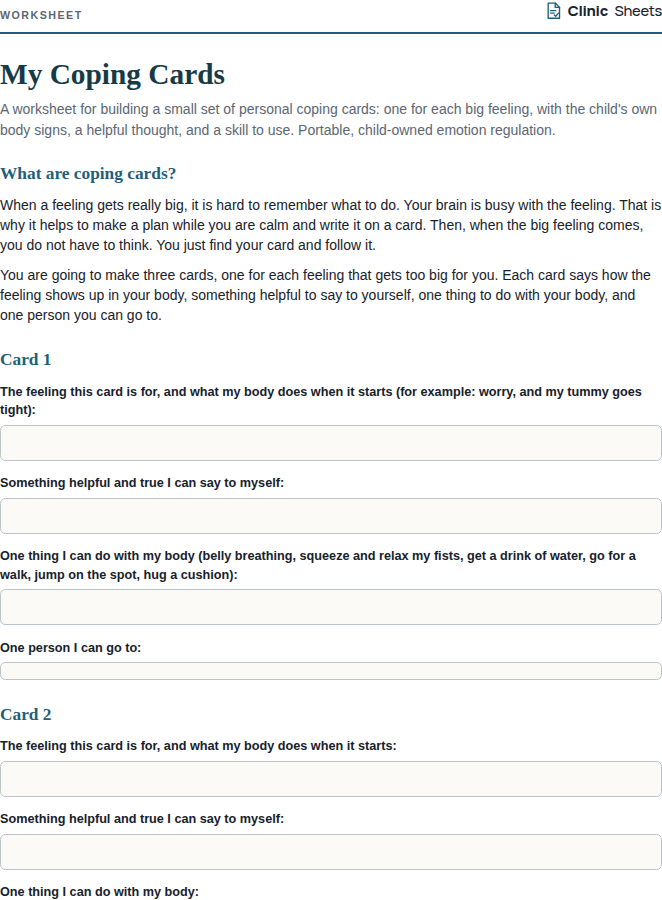
This worksheet walks the child and parent through building the corner together. The child chooses the spot and the tools that actually help them (a blanket, a fidget, headphones, a book, a breathing card, a stuffed animal), records the body clues that signal it is time to go there, and agrees with the parent how it will work: who can suggest it, what the parent will and will not do, and what happens afterwards. Writing the plan together is what makes the corner the child's own rather than something imposed.
The professional version notes that the corner works best when it is introduced and practised while the child is calm, when the parent models using their own calm strategy, and when it is never used as a threat. It also addresses common problems: the child refusing to go when upset (which usually means the plan is being used too late), the corner becoming a place to avoid tasks, and siblings using it at the same time.
How to use it
- Explain to the child and parent that a calm corner is a helping place, not a naughty spot. It is where the body goes to settle so the thinking brain can come back online.
- Complete the worksheet with the child leading: where the corner will be, what goes in it, what it will be called. Keep the parent's role to suggestions and practicalities.
- Link the corner to early body clues (see Body Clues: Where Do I Feel My Feelings?). Agree the signal, for example 'when my fists squeeze, that is my sign'.
- Agree the rules with both: the child can go whenever they need; the parent can invite ('would the calm corner help?') but not order; nobody talks about the problem until the child is back and calm.
- Ask the family to practise using the corner two or three times in the week while calm, as a rehearsal. Review at the next session how it went in a real moment and adjust the tools or the timing.
References
- Siegel, D. J., & Bryson, T. P. (2011). The Whole-Brain Child: 12 Revolutionary Strategies to Nurture Your Child's Developing Mind. Delacorte Press.
- Linehan, M. M. (2015). DBT Skills Training Manual (2nd ed.). Guilford Press.
- Greene, R. W. (2014). The Explosive Child: A New Approach for Understanding and Parenting Easily Frustrated, Chronically Inflexible Children (5th ed.). Harper.