My Coping Cards
A worksheet for building a small set of personal coping cards: one for each big feeling, with the child's own body signs, a helpful thought, and a skill to use. Portable, child-owned emotion regulation.
About this resource
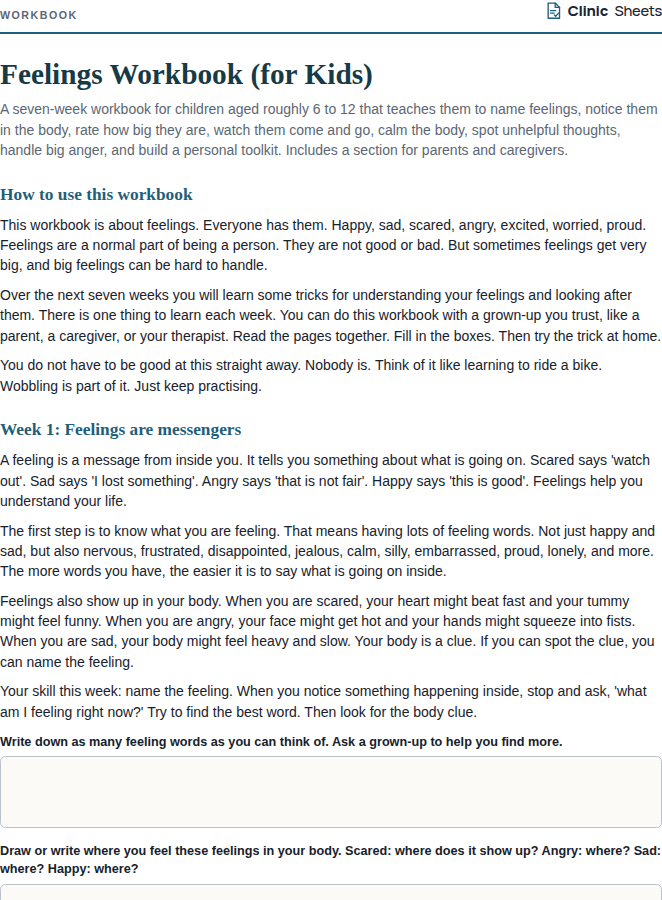
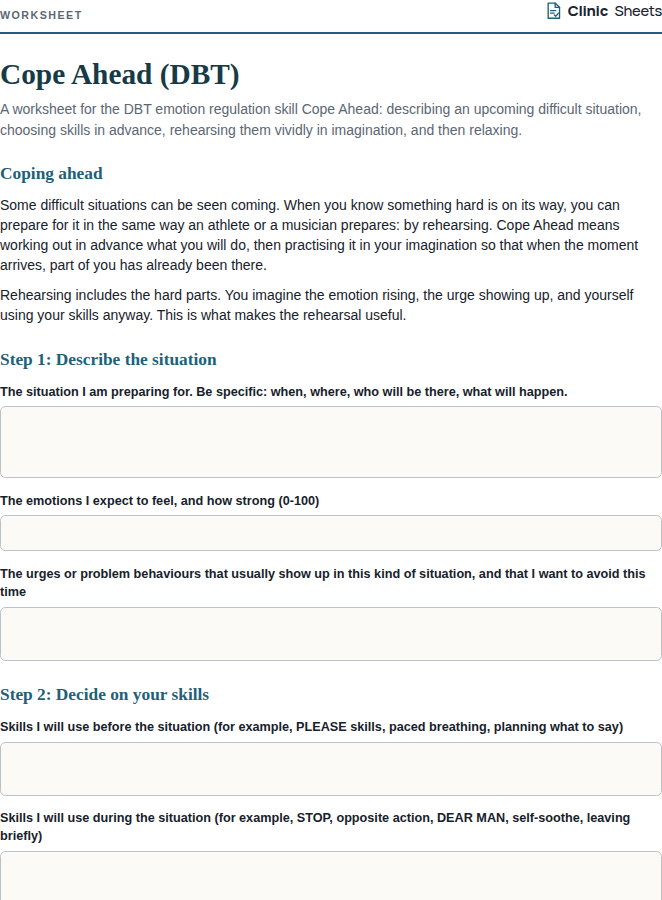
Coping cards are a long-standing CBT tool: a brief written reminder, prepared in advance when calm, of what to think and do when a difficult moment arrives. Judith Beck describes them as a way of making therapy learning available outside the session. For children the format is especially useful because, in the middle of a big feeling, the capacity to remember a plan drops sharply. A card the child made themselves, in their own words, with a picture if they like, is easier to reach for than an instruction from an adult. The structure of each card draws on both CBT (a helpful thought to replace an unhelpful one) and DBT-informed skills for children (a concrete action to change the body's state or to tolerate the feeling until it passes).
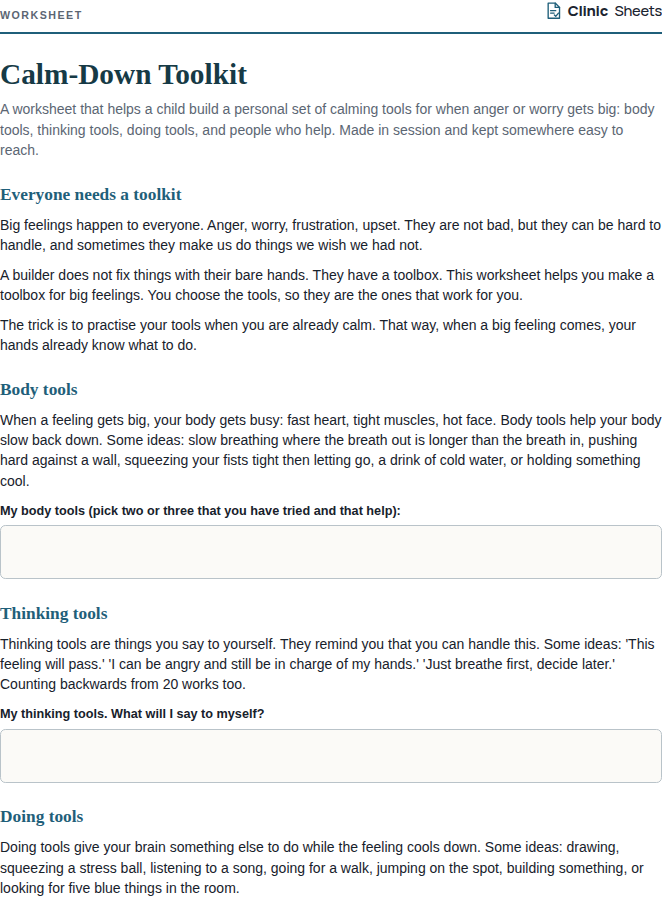
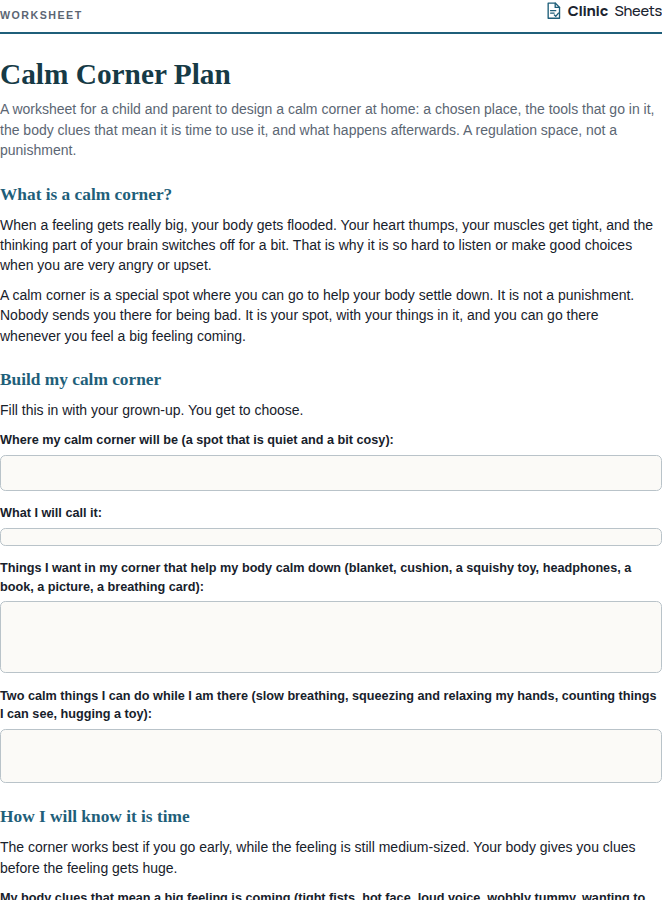
This worksheet guides the child to make three cards, one each for a feeling they struggle with (most often worry, anger and sadness, but the child chooses). Each card has four parts: the name of the feeling and how it shows up in the body, a helpful thing to say to myself, one thing I can do with my body, and one person I can go to. The child then writes out or draws the cards on real card stock, and the family agrees where the cards will live (backpack, bedside, kitchen fridge).
The professional version adds guidance on keeping the helpful thought believable rather than falsely cheerful, on choosing body skills that have already been practised in session (belly breathing, muscle squeeze and release, a cold drink of water, movement), and on reviewing the cards after a real-life use so they can be edited. It also notes that coping cards work best when the parent knows what is on them and can prompt the card rather than deliver a lecture.
How to use it
- Ask the child which feelings get too big for them. Pick up to three. If the child names a situation rather than a feeling ('when my brother annoys me'), help them name the feeling underneath.
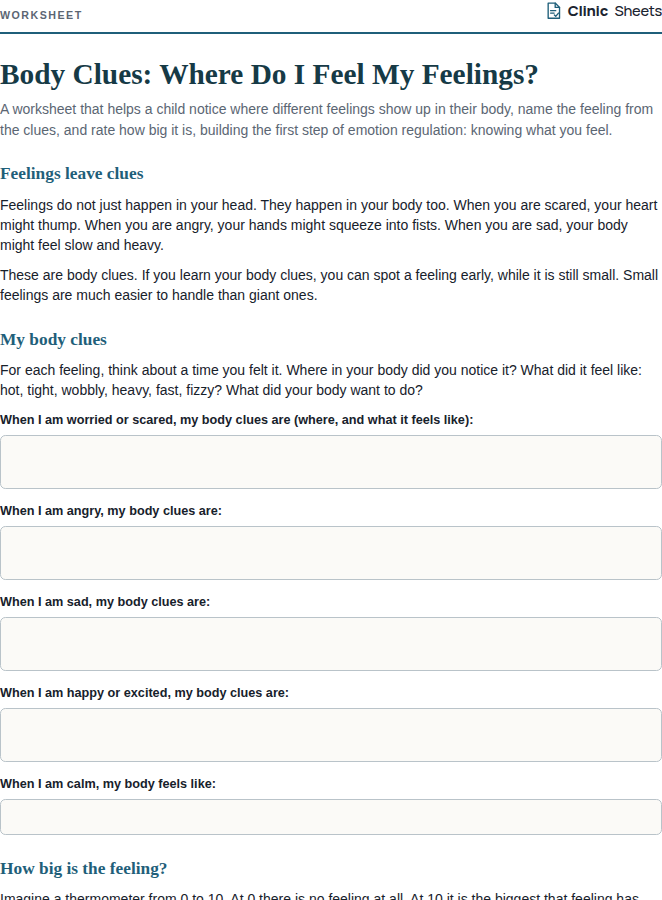
- For each feeling, first map the body signs, since those are the cue for reaching for the card. Then work on a helpful thought together. Test it: does the child believe it, at least a bit? 'I can handle this even if it's hard' usually beats 'Everything is fine'.
- Choose one body skill per card, drawn from skills the child has already practised. Rehearse it in session so the card is a reminder, not a new instruction.
- Have the child write or draw the final cards on index cards. Decorating them increases ownership. Agree where each card will be kept and who else knows about them.
- Review at the next session: which cards were used, whether the helpful thought held up, and what needs changing. Cards should evolve as the child's skills grow.
References
- Beck, J. S. (2020). Cognitive Behavior Therapy: Basics and Beyond (3rd ed.). Guilford Press.
- Friedberg, R. D., & McClure, J. M. (2015). Clinical Practice of Cognitive Therapy with Children and Adolescents: The Nuts and Bolts (2nd ed.). Guilford Press.
- Linehan, M. M. (2015). DBT Skills Training Manual (2nd ed.). Guilford Press.