Managing Anger (for Teens)
A worksheet for teenagers that walks back through a recent angry outburst as a chain of triggers, thoughts, body signals and actions, then plans specific skills to interrupt the chain earlier next time.
About this resource
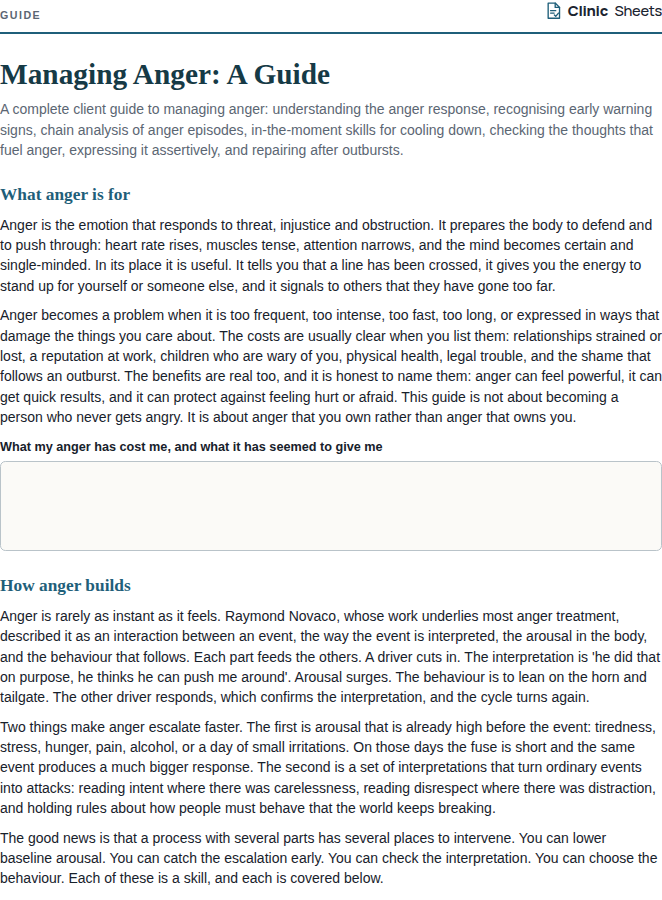
Anger in adolescence is often experienced as instant: the trigger happens and the explosion follows with nothing in between. In practice there is always a chain, and the CBT and DBT approaches to anger both work by slowing that chain down enough for the young person to see the links and find a place to intervene. Cognitive work targets the hostile interpretations that turn a neutral event into a provocation; DBT emotion regulation skills target the physiological surge and the impulsive action that follows.
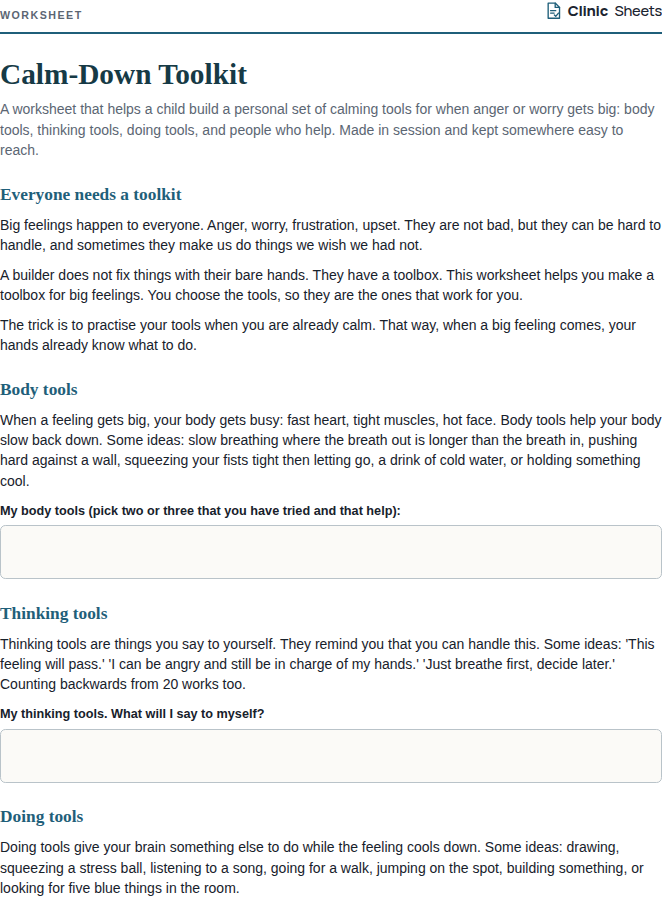
This worksheet adapts the DBT chain analysis for adolescent use. The young person reconstructs one recent incident from vulnerability factors through trigger, interpretation, body signals, urge, action and consequences, then identifies the earliest point at which they noticed something and a skill they could use there. A short skills section introduces the DBT distress tolerance and emotion regulation tools most useful in the heat of the moment: changing body temperature, paced breathing, brief time-out, and opposite action.
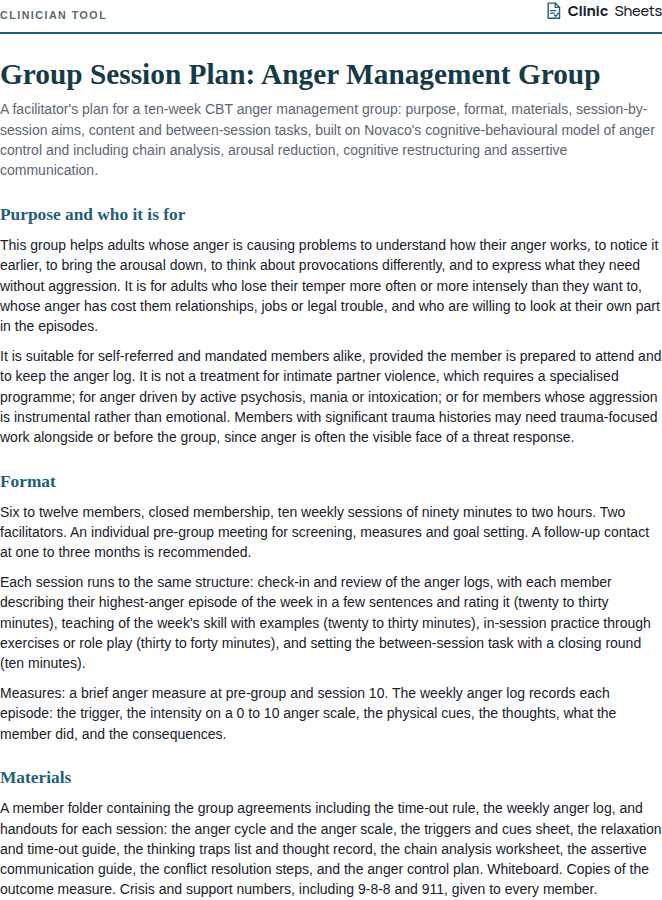
The professional version adds guidance on completing a chain analysis collaboratively rather than as an interrogation, on distinguishing reactive anger from instrumental aggression, and on involving parents where the cycle is a family one.
How to use it
- Choose one recent, specific incident with the young person. Not the worst one; a typical one that ended with something they regret.
- Complete the chain together, working backwards from the action if that is easier. Stay curious and non-judgemental; the point is to understand, not to assign blame.
- Look together for the earliest link the young person could have noticed. This is usually a body signal or a hot thought, well before the action.
- Teach and rehearse one or two skills that fit that link. Practise them in session while calm; skills used under pressure need to be over-learned.
- Set a between-session task of noticing the early warning signs, even if the skill is not yet used. Review with a fresh chain next session.
References
- Rathus, J. H., & Miller, A. L. (2015). DBT Skills Manual for Adolescents. Guilford Press.
- Sukhodolsky, D. G., & Scahill, L. (2012). Cognitive-Behavioral Therapy for Anger and Aggression in Children. Guilford Press.
- Linehan, M. M. (2015). DBT Skills Training Manual (2nd ed.). Guilford Press.