Coping with Parental Separation (for Teens)
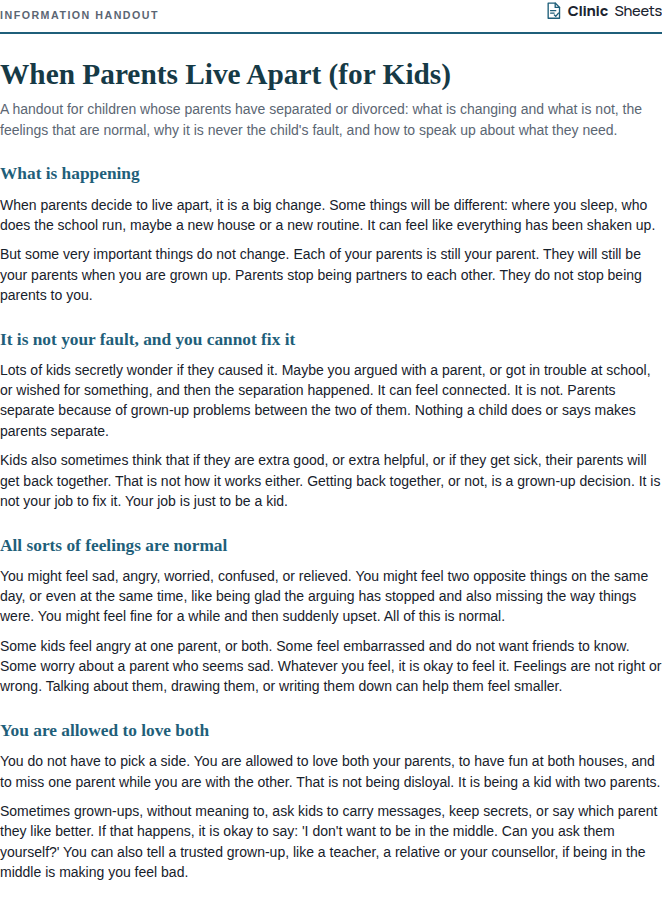
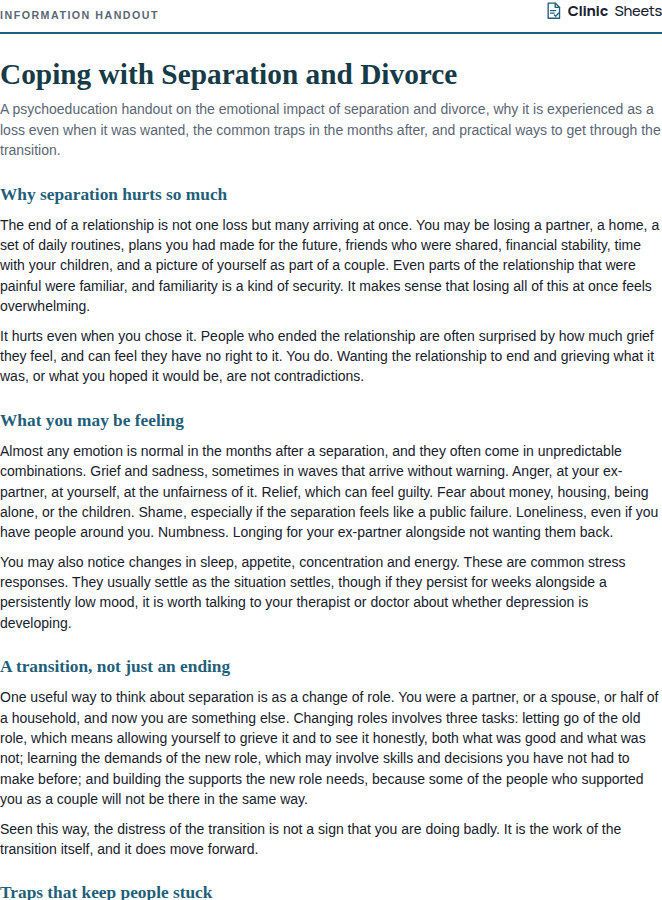
A handout for adolescents whose parents are separating or divorcing, covering common reactions, what research says about how young people adjust, the trap of being caught in the middle, and practical ways to cope. CBT-informed psychoeducation.
About this resource
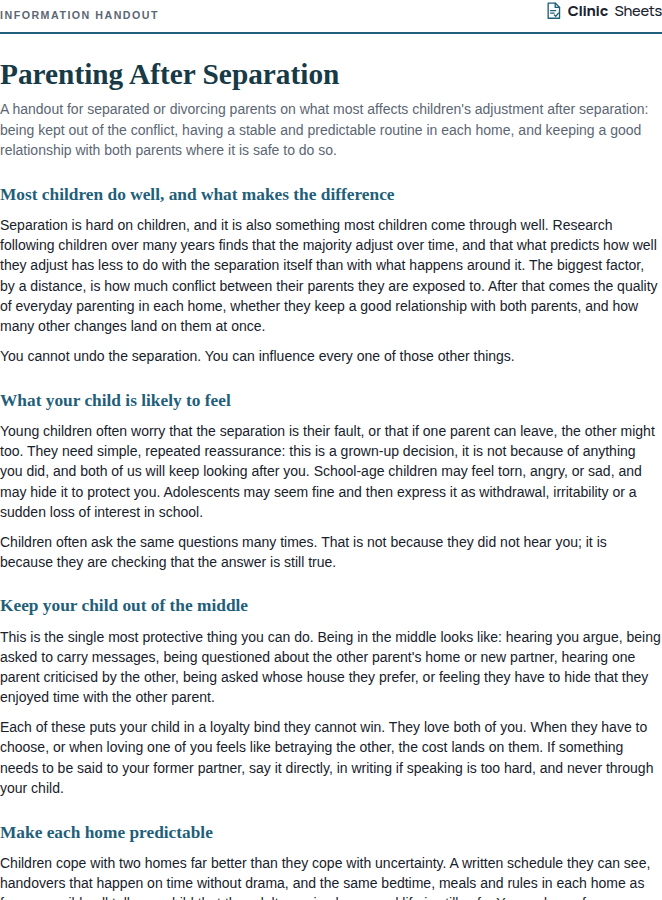
Parental separation is one of the most common major life transitions adolescents face. Research summarised by Amato (2000) and by Kelly and Emery (2003) is consistent: most young people adjust well over time, but the period around the separation is genuinely stressful, and certain factors make it harder. The strongest of these is ongoing conflict between parents, particularly when the young person is drawn into it as a messenger, confidant or ally. Loss of contact with a parent, repeated moves, and financial strain also raise the risk of difficulty.
Adolescents often carry unspoken beliefs about the separation that maintain distress: that they caused it, that they should be able to fix it, that they must choose a side, or that their own future relationships are doomed. These beliefs are rarely voiced unless asked about. This handout names them plainly, presents the evidence that most teens adjust, and offers concrete guidance on staying out of the middle, managing practical changes, and keeping their own life going.
The professional version adds guidance on assessing exposure to interparental conflict, on the teen who has become a parent's emotional support, and on when a referral to family mediation or a separate parent session is warranted.
How to use it
- Use once the teen has told you their version of what is happening. Do not assume the parents' account matches it.
- Ask directly about the beliefs in the 'Things teens often think' section. Many will not volunteer that they feel responsible unless asked.
- Screen for loyalty binds: being asked to carry messages, report on the other household, or comfort a distressed parent. Where present, this is the priority for intervention, often including a conversation with the parents.
- Use the reflection fields to identify what the teen can and cannot control, and build a short plan for the controllable items.
- Follow with a general stress-management or emotion-regulation resource if the teen's distress is high, and monitor mood over the following weeks.
References
- Amato, P. R. (2000). The consequences of divorce for adults and children. Journal of Marriage and Family, 62(4), 1269-1287.
- Kelly, J. B., & Emery, R. E. (2003). Children's adjustment following divorce: Risk and resilience perspectives. Family Relations, 52(4), 352-362.
- Grych, J. H., & Fincham, F. D. (1990). Marital conflict and children's adjustment: A cognitive-contextual framework. Psychological Bulletin, 108(2), 267-290.