Parenting After Separation
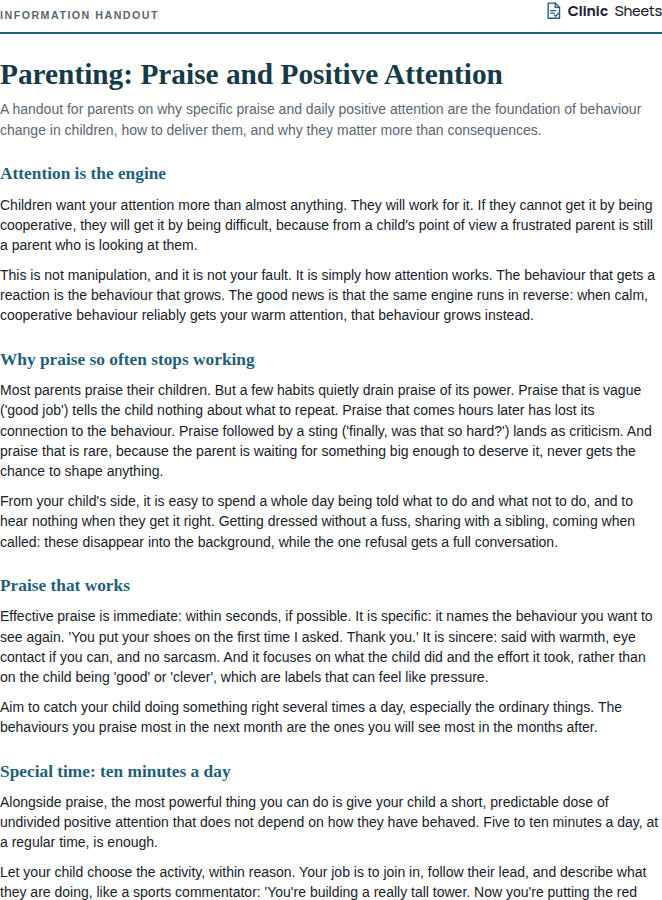
A handout for separated or divorcing parents on what most affects children's adjustment after separation: being kept out of the conflict, having a stable and predictable routine in each home, and keeping a good relationship with both parents where it is safe to do so.
About this resource
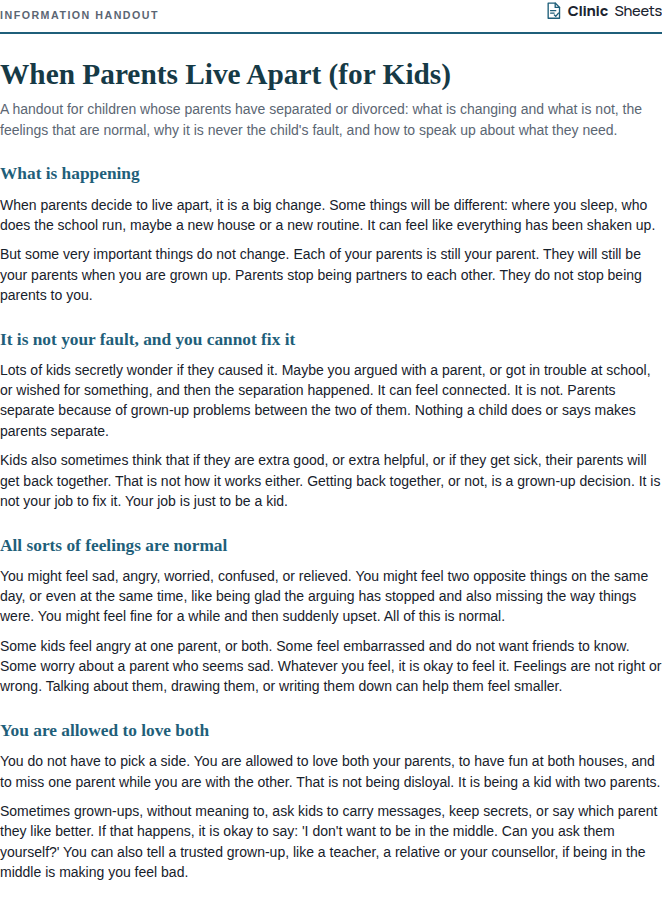
Decades of research on children of divorce, summarised in the meta-analytic work of Amato and in the risk and resilience reviews of Kelly and Emery, converge on a consistent finding: most children adjust well over time, and the factors that predict poorer outcomes are largely within parents' control. The strongest of these is exposure to ongoing parental conflict, particularly conflict that places the child in the middle. Others include the quality of parenting in each home, the child's continued relationship with both parents, financial stability, and the number of additional changes (moves, school changes, new partners) the child has to absorb at once.
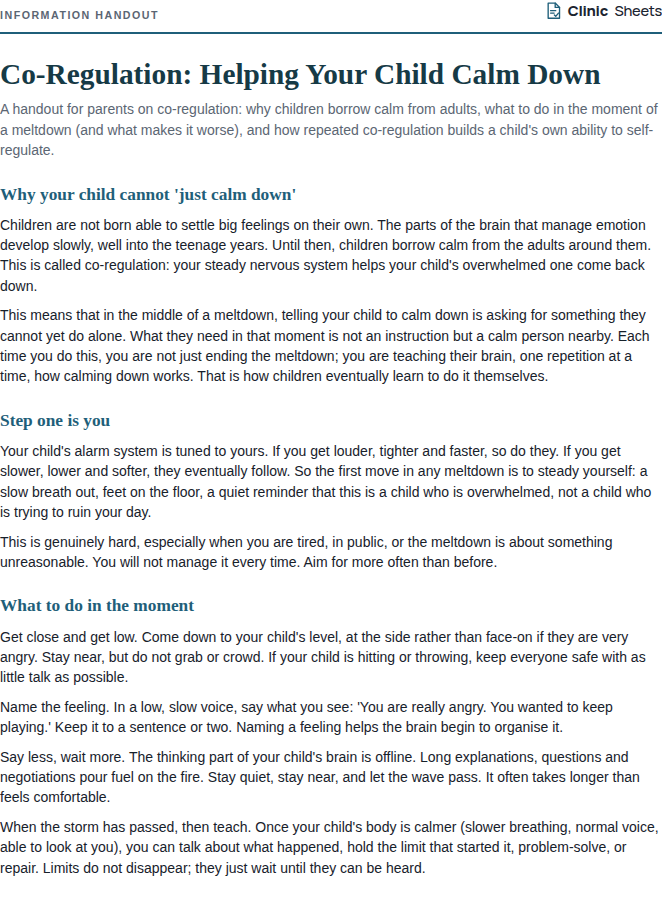
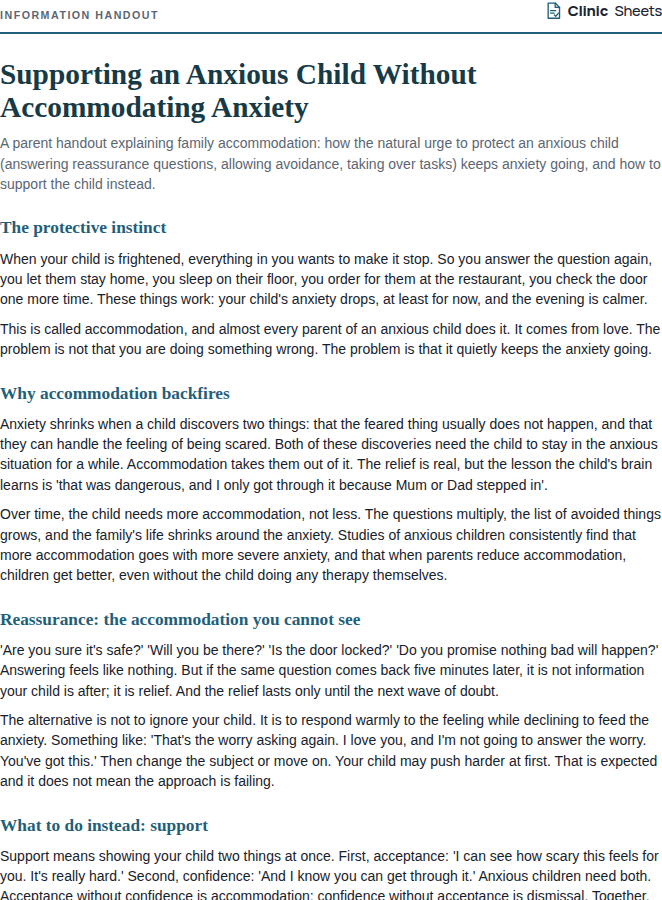
This handout translates that evidence into practical guidance for parents in the early period after separation. It describes what children typically feel and need at different ages, sets out the behaviours that protect children (a simple, honest explanation; a predictable schedule; consistent routines in both homes; and a business-like co-parenting relationship) and the behaviours that harm them (arguing in front of them, using them as messengers, asking them to take sides, criticising the other parent in their hearing). It ends with a short reflection section.
The professional version adds notes on when the guidance to support the child's relationship with the other parent does not apply, namely where there is family violence, abuse or serious safety concern, and on the difference between high-conflict and low-conflict co-parenting, including the 'parallel parenting' arrangement that suits families who cannot yet cooperate. It also flags the parent's own grief and adjustment as a legitimate focus of therapy.
How to use it
- Use with a parent early after separation, or with a parent whose child is showing distress in the context of ongoing parental conflict.
- Read the section on conflict together and ask the parent, without judgement, which of the listed behaviours have happened in their family. Most parents will recognise some. Normalise this while being clear about the effect.
- Help the parent separate the co-parenting relationship from the former couple relationship. The goal is a business-like arrangement focused on the children, not friendship and not resolution of the past.
- Where conflict is high, work toward parallel parenting: minimal direct contact, written communication about logistics only, consistent handovers, and each parent running their own home without commentary on the other.
- Screen for family violence and safety concerns before recommending that the parent support the child's relationship with the other parent. Where there are concerns, the guidance changes and appropriate referral is needed.
References
- Amato, P. R. (2001). Children of divorce in the 1990s: An update of the Amato and Keith (1991) meta-analysis. Journal of Family Psychology, 15(3), 355-370.
- Kelly, J. B., & Emery, R. E. (2003). Children's adjustment following divorce: Risk and resilience perspectives. Family Relations, 52(4), 352-362.
- Emery, R. E. (2016). Two Homes, One Childhood: A Parenting Plan to Last a Lifetime. Avery.
- Pedro-Carroll, J. (2010). Putting Children First: Proven Parenting Strategies for Helping Children Thrive Through Divorce. Avery.