Dental Anxiety
A handout on dental anxiety and dental phobia: the common fears behind it (pain, loss of control, gagging, needles, embarrassment), the cycle of avoidance and worsening dental health, and a graded exposure plan built with the dental team. For adults.
About this resource
Dental anxiety is widespread, and a substantial minority of adults avoid dental care entirely because of it. The fear has several common threads: anticipated pain, the helplessness of lying back with someone working in your mouth, fear of needles, fear of gagging or choking, embarrassment about the state of one's teeth after years of avoidance, and sometimes memories of a rough experience in childhood. Avoidance produces a vicious cycle: the longer dental care is put off, the more deterioration accumulates, the more likely it is that the eventual visit will be long and uncomfortable, and the more the fear is confirmed.
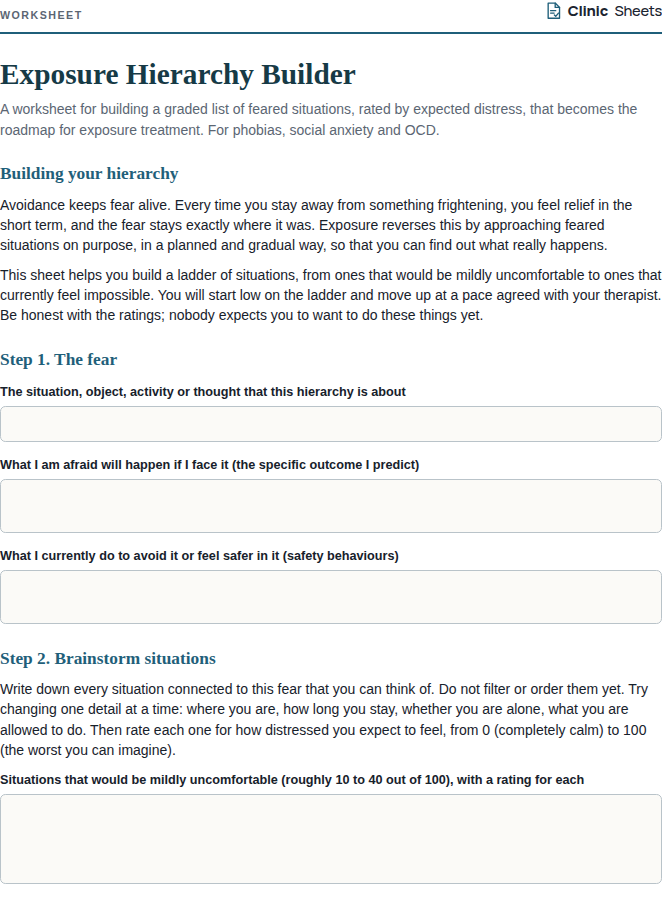
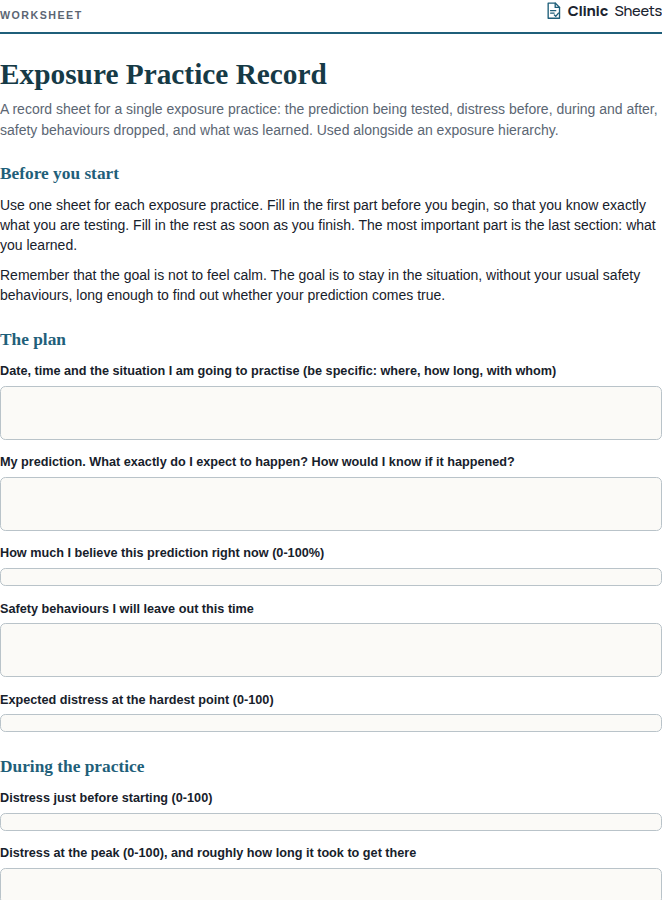
This handout applies the cognitive-behavioural model of specific phobia to the dental setting. It normalises the fear, explains the avoidance cycle, and lays out a graded exposure approach that begins with non-treatment visits and builds toward a full appointment, with the dentist as a collaborator. It emphasises control and predictability, which reduce dental fear: agreed stop signals, explanation before each step, and short first appointments. Where needle fear with fainting is present, it points to applied tension.
The professional version adds guidance on liaising with a dentist who is willing to work in a graded way, on the cognitive targets most often relevant (catastrophic predictions about pain and about being judged), and on the interaction between dental phobia and embarrassment-driven avoidance.
How to use it
- Identify the specific fears. Pain, needles, gagging, loss of control and embarrassment call for different steps in the hierarchy, and a client may have several.
- Ask about the history of avoidance and the current state of dental health. Shame about neglected teeth is a frequent and under-recognised barrier; address it directly and without judgement.
- Use the handout to introduce the avoidance cycle and the graded approach. Then help the client identify or contact a dentist who is willing to do a no-treatment first visit and to agree on a stop signal.
- Build the hierarchy in the reflection section, from phoning the practice through to a check-up and, later, treatment. Rehearse the stop signal and the questions the client will ask.
- If needle fear with faintness is present, teach applied tension before the injection step. If the panic sensations of lying back are central, add interoceptive exposure.
References
- Öst, L.-G., & Skaret, E. (Eds.). (2013). Cognitive Behavioral Therapy for Dental Phobia and Anxiety. Wiley-Blackwell.
- Armfield, J. M., & Heaton, L. J. (2013). Management of fear and anxiety in the dental clinic: A review. Australian Dental Journal, 58(4), 390-407.
- Abramowitz, J. S., Deacon, B. J., & Whiteside, S. P. H. (2019). Exposure Therapy for Anxiety: Principles and Practice (2nd ed.). Guilford Press.