Diaphragmatic Breathing
A guide to slow, belly-based breathing that uses the diaphragm rather than the upper chest, to reduce over-breathing and lower the physical arousal that accompanies anxiety and panic. Includes a practice routine and log.
About this resource
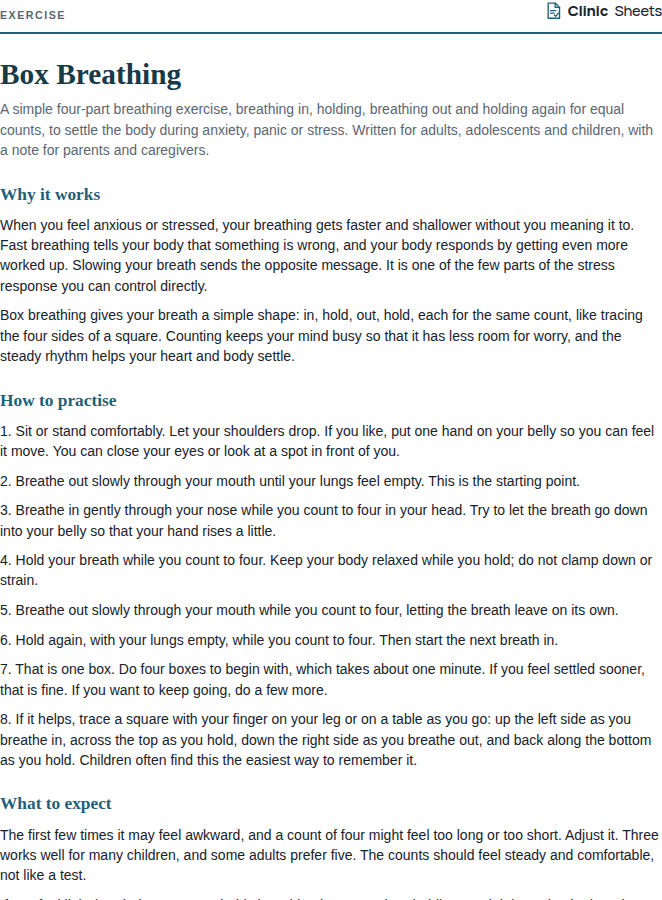
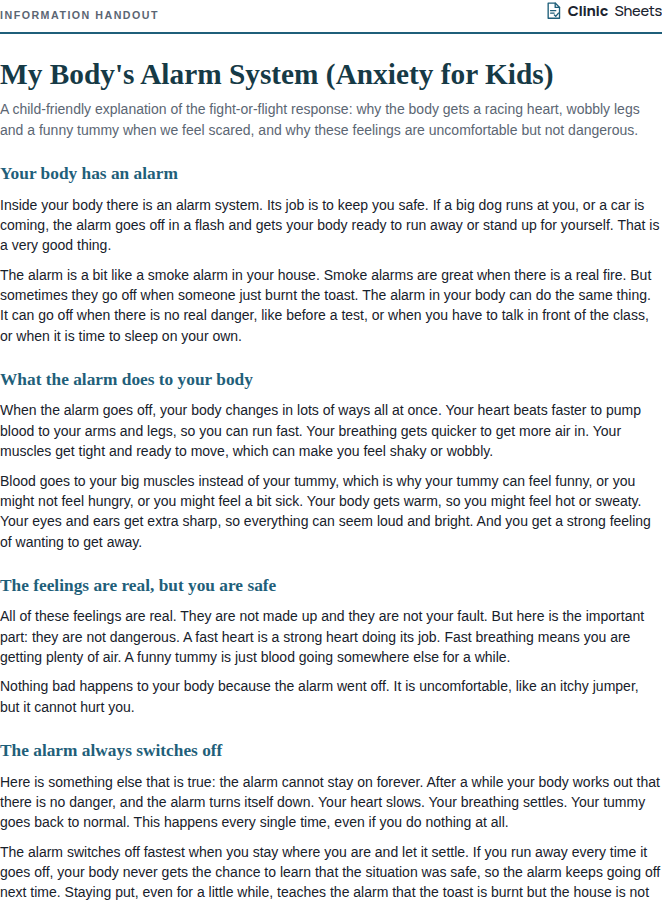
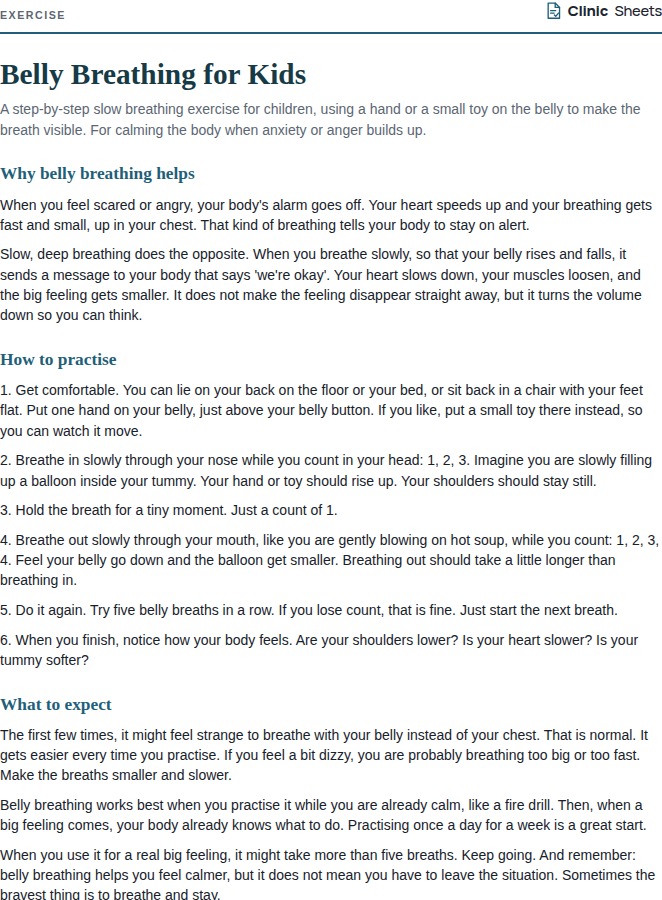
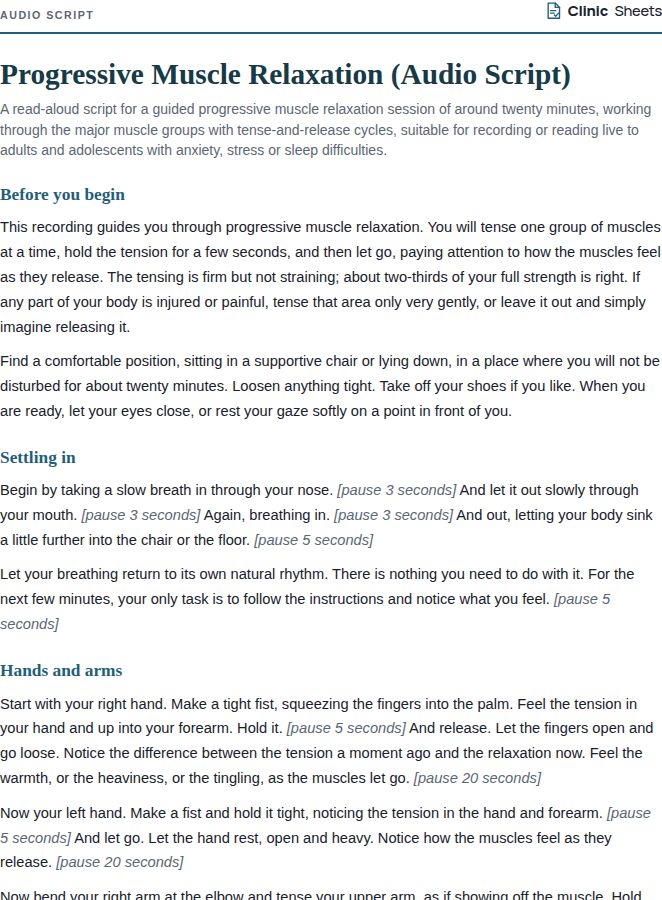
Diaphragmatic breathing, sometimes called abdominal or belly breathing, is the foundational breathing retraining skill in CBT for anxiety. Under stress, most people shift to rapid, shallow breathing from the upper chest, using the accessory muscles of the neck and shoulders. This pattern is inefficient, contributes to chest tightness and muscle tension, and in some people leads to chronic mild hyperventilation, which lowers blood carbon dioxide and produces dizziness, tingling, unreality and breathlessness: the very sensations that drive panic. Retraining the breath to use the diaphragm, at a slower rate, reverses this pattern and engages the parasympathetic nervous system.
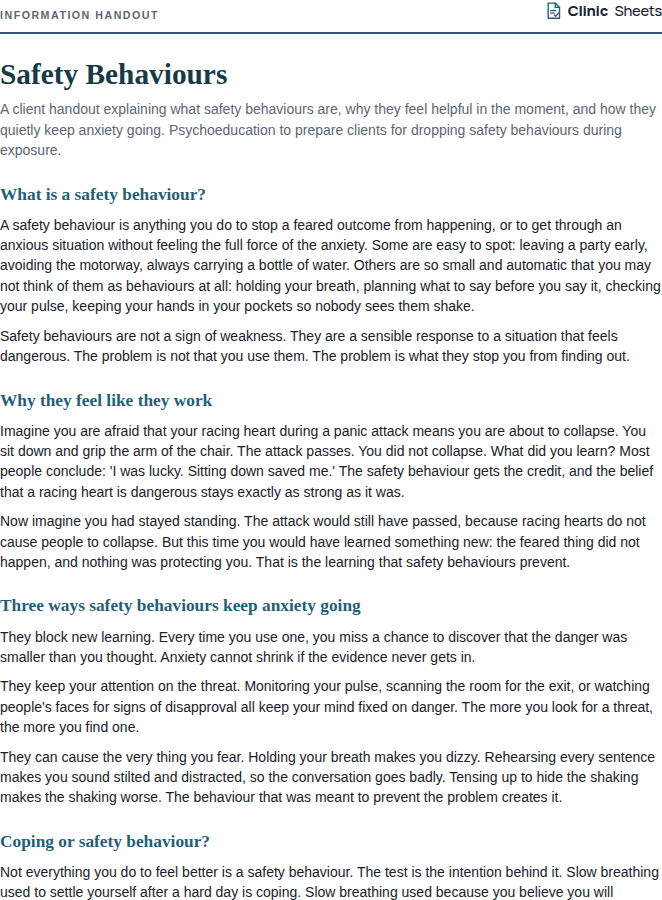
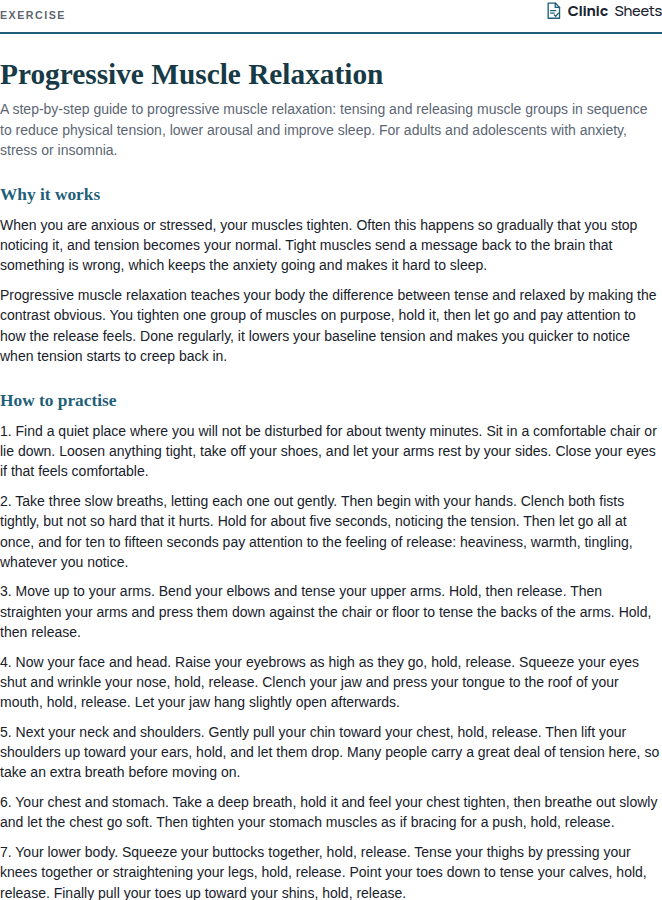
The technique has a long history in the treatment of panic and generalised anxiety, and it is a standard element of applied relaxation. Its role in panic disorder has been debated: breathing retraining is helpful as a general arousal-reduction skill but should not be presented as a way of preventing panic, because that framing can turn it into a safety behaviour and undermine the learning that sensations are harmless. This resource is written with that in mind, presenting the skill as a way to settle the body rather than as an emergency brake.
The professional version includes guidance on assessing the client's habitual breathing pattern in session, a note on clients with respiratory or cardiac conditions, an explanation of the hyperventilation link for use in panic psychoeducation, and suggestions for progressing from lying down to sitting to real-world practice.
How to use it
- Observe the client's breathing at rest. Ask them to place one hand on the chest and one on the belly and notice which moves more. Most anxious clients find the chest hand moves most.
- Teach the technique lying down first, where the diaphragm works most easily, then progress to sitting and standing over subsequent sessions.
- Aim for a rate of roughly six to ten breaths per minute, with the out-breath a little longer than the in-breath. Do not push for very deep breaths; the goal is slow and smooth, not large.
- Prescribe two practice periods of five to ten minutes daily for at least two weeks, when calm. Review the log each session.
- Once the skill is established, encourage brief check-ins during the day (a few belly breaths while waiting or between tasks) so that it becomes the default pattern.
- In panic treatment, be explicit that the technique is for comfort and settling, not for preventing a catastrophe, and watch for it becoming a safety behaviour during exposure.
References
- Clark, D. M., Salkovskis, P. M., & Chalkley, A. J. (1985). Respiratory control as a treatment for panic attacks. Journal of Behavior Therapy and Experimental Psychiatry, 16(1), 23-30.
- Meuret, A. E., Wilhelm, F. H., Ritz, T., & Roth, W. T. (2008). Feedback of end-tidal pCO2 as a therapeutic approach for panic disorder. Journal of Psychiatric Research, 42(7), 560-568.
- Craske, M. G., & Barlow, D. H. (2007). Mastery of Your Anxiety and Panic: Therapist Guide (4th ed.). Oxford University Press.
- Öst, L.-G. (1987). Applied relaxation: Description of a coping technique and review of controlled studies. Behaviour Research and Therapy, 25(5), 397-409.