My Body's Alarm System (Anxiety for Kids)
A child-friendly explanation of the fight-or-flight response: why the body gets a racing heart, wobbly legs and a funny tummy when we feel scared, and why these feelings are uncomfortable but not dangerous.
About this resource
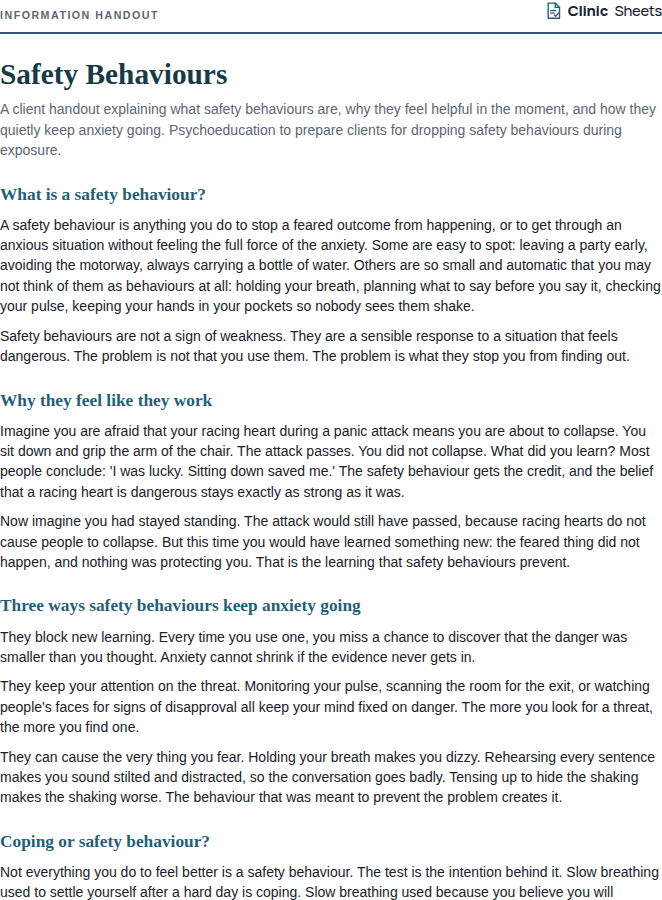
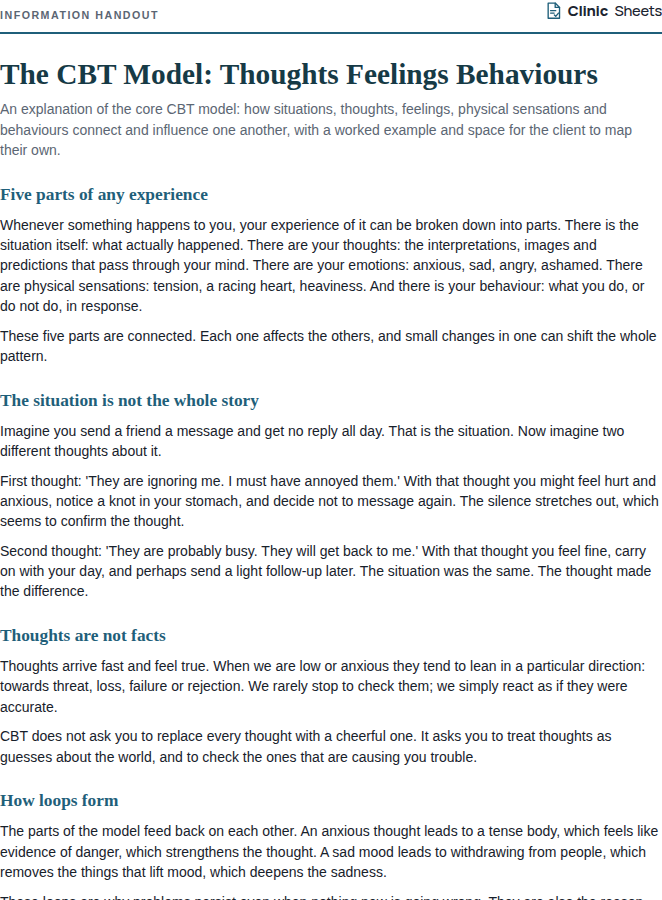
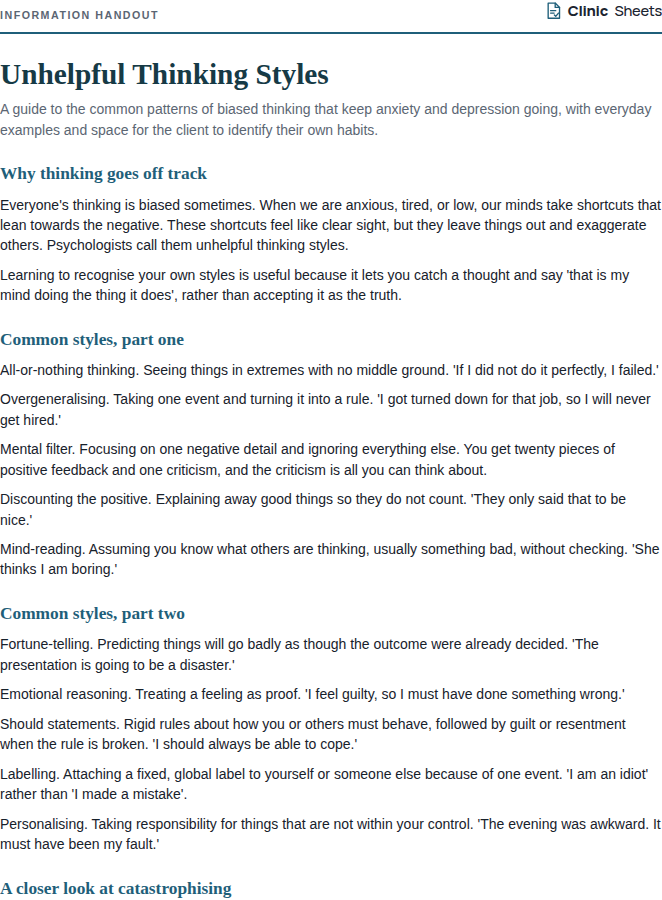
Psychoeducation about the physiology of anxiety is a standard early component of CBT for childhood anxiety, appearing in programs such as Kendall's Coping Cat and Rapee's Cool Kids. Children who are anxious often notice bodily sensations first and interpret them as signs that something is wrong with them or that danger is real. Giving the child a simple, accurate account of what the body is doing, and why, reduces the fear of the sensations themselves and provides shared language for later work on thoughts, avoidance and exposure.
This handout uses the metaphor of a smoke alarm: a useful system that sometimes goes off when there is no fire. It walks through the main sensations a child might notice (fast heartbeat, fast breathing, wobbly or tense muscles, funny tummy, feeling hot or shaky, wanting to run) and gives a one-line reason for each. It then introduces the idea that the alarm switches off by itself once the body works out there is no danger, and that scary feelings always come down. A short reflection section invites the child to mark the sensations they notice, and a parent section explains how to respond in the moment.
The professional version adds notes on pacing (the handout is best read aloud together, a section at a time), on using the child's own words for sensations, and on linking the alarm metaphor to the child's specific feared situations. It also flags that unexplained physical symptoms should still be reviewed by a physician where a parent or clinician has concerns.
How to use it
- Read the handout aloud with the child and parent in session, pausing after each section to ask whether the child has felt that sensation. Use the child's own words ('my heart goes boom boom').
- Ask the child to draw or point to where in their body the alarm feelings show up. This builds interoceptive awareness and gives you a shared map for later.
- Emphasise that the alarm is not a fault. It is a good system doing its job too keenly. Avoid language that suggests the child should stop the feelings.
- Use the 'alarm switches off by itself' idea as the bridge to exposure: the way to teach the alarm that a situation is safe is to stay in it and let the alarm settle.
- Give a copy to the parent and go through the caregiver section, so their responses in the moment match what the child has learned.
References
- Kendall, P. C., & Hedtke, K. A. (2006). Cognitive-Behavioral Therapy for Anxious Children: Therapist Manual (3rd ed.). Workbook Publishing.
- Rapee, R. M., Wignall, A., Spence, S. H., Cobham, V., & Lyneham, H. (2022). Helping Your Anxious Child: A Step-by-Step Guide for Parents (3rd ed.). New Harbinger.
- Chorpita, B. F. (2007). Modular Cognitive-Behavioral Therapy for Childhood Anxiety Disorders. Guilford Press.