EMDR: What to Expect (Client Handout)
A client handout explaining what EMDR therapy is, how the eight phases unfold, what a processing session feels like, and what to expect between sessions. Given during the preparation phase so that clients begin memory work informed and consenting.
About this resource
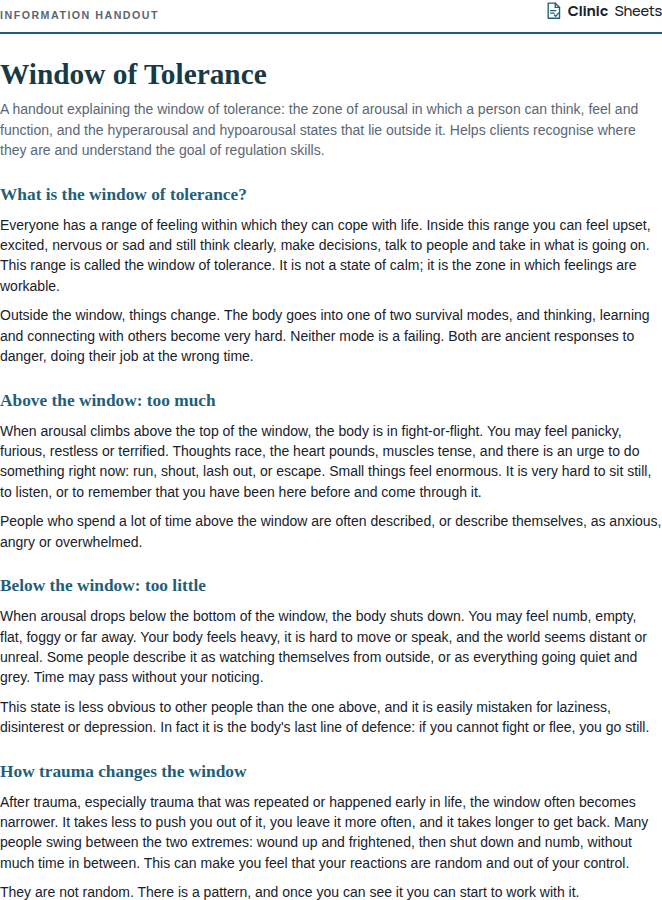
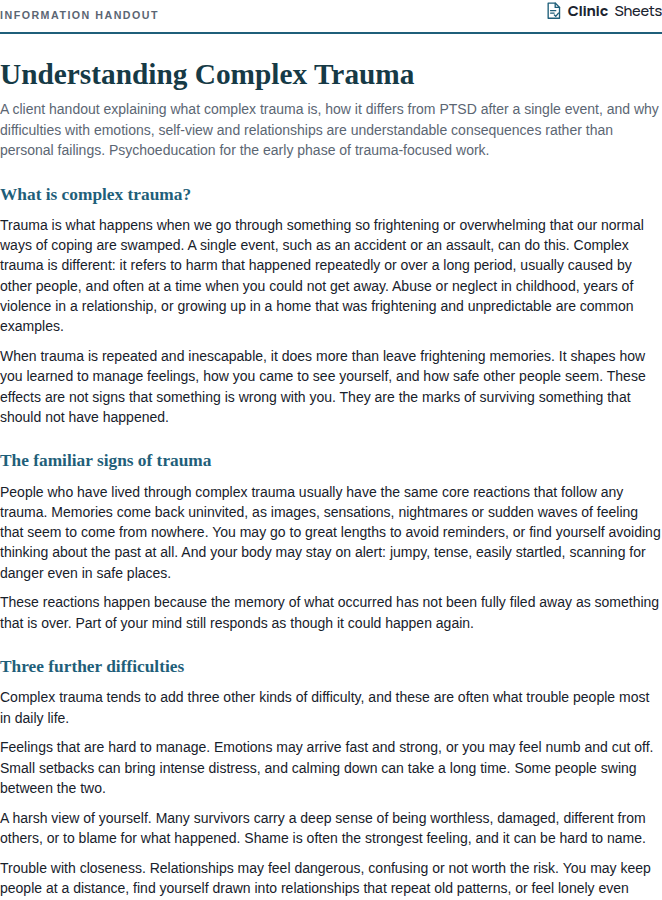
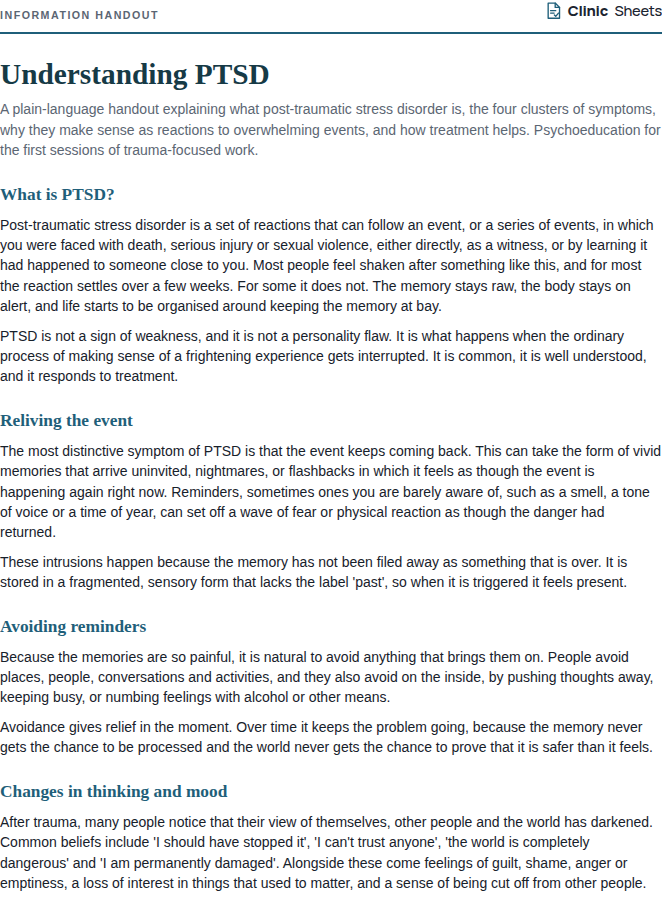
Eye Movement Desensitization and Reprocessing (EMDR) therapy, developed by Francine Shapiro, is a structured psychotherapy for trauma and other adverse life experiences. It is recommended for PTSD in international guidelines, including those of the World Health Organization. Its theoretical basis is the Adaptive Information Processing model, which proposes that symptoms arise when a distressing experience is stored in memory in an unprocessed, state-specific form, with the original images, thoughts, emotions and body sensations intact, and that treatment works by activating that memory while the client engages in bilateral stimulation (typically eye movements, but also taps or tones), allowing the memory to link with adaptive information and be reconsolidated in a less distressing form.
EMDR follows eight phases: history taking and treatment planning, preparation, assessment of the target memory, desensitisation, installation of a positive belief, body scan, closure, and re-evaluation at the start of the next session. Clients often arrive with misconceptions (that it is hypnosis, that they will have to describe everything in detail, that a single session will erase the memory), and clear preparation improves engagement and reduces drop-out. This handout explains the phases in plain language, describes what a processing session is like moment to moment, including the ratings used, and sets expectations for between-session experiences.
The professional version notes the informed consent elements the handout is intended to support, the importance of ensuring that stabilisation and a working alliance are in place before phase 4, and the value of returning to the handout if a client becomes discouraged mid-treatment.
How to use it
- Give the handout in the preparation phase, after history taking, once you have agreed that EMDR is an appropriate approach. Ask the client to read it before the next session and bring questions.
- Go through the phases briefly in session, emphasising that they will not begin processing until they feel ready and have practised a way of calming themselves.
- Demonstrate the bilateral stimulation you intend to use and let the client try it with a neutral or pleasant image, so that the mechanics are familiar before any target is chosen.
- Explain the ratings (distress 0 to 10, belief in the positive statement 1 to 7) and the stop signal. Practise the stop signal once.
- Revisit the 'between sessions' section at the end of the first processing session and encourage the client to keep a brief log of anything that comes up.
References
- Shapiro, F. (2018). Eye Movement Desensitization and Reprocessing (EMDR) Therapy: Basic Principles, Protocols, and Procedures (3rd ed.). Guilford Press.
- Shapiro, F. (2012). Getting Past Your Past: Take Control of Your Life with Self-Help Techniques from EMDR Therapy. Rodale.
- World Health Organization. (2013). Guidelines for the Management of Conditions Specifically Related to Stress. World Health Organization.