Fight Flight Freeze
A handout explaining the body's threat response, fight, flight and freeze, why each reaction happens, and why the sensations are uncomfortable but safe. For adults and adolescents with anxiety or trauma-related symptoms.
About this resource
The threat response is the physiological foundation of every anxiety problem and of many trauma reactions. Clients who understand it tend to be less frightened by their own bodies, which in itself reduces the secondary fear that amplifies symptoms. This handout describes the three main responses, fight, flight and freeze, in accessible terms, explains the role of the amygdala and adrenaline without over-simplifying, and links each common physical sensation to its survival purpose.
The freeze response is given equal weight to fight and flight. It is under-explained in most client material yet is common in trauma survivors, who may feel shame at having 'done nothing' during a threatening event. Explaining freeze as an automatic survival response, not a choice, is often a significant moment in trauma work. The handout also touches on the related concept of the response firing in the absence of current danger, which is central to both anxiety and PTSD.
The language and length suit adolescents as well as adults. The handout closes with a reflection section that asks the client to identify their own dominant response and the sensations they notice most.
The professional version adds notes on using the handout with trauma survivors (pacing, avoiding detailed trauma discussion at this stage), on distinguishing freeze from dissociation, and on linking the handout to grounding and interoceptive exposure.
How to use it
- Use early in treatment for any anxiety or trauma presentation, ideally once the client has described their physical symptoms.
- Read through the three responses together. Ask the client which one they recognise in themselves, and in which situations.
- For trauma survivors who froze, name explicitly that freezing was the body's decision, not theirs, and that it is a recognised survival response.
- Complete the reflection section together. Use it to normalise the sensations before any exposure work.
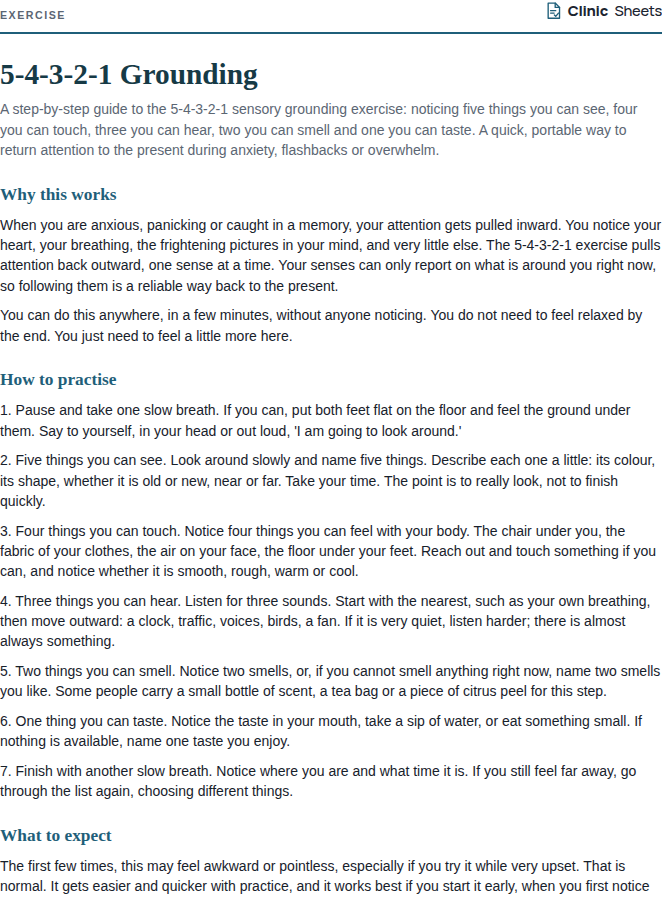
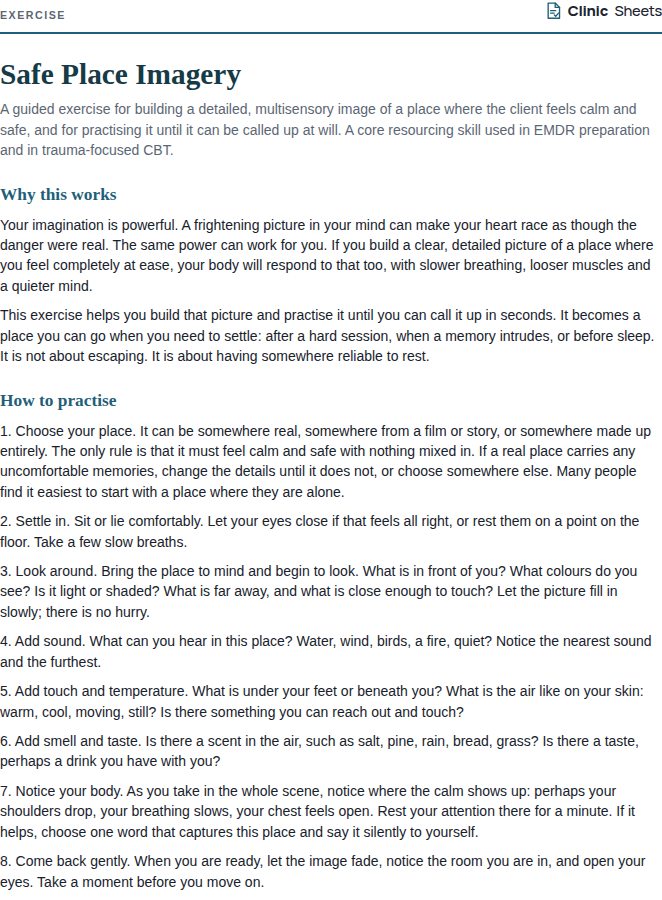
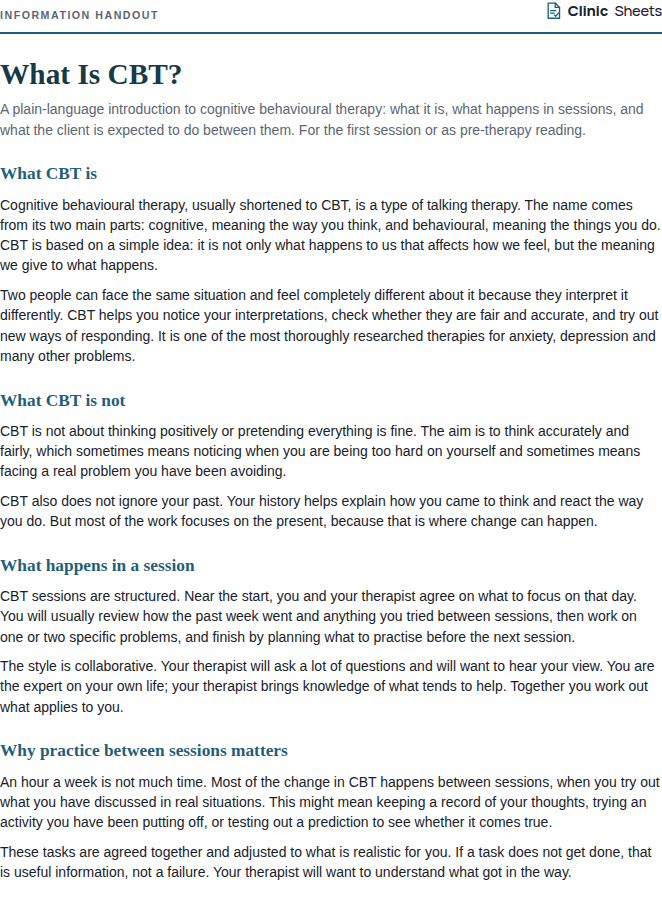
- Pair with Understanding Anxiety or Understanding Panic Attacks depending on the presenting problem.
References
- Cannon, W. B. (1929). Bodily Changes in Pain, Hunger, Fear and Rage (2nd ed.). Appleton.
- LeDoux, J. (1996). The Emotional Brain: The Mysterious Underpinnings of Emotional Life. Simon & Schuster.
- Schauer, M., & Elbert, T. (2010). Dissociation following traumatic stress: Etiology and treatment. Zeitschrift fur Psychologie / Journal of Psychology, 218(2), 109-127.
- Barlow, D. H. (2002). Anxiety and Its Disorders: The Nature and Treatment of Anxiety and Panic (2nd ed.). Guilford Press.