Feelings Thermometer
A simple 0 to 10 scale that helps children notice how strong a feeling is, what it feels like in their body at each level, and what helps at each level. A foundation tool for emotion awareness in child CBT.
About this resource
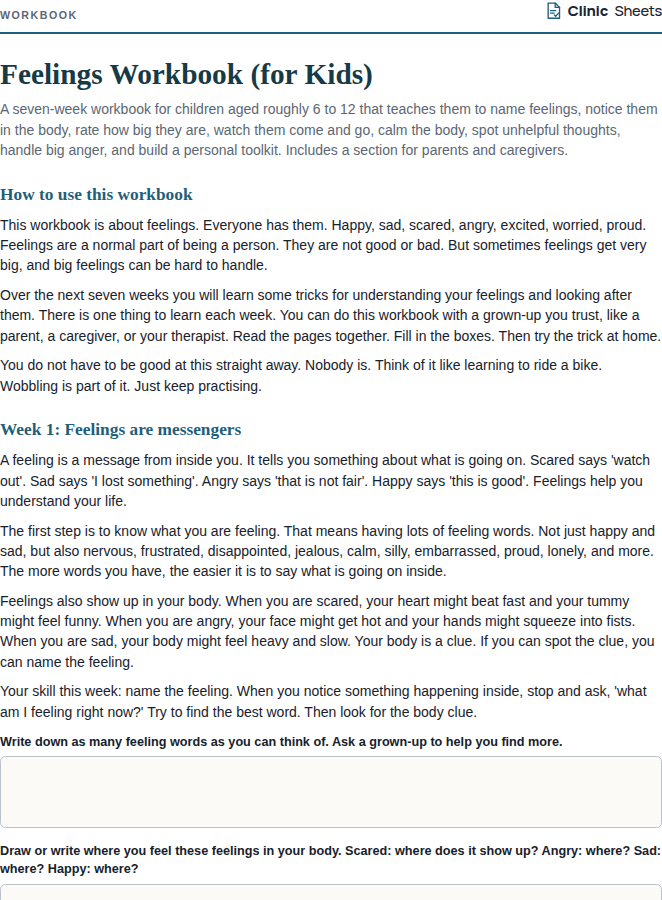
Children often experience emotions as all or nothing: they are fine, and then suddenly they are furious or terrified. A feelings thermometer introduces the idea that feelings come in sizes, that they build gradually, and that there are early signs a feeling is growing. Once a child can rate a feeling as a 3 rather than a 9, they have a way to talk about it, and the adults around them have a way to step in before the peak.
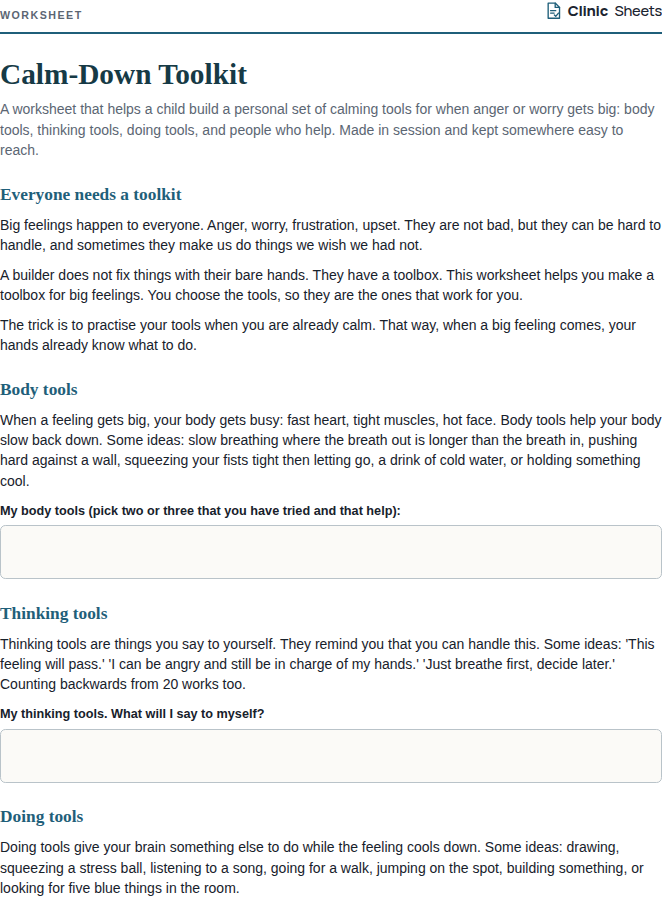
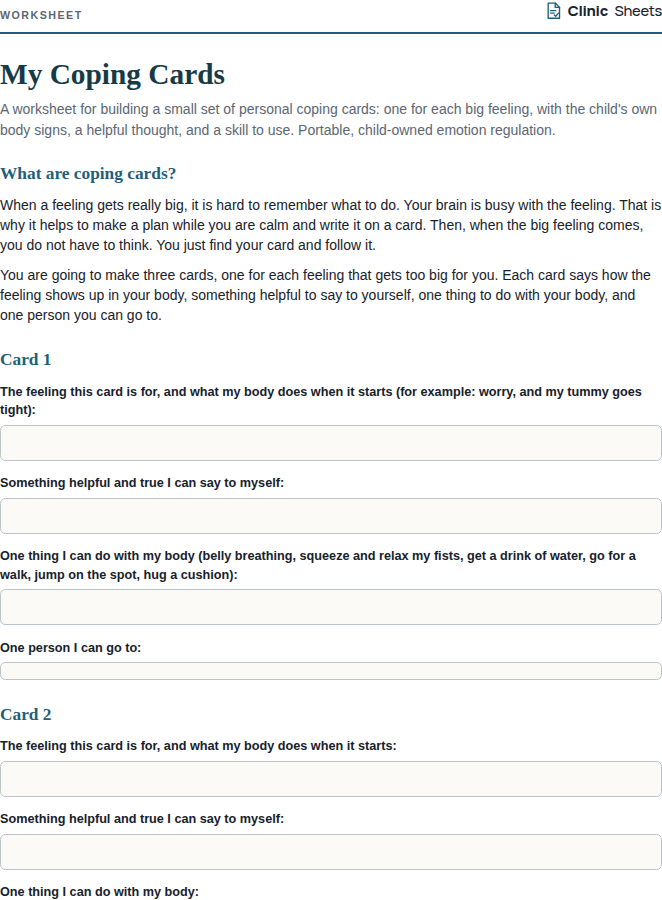
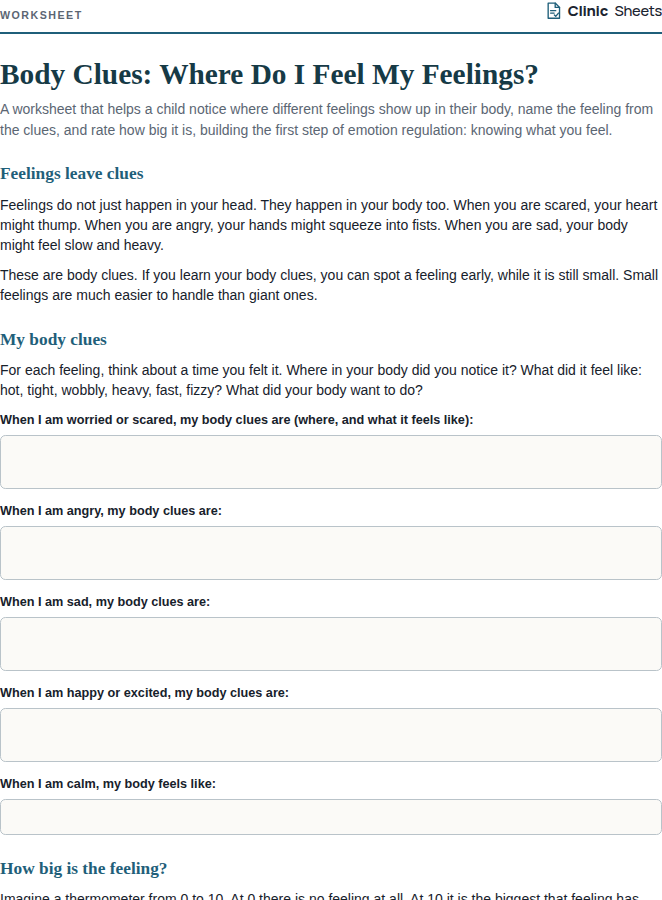
This worksheet asks the child to choose one feeling (anger and worry are the most common), label the low, middle and high points of the scale in their own words, describe what their body does at each level, and identify what helps at each level. Because the labels and body clues are the child's own, the thermometer becomes a shared language for the family and the school. It is a routine part of most CBT programs for childhood anxiety and anger, including Coping Cat and its descendants.
The professional version adds guidance on introducing the scale playfully, on using the thermometer for in-session ratings during exposure, and on coaching parents to ask 'what number are you at?' rather than 'calm down'. It also notes that younger children may manage a three-point scale (small, medium, big) better than ten points.
How to use it
- Introduce the idea that feelings have sizes, using a concrete example: a small worry before a spelling test versus a huge worry before a needle. Ask the child to show the sizes with their hands or their voice.
- Choose one feeling to map first. Let the child name it in their own words (angry, mad, grumpy, worried, scared) and draw or colour the thermometer if that helps.
- Work up the scale together. For each level, ask what it looks like, what the body does, and what the child might say or do. Use recent real examples from the child or parent.
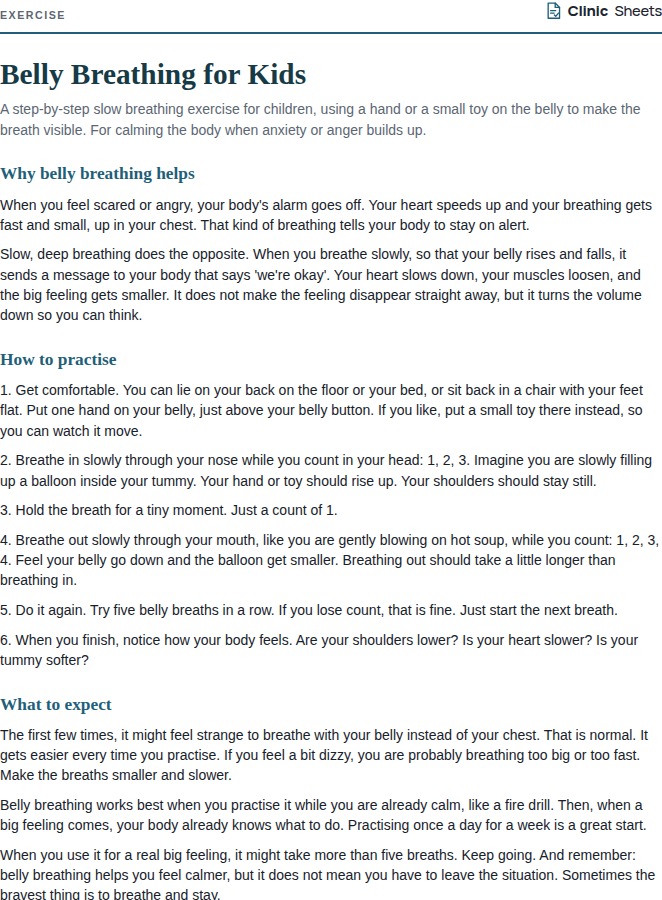
- Complete the 'what helps' column together, drawing on skills already taught. Point out that the strategies at a 3 are different from the strategies at a 9, and that catching a feeling early is easier.
- Send a copy home and to school. Ask parents to use the numbers in everyday conversation, including for pleasant feelings, so the scale is not only used in crises.
- Return to the thermometer in later sessions to rate feelings before and after exposure tasks or skills practice.
References
- Kendall, P. C., & Hedtke, K. A. (2006). Cognitive-Behavioral Therapy for Anxious Children: Therapist Manual (3rd ed.). Workbook Publishing.
- Stallard, P. (2019). Think Good, Feel Good: A Cognitive Behavioural Therapy Workbook for Children and Young People (2nd ed.). Wiley.
- Southam-Gerow, M. A., & Kendall, P. C. (2002). Emotion regulation and understanding: Implications for child psychopathology and therapy. Clinical Psychology Review, 22(2), 189-222.