Knowing Your Partner's World
A couples worksheet in which each partner writes down what they know about the other's current inner world (stresses, hopes, friends, small pleasures) and then checks their answers together, rebuilding the everyday knowledge that keeps a relationship close.
About this resource
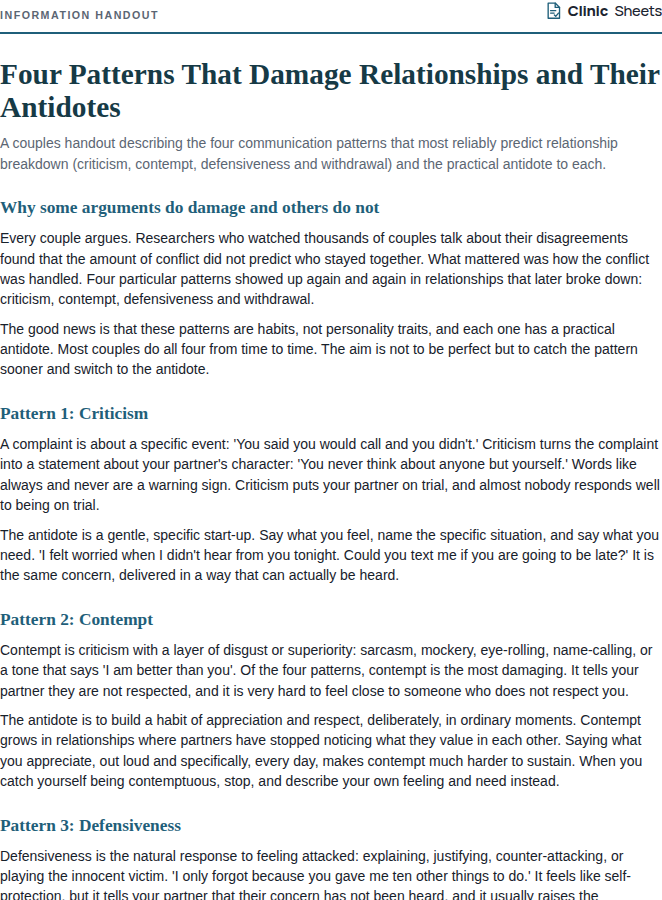
Couples who stay close tend to keep a detailed, current map of each other's lives: what their partner is worried about this month, who they have been spending time with, what they are looking forward to, what has quietly changed. Distressed couples often find that this knowledge has gone stale. Each partner is relating to a version of the other from several years ago, and the sense of being truly known, which is central to felt security in an attachment relationship, has faded.
This worksheet gives partners a structured way to rebuild that knowledge. Each partner first answers a set of questions about the other from memory, then the couple compares answers and corrects them together. The comparison is where the work happens: the gaps are not evidence of failure but an invitation to ask, listen and update. Written from an emotionally focused perspective, the prompts move from practical detail toward feelings, fears and hopes, so that the exercise ends in the kind of emotionally open conversation that builds a secure bond.
The professional version adds guidance on pacing the emotional depth of the questions, on managing the partner who feels exposed by being 'not known', and on turning the gaps into accessible, responsive conversations rather than evidence for a grievance.
How to use it
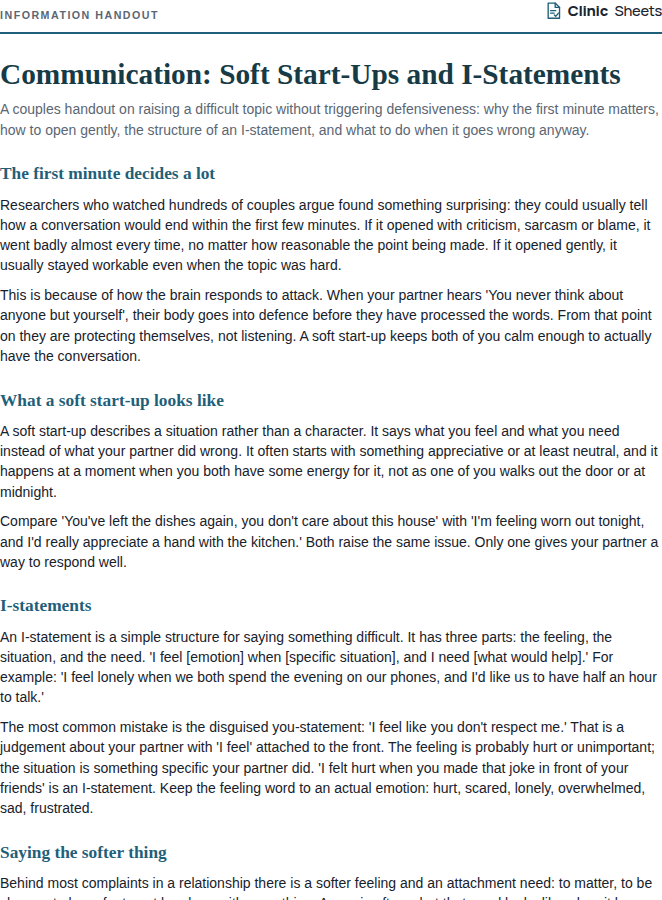
- Introduce the idea that closeness depends on current knowledge of each other, and that knowledge goes out of date unless it is refreshed. Frame the exercise as curiosity, not a test.
- Give each partner their own copy. Ask them to complete the first two sections about their partner, from memory, without conferring. This can be done in session or as homework.
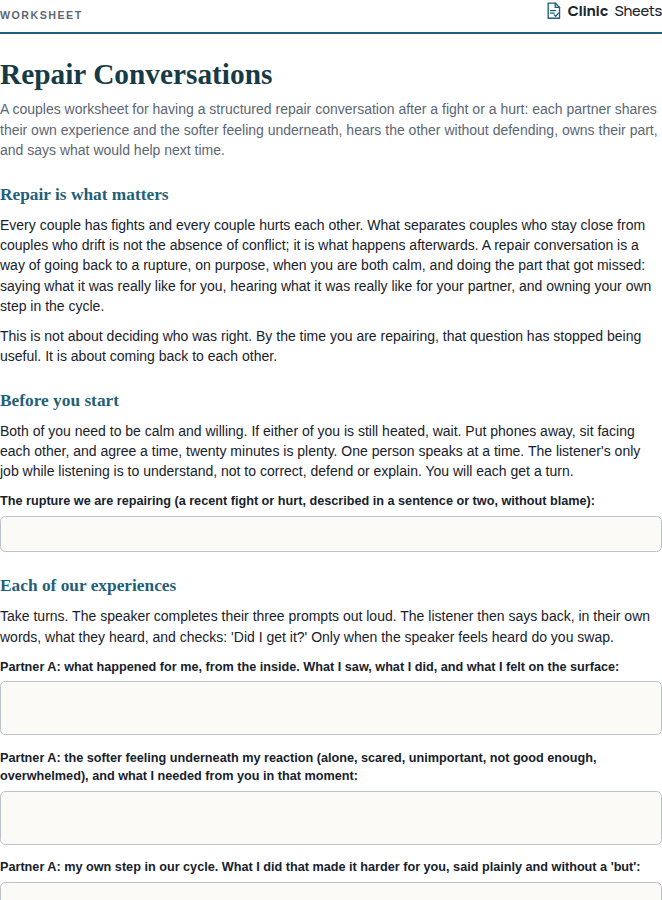
- In session, have the couple compare answers one question at a time. The partner being described confirms, corrects or adds detail. Coach the describing partner to listen and ask follow-up questions rather than defend their guess.
- Watch for signs of hurt when a partner feels unknown. Slow down, reflect the feeling, and help the other partner respond to it directly. This is often more important than the content of the answer.
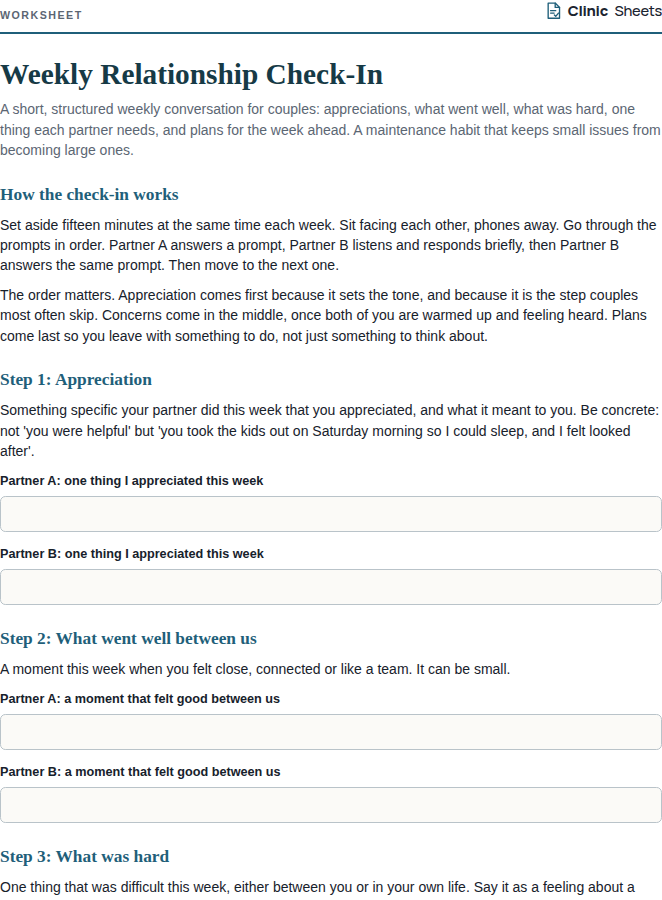
- Suggest the couple repeat a shorter version monthly, since the answers change. Pair with the Weekly Relationship Check-In if the couple wants a regular structure.
References
- Gottman, J. M., & Silver, N. (1999). The Seven Principles for Making Marriage Work. Crown.
- Johnson, S. M. (2008). Hold Me Tight: Seven Conversations for a Lifetime of Love. Little, Brown.
- Johnson, S. M. (2004). The Practice of Emotionally Focused Couple Therapy: Creating Connection (2nd ed.). Brunner-Routledge.