Memory Box Activity
A guided activity for a bereaved child to make a memory box for the person who died: choosing objects, writing or drawing memories, and writing a letter to put inside. Keeps the relationship alive in a way the child can hold and return to.
About this resource
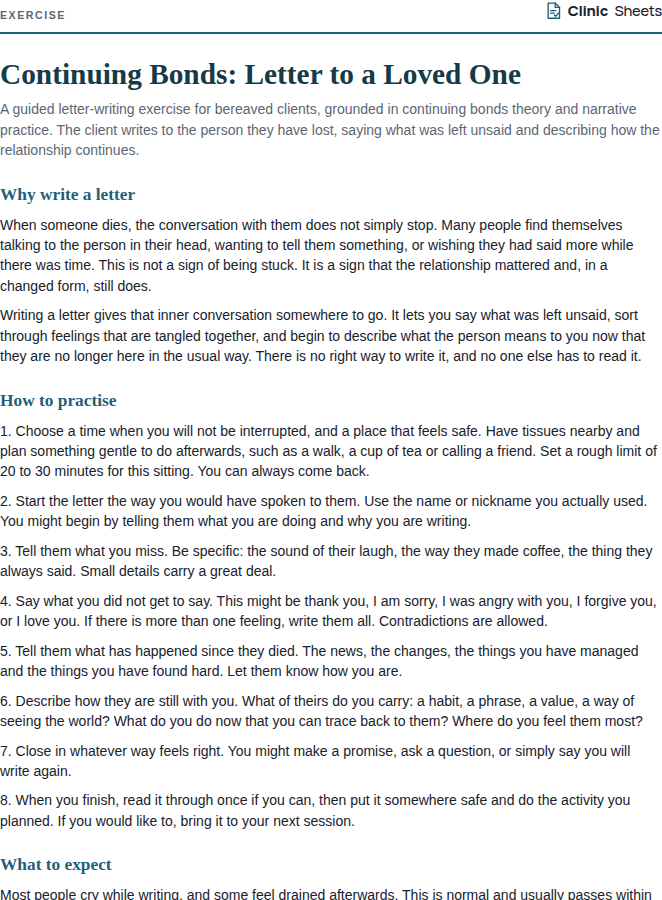
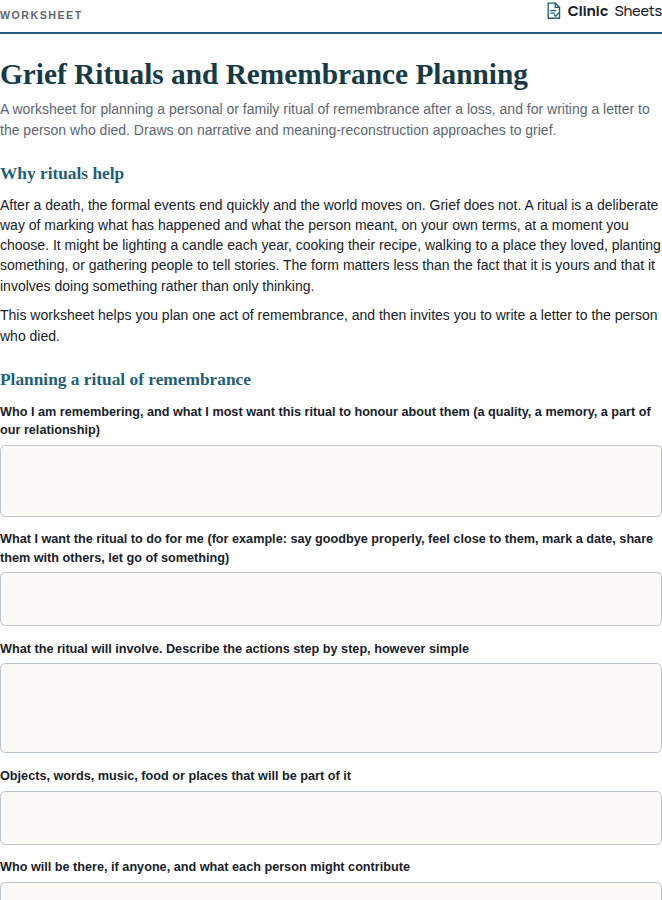
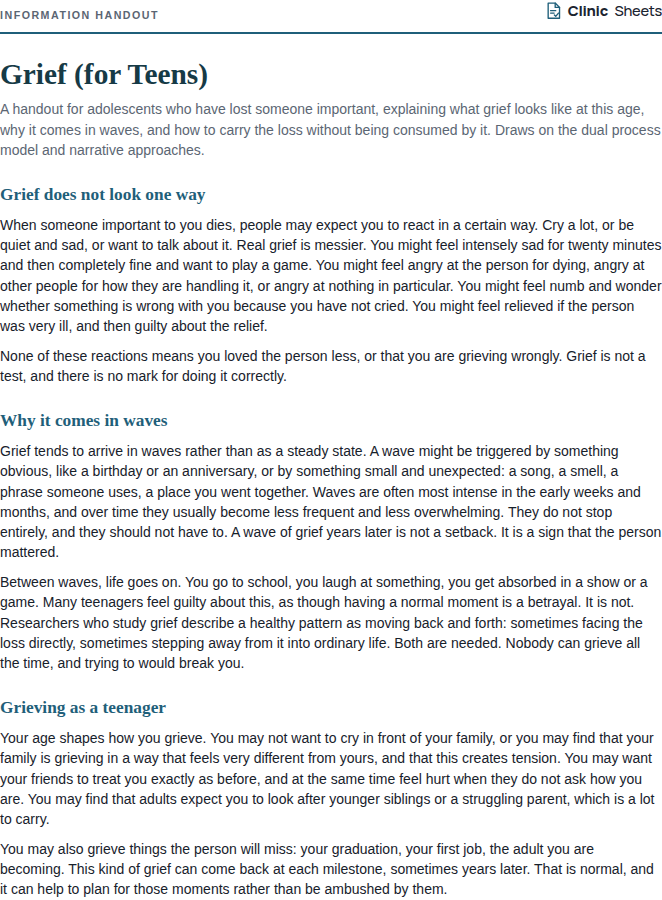
Memory work is a central part of supporting bereaved children. Rather than encouraging the child to let go of the person who died, contemporary grief theory, including the continuing bonds work of Klass, Silverman and Nickman and Worden's research with bereaved children, recognises that a continued inner relationship with the deceased is normal and often protective. Narrative therapy takes a similar view: Hedtke and Winslade describe 'remembering' practices that keep the person's voice, values and stories present in the life of the bereaved. For a child, an abstract inner bond is hard to hold; a physical box that they made, filled with objects, pictures, words and a letter, gives the bond a place to live. Children can return to it when a wave of grief comes, add to it as they grow, and show it to people who did not know the person.
This exercise walks the child and a supporting adult through making the box over one or more sessions: choosing and decorating a container, gathering items that carry memories, recording memories in words or pictures, writing a letter to the person, and deciding where the box will live and when it might be opened. The letter is a form of compassionate letter writing adapted for children: it gives the child a way to say the things that were not said, to ask questions, and to tell the person about their life now. The activity is deliberately unhurried; some children complete it in an afternoon, others over weeks.
The professional version adds guidance on pacing, on involving the surviving parent or caregiver (who may find the activity painful themselves), on what to do when the child's memories are mixed or the relationship was difficult, and on situations where the activity should wait, such as traumatic bereavement where intrusive images need to be addressed first.
How to use it
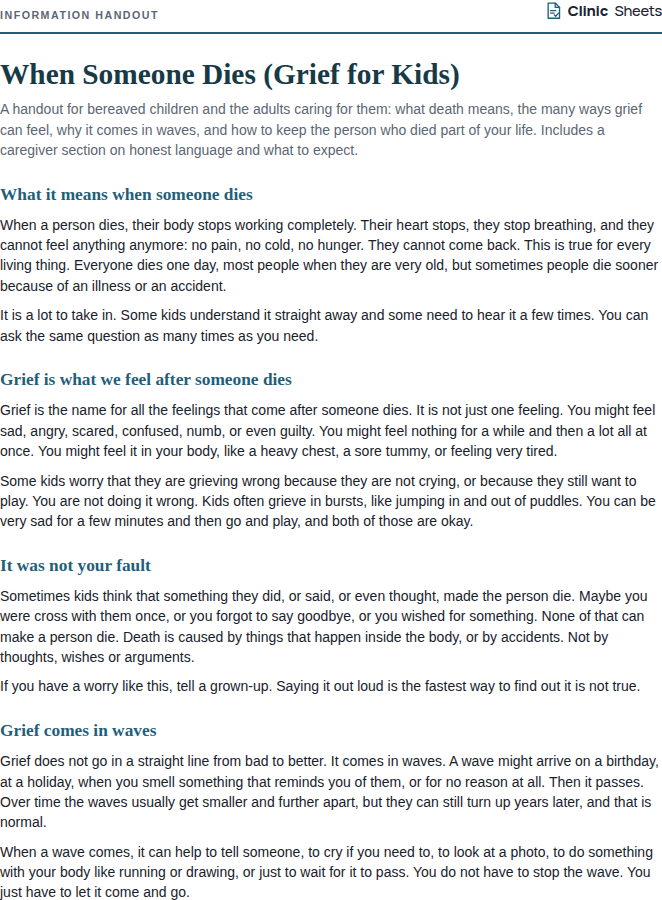
- Introduce the idea after some grief psychoeducation (see When Someone Dies). Explain that the box is a place to keep the person close, not a way of saying goodbye.
- Involve a caregiver in gathering objects and photos between sessions, with the child choosing what goes in. Check that the caregiver is able to take part without becoming overwhelmed; if not, help the child think of another adult who knew the person.
- Work through the steps at the child's pace across one or more sessions. Follow the child's lead about which memories to record. If memories are mixed, allow both; a box can hold 'things I miss' and 'things that were hard'.
- Support the letter writing gently. Offer sentence starters if the child is stuck, and let them draw instead of write if they prefer. The letter goes in the box; it is not read aloud unless the child wants to.
- Agree with the child and caregiver where the box will live and when it might be opened, for example on anniversaries, when a wave of grief comes, or whenever the child wants. Note that adding to the box over time is expected.
- If the death was sudden or violent and the child shows signs of traumatic grief, address the trauma first; memory work that triggers intrusive images is not helpful until the child can think about the person without being flooded.
References
- Klass, D., Silverman, P. R., & Nickman, S. L. (Eds.). (1996). Continuing Bonds: New Understandings of Grief. Taylor and Francis.
- Worden, J. W. (1996). Children and Grief: When a Parent Dies. Guilford Press.
- Hedtke, L., & Winslade, J. (2004). Re-membering Lives: Conversations with the Dying and the Bereaved. Baywood.
- Cohen, J. A., Mannarino, A. P., & Deblinger, E. (2017). Treating Trauma and Traumatic Grief in Children and Adolescents (2nd ed.). Guilford Press.