When Someone Dies (Grief for Kids)
A handout for bereaved children and the adults caring for them: what death means, the many ways grief can feel, why it comes in waves, and how to keep the person who died part of your life. Includes a caregiver section on honest language and what to expect.
About this resource
Children grieve, but they grieve differently from adults. Their understanding of death develops with age; younger school-aged children may still be working out that death is permanent, universal and has a physical cause. Their grief is typically intermittent, moving between intense sadness and ordinary play within minutes, which adults can misread as not being affected. Worden's Harvard Child Bereavement Study documented that most bereaved children adjust well when they receive honest information, are included in family mourning, and have a stable, warm caregiver, and that a continued inner connection to the person who died, rather than detachment, is normal and often helpful. This idea, described by Silverman, Nickman and Worden and developed in the continuing bonds literature, informs the approach here.
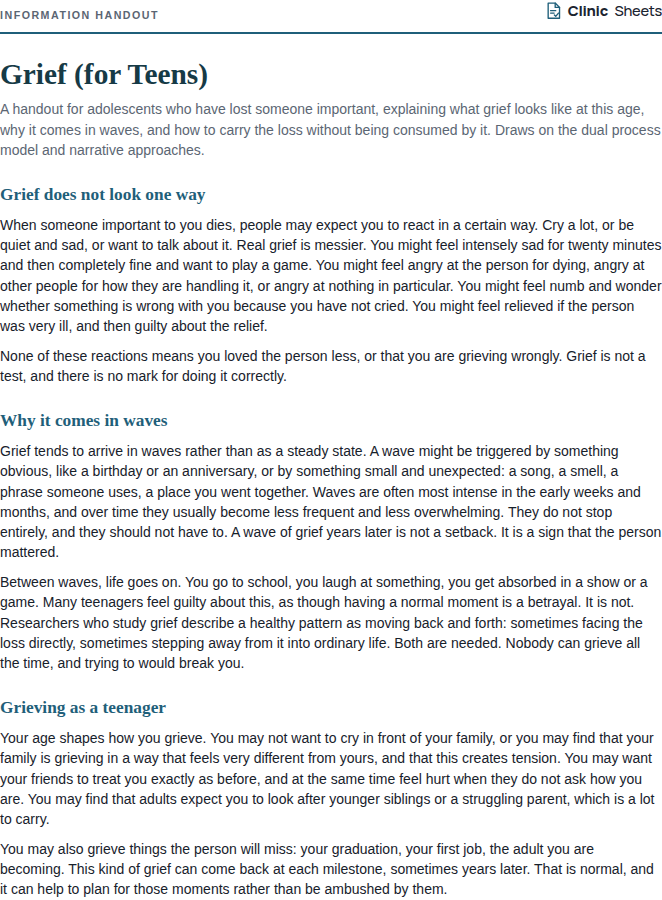
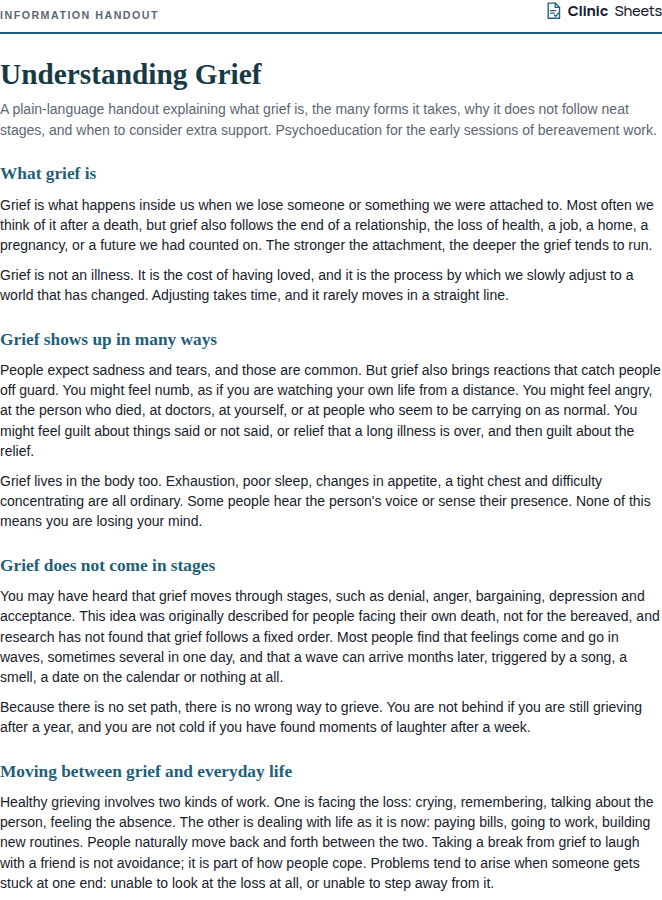
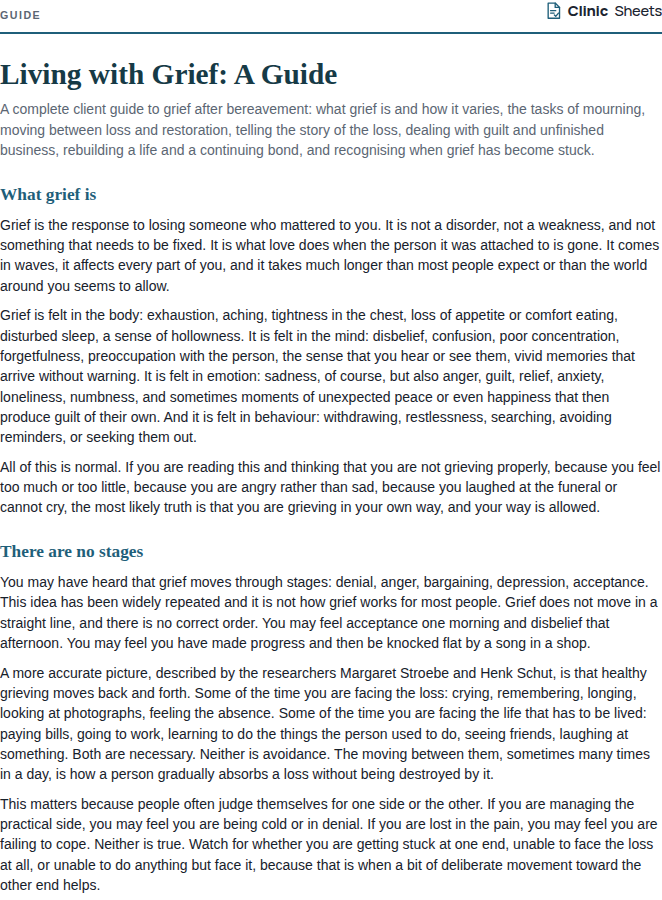
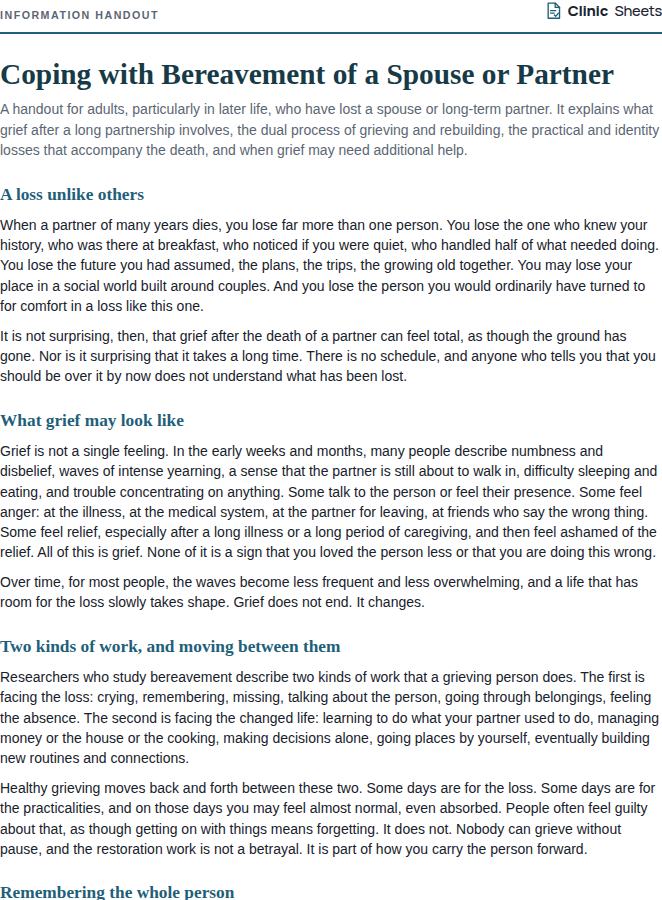
This handout gives a child accurate, gentle information: what it means when someone dies, why people die, the wide range of feelings grief brings, why grief comes in waves, that nothing the child did or thought caused the death, and that it is okay to have fun again. It draws on narrative ideas by encouraging the child to keep the person's story alive through memories, objects and rituals. A reflection section invites the child to record memories and questions, and a caregiver section gives practical guidance on language, inclusion in rituals, and when to seek further help.
The professional version adds guidance on adapting the language for the child's age and for the circumstances of the death, on distinguishing normal grief from prolonged grief or traumatic grief where the death was sudden or violent (where trauma-focused work may need to come first), and on supporting the caregiver's own grief, since a bereaved parent's capacity is one of the strongest predictors of the child's adjustment.
How to use it
- Find out first what the child has been told and by whom, and what words the family uses. Match your language to theirs where it is accurate; gently correct euphemisms that confuse ('went to sleep', 'lost').
- Read the handout with the child at their pace, stopping to check understanding and to answer questions honestly and simply. Children often ask the same question repeatedly; this is how they process, not a sign the answer was wrong.
- Listen for magical thinking (that a thought, wish or misbehaviour caused the death) and address it directly. Also check for worries about the surviving caregiver's health or their own.
- Use the reflection fields to begin memory work. This can lead into the Memory Box Activity.
- Go through the caregiver section with the parent or guardian. Encourage them to include the child in rituals with preparation and choice, to keep routines steady, and to seek support for their own grief.
- Where the death was sudden, violent or witnessed, or where the child shows persistent intrusive images, avoidance or hyperarousal, assess for traumatic grief and consider trauma-focused treatment before or alongside grief work.
References
- Worden, J. W. (1996). Children and Grief: When a Parent Dies. Guilford Press.
- Silverman, P. R., Nickman, S., & Worden, J. W. (1992). Detachment revisited: The child's reconstruction of a dead parent. American Journal of Orthopsychiatry, 62(4), 494-503.
- Cohen, J. A., Mannarino, A. P., & Deblinger, E. (2017). Treating Trauma and Traumatic Grief in Children and Adolescents (2nd ed.). Guilford Press.
- Sandler, I. N., Ayers, T. S., Wolchik, S. A., et al. (2003). The Family Bereavement Program: Efficacy evaluation of a theory-based prevention program for parentally bereaved children and adolescents. Journal of Consulting and Clinical Psychology, 71(3), 587-600.