Understanding Grief
A plain-language handout explaining what grief is, the many forms it takes, why it does not follow neat stages, and when to consider extra support. Psychoeducation for the early sessions of bereavement work.
About this resource
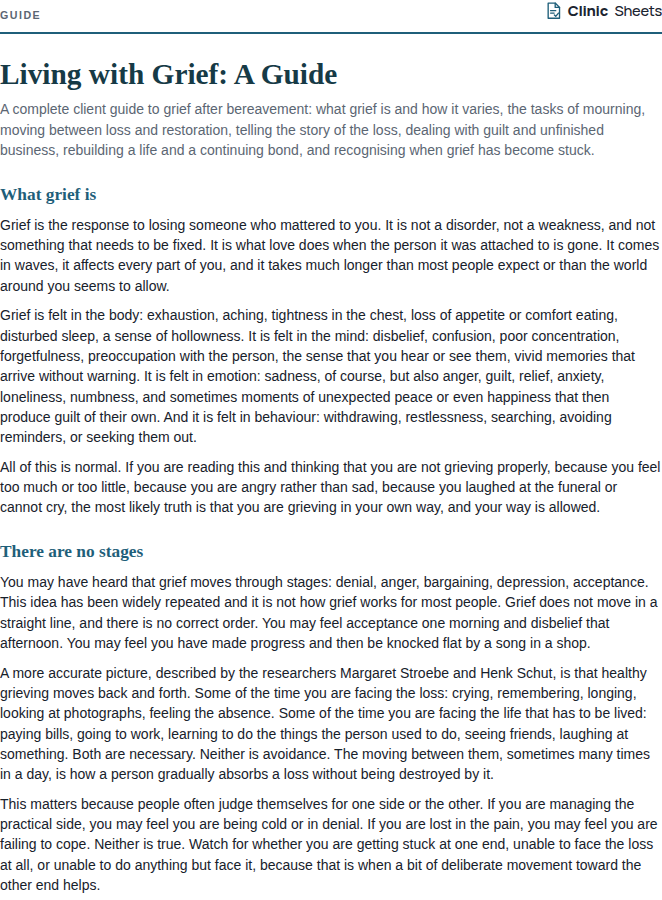
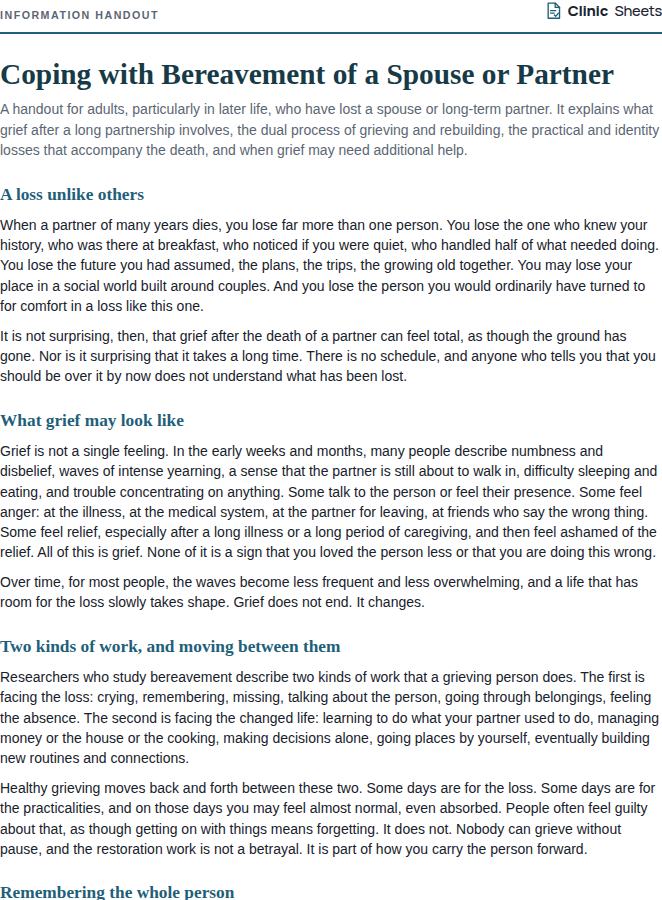
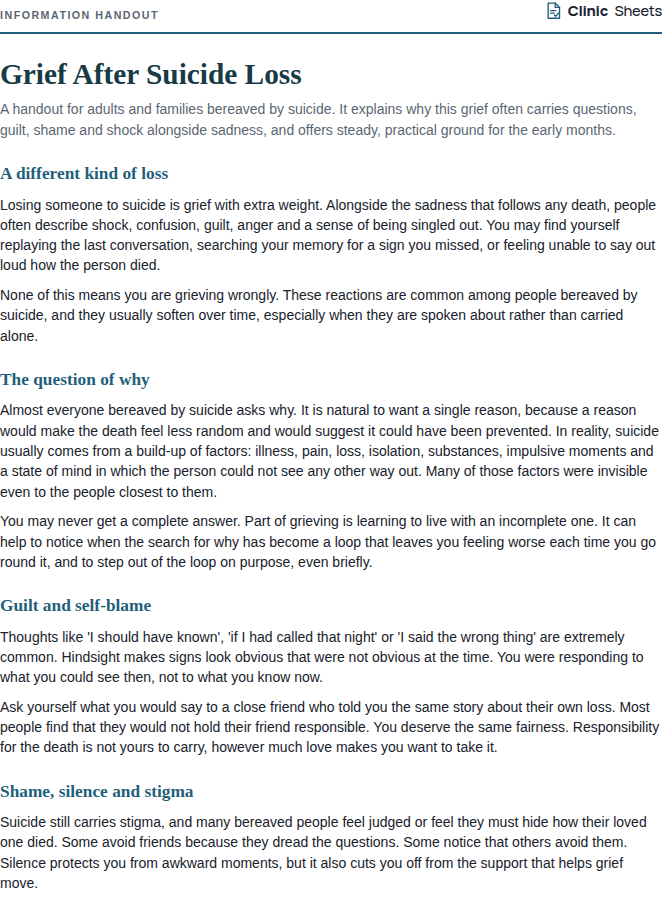
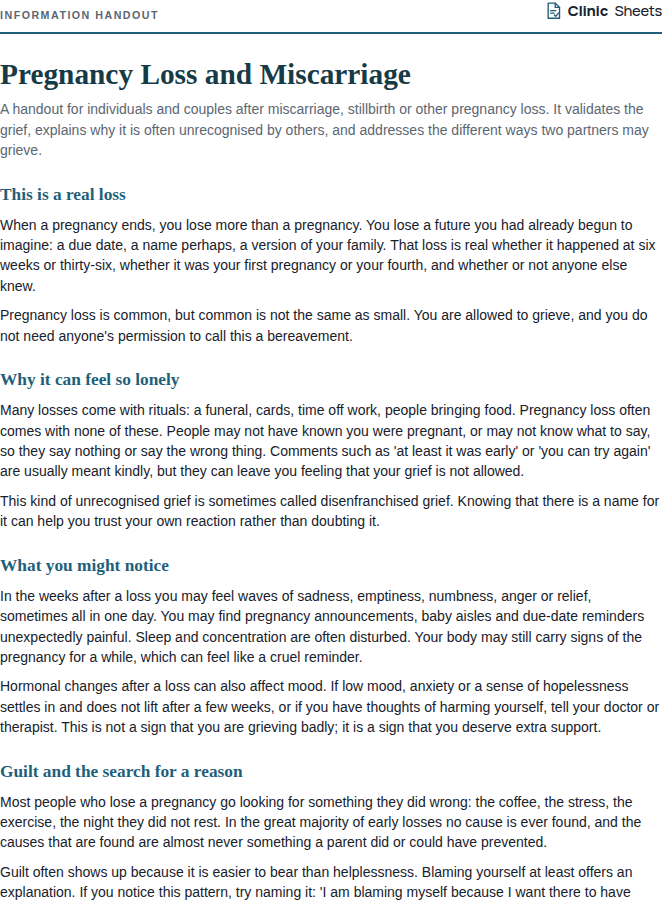
Grief is the natural response to losing someone or something that mattered. Most people adapt over time without professional help, but many who do seek therapy are worried that they are grieving wrongly: too much, too little, for too long, or in the wrong order. Popular stage models have contributed to this, suggesting that grief moves through a fixed sequence and finishes with acceptance. Contemporary research does not support a fixed sequence. Grief oscillates, resurfaces around anniversaries and reminders, and often includes reactions that people do not expect, such as relief, anger, numbness or physical symptoms.
This handout normalises the range of grief reactions, distinguishes ordinary grief from the minority of cases where grief becomes stuck (prolonged grief), and gently introduces the idea that the goal of grieving is not to let go of the person but to find a way of carrying the relationship forward while re-engaging with life. It is written to be read at home and discussed in session, and it prepares the ground for interventions from CBT for grief, interpersonal therapy, and the dual process model.
The professional version includes a short guide to screening for prolonged grief disorder, notes on cultural variation in mourning, and suggested questions for exploring the client's beliefs about how they 'should' be grieving.
How to use it
- Offer this handout once the client has told the story of the loss and you have a sense of their main worries about their own grieving.
- Ask the client to mark the reactions they recognise, and any they were surprised or ashamed to have. Explore the beliefs behind the shame.
- Use the section on stages to open a conversation about where the client's expectations of grief came from (family, culture, media) and whether those expectations are helping.
- If the client's grief is intense, unchanged and dominating daily life a year or more after the loss, consider assessment for prolonged grief disorder and a more structured intervention.
- Follow with Grief and the Dual Process Model or Continuing Bonds: Letter to a Loved One depending on whether the client is mostly avoiding the loss or mostly unable to step away from it.
References
- Stroebe, M., & Schut, H. (1999). The dual process model of coping with bereavement: Rationale and description. Death Studies, 23(3), 197-224.
- Shear, M. K. (2015). Complicated grief. New England Journal of Medicine, 372(2), 153-160.
- Worden, J. W. (2018). Grief Counseling and Grief Therapy: A Handbook for the Mental Health Practitioner (5th ed.). Springer.
- Bonanno, G. A. (2004). Loss, trauma, and human resilience: Have we underestimated the human capacity to thrive after extremely aversive events? American Psychologist, 59(1), 20-28.