My Focus Toolkit (ADHD for Kids)
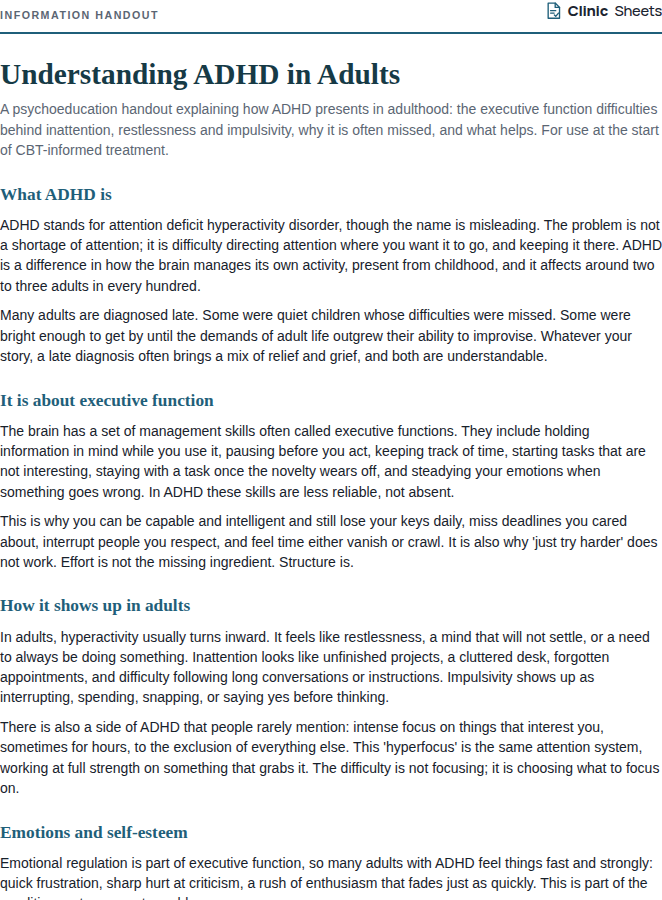
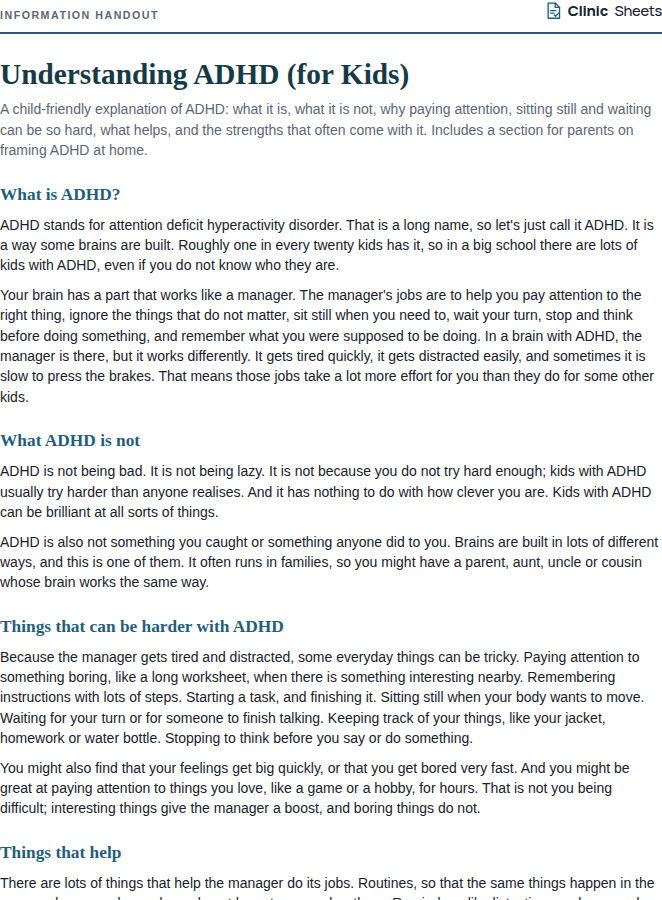
A child-friendly worksheet that helps a child with ADHD build a personal toolkit for getting started on tasks and sticking with them: breaking big jobs into small steps, setting up the space, and using timers and check-ins.
About this resource
Children with ADHD are not short of intelligence or good intentions. What they find hard is the executive side of doing: starting a task that is boring or long, holding the steps in mind, ignoring distractions, and keeping going until the end. Russell Barkley describes ADHD as a problem of performance rather than knowledge, which is why telling a child what to do rarely works and changing the point of performance (the desk, the timer, the checklist in front of them) usually helps.
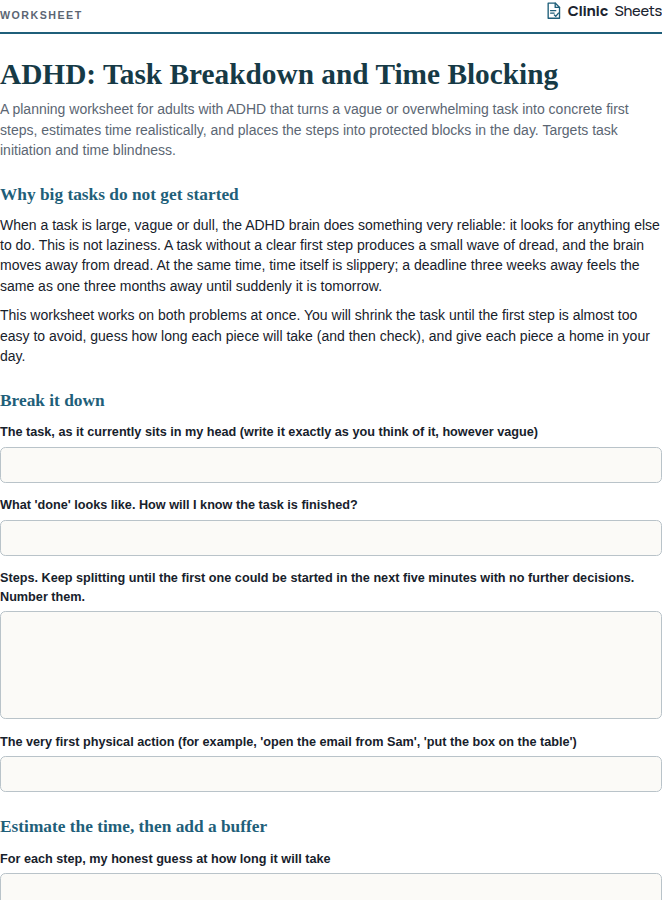
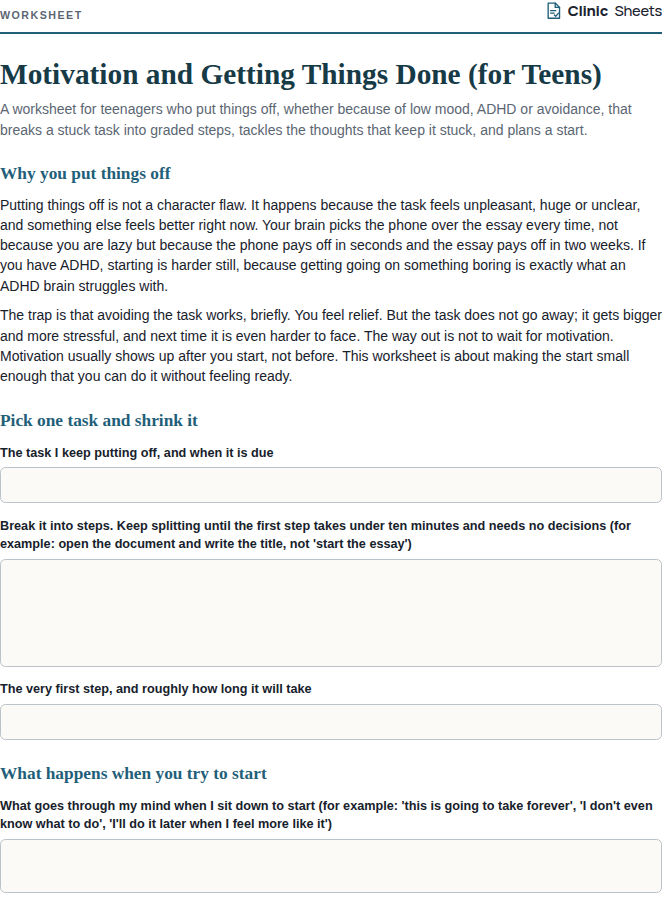
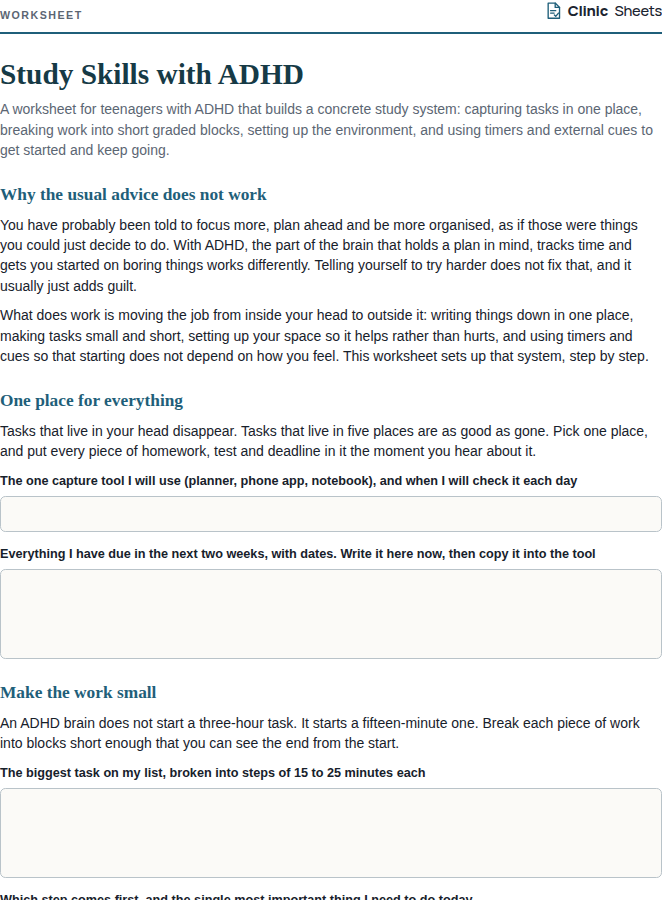
This worksheet turns those ideas into a toolkit the child can own. It uses graded task assignment in a form a child understands: a big job is cut into small steps that each feel doable, the first step is made very easy, and each finished step is ticked off so the child can see progress. Alongside that, the child chooses how to set up their space, how long a work burst will be, and what they will do when they notice their attention has wandered. The child's own choices are written down so that the plan belongs to them rather than to an adult.
The professional version notes that the toolkit works best when it is paired with a parent or teacher who prompts and praises its use, since children with ADHD rely on external structure more than their peers. It also suggests starting with one homework task or one chore and adding others only once the routine is established.
How to use it
- Introduce the idea that ADHD brains find starting and finishing harder, not because the child is lazy but because the brain's 'get going' system needs more help. Frame the toolkit as help for the brain, like glasses for eyes.
- Pick one real task the child struggles with (a page of homework, tidying a bedroom, getting ready for school). Break it into steps together, aiming for five to seven steps that each take only a few minutes. Make the first step almost too easy.
- Let the child choose a work-burst length (many children manage five to fifteen minutes to begin with) and a short break activity. Set a visible timer.
- Complete the 'my space' and 'when I drift' fields with the child so they have a plan for distractions before they happen.
- Ask a parent or teacher to prompt the toolkit at the point of performance and to praise each step finished, not only the whole task. Review at the next session what worked and adjust step size or burst length.
References
- Barkley, R. A. (2013). Taking Charge of ADHD: The Complete, Authoritative Guide for Parents (3rd ed.). Guilford Press.
- DuPaul, G. J., & Stoner, G. (2014). ADHD in the Schools: Assessment and Intervention Strategies (3rd ed.). Guilford Press.
- Pfiffner, L. J. (2011). All About ADHD: The Complete Practical Guide for Classroom Teachers (2nd ed.). Scholastic.