Naming Emotions
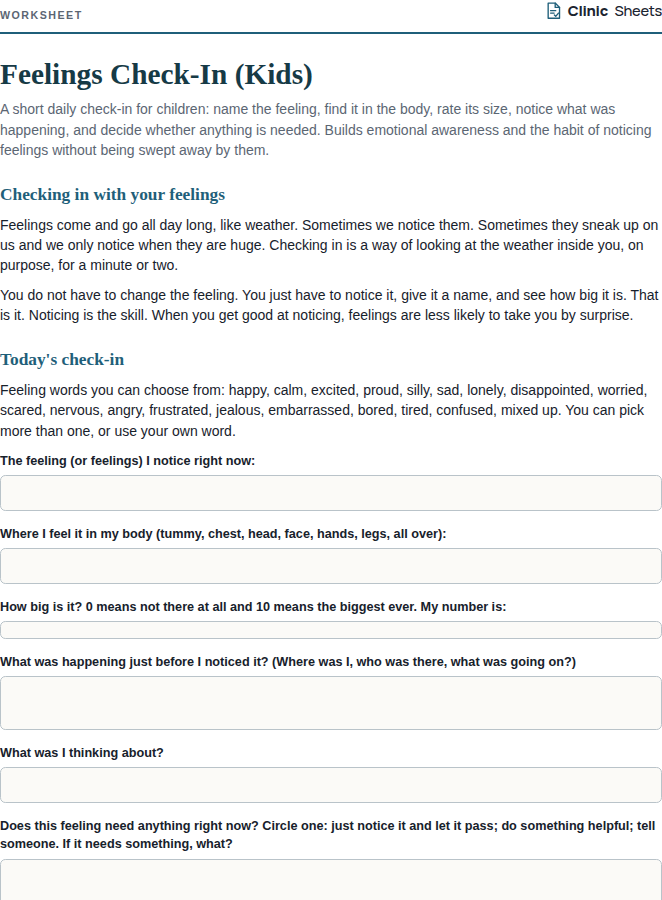
A worksheet for children and adolescents that walks through noticing a feeling in the body, giving it a name, rating its size, and working out what it is trying to say. A first step in emotion regulation for younger clients.
About this resource
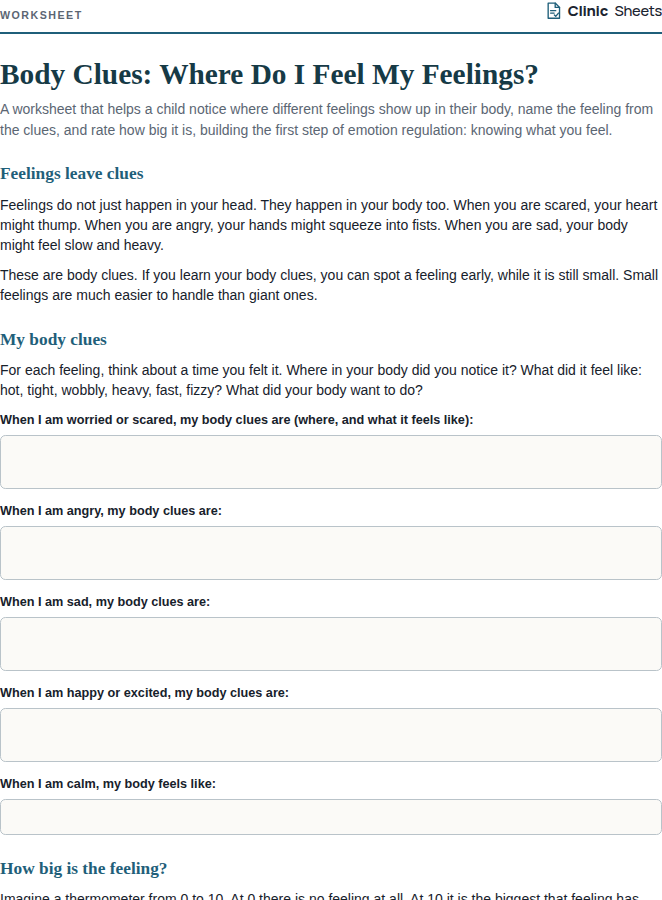
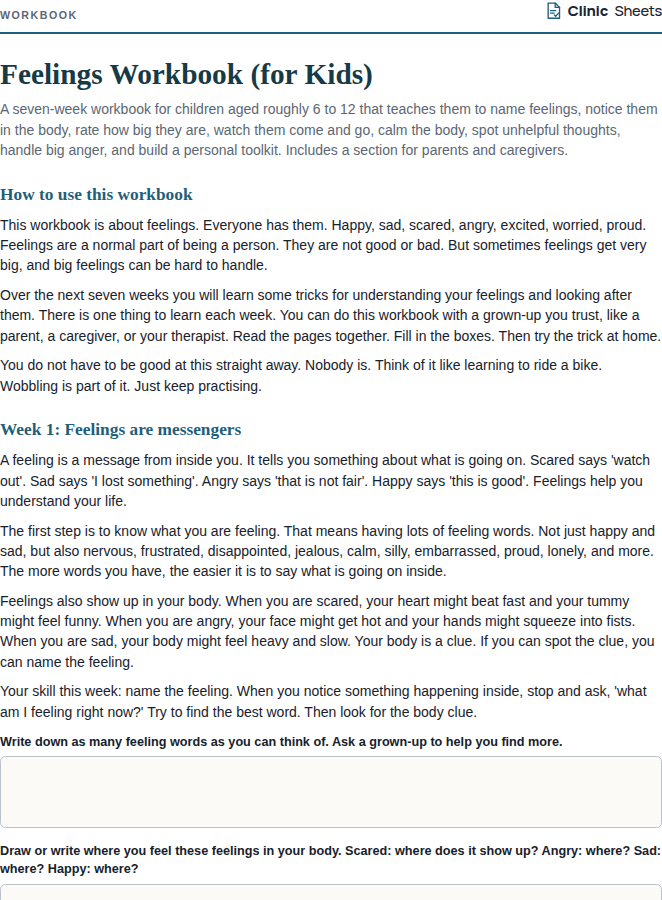
Children and many adolescents experience emotions as physical events first: a hot face, a tight tummy, a lump in the throat. The step of connecting those sensations to a word is not automatic and is often the first thing to teach. Without a name, a feeling tends to be expressed as behaviour (shouting, hiding, refusing) rather than communicated. With a name, the young person can tell someone what is happening and begin to choose what to do about it.
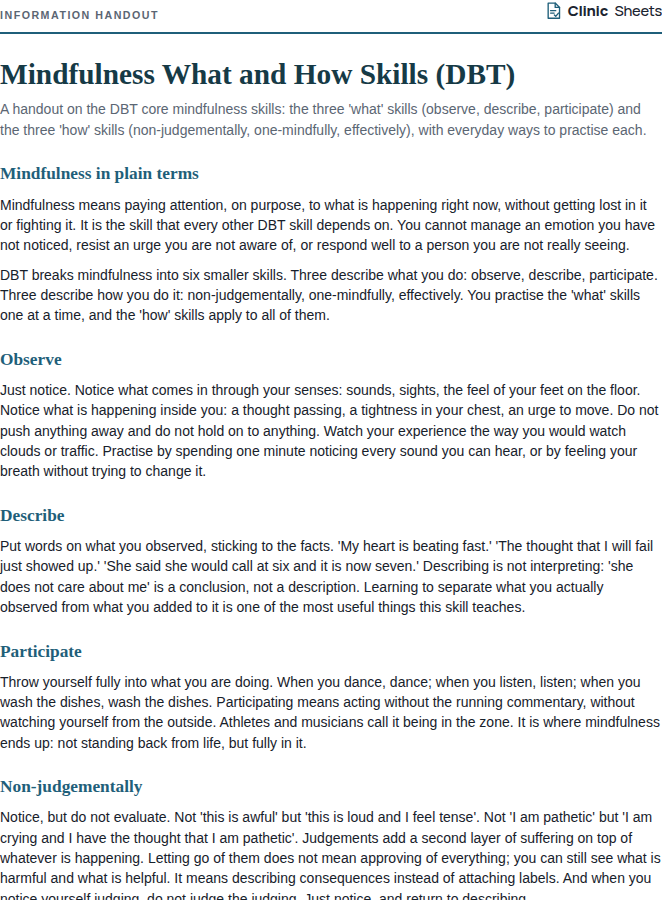
This worksheet follows the DBT sequence of observing and describing an emotion before acting on it, adapted for younger clients. It moves from the body (where do you feel it), to the name (what is it called), to the size (how big is it), to the message (what is it telling you), and finally to what the young person might need. It deliberately keeps the language concrete and avoids abstract instructions.
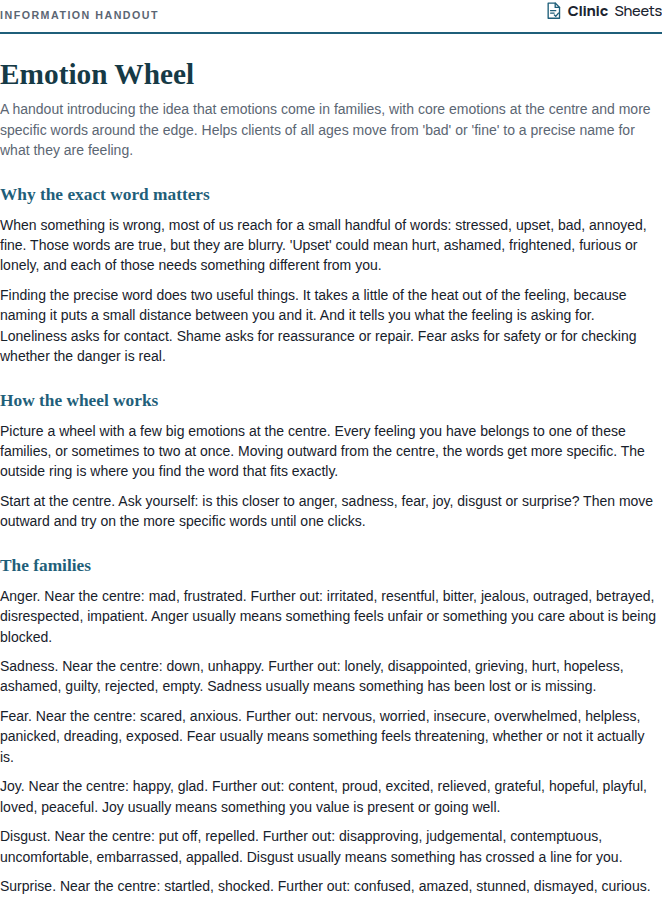
It is designed for children of roughly six to twelve and for younger adolescents, and can be completed with a parent, teacher or clinician. The professional version adds a list of body clues by emotion, suggestions for using the worksheet in play or drawing, and a note on adolescents who find the format too young, for whom the Emotion Wheel handout is a better starting point.
How to use it
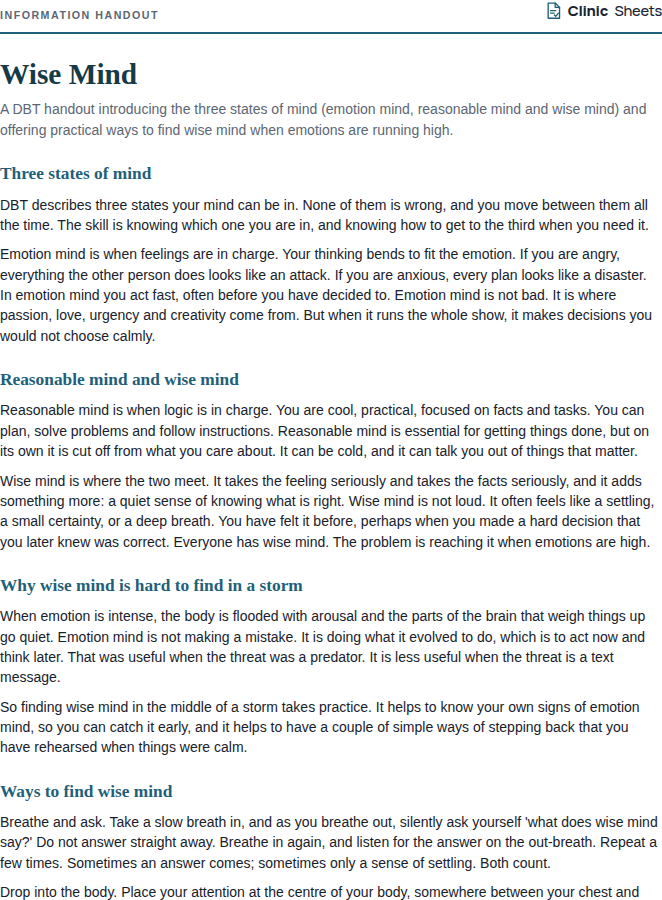
- Introduce the idea that feelings live in the body and give clues. Ask the child where they feel excitement, then where they feel nervous, to show that different feelings have different clues.
- Complete the worksheet together the first time, using a recent, mild feeling rather than a big upsetting one. Model it yourself with an example from your own day if that suits the child.
- For the rating step, use whatever scale the child relates to: numbers, a thermometer, small-medium-big, or animals of different sizes.
- Keep the 'what is it telling me' step simple. Angry often means something feels unfair. Scared often means something feels unsafe. Sad often means something is missing.
- Send a copy home for parents to use at calmer moments, not during a meltdown. The skill has to be practised when the feeling is small before it will work when the feeling is big.
References
- Linehan, M. M. (2015). DBT Skills Training Manual (2nd ed.). Guilford Press.
- Rathus, J. H., & Miller, A. L. (2015). DBT Skills Manual for Adolescents. Guilford Press.
- Southam-Gerow, M. A. (2013). Emotion Regulation in Children and Adolescents: A Practitioner's Guide. Guilford Press.
- Perry-Parrish, C., Webb, L., Zeman, J., Spencer, S., Malone, C., Borowski, S., Reynolds, E., Hansen, C., & Ostrander, R. (2017). Anger regulation and social acceptance in early adolescence. Journal of Early Adolescence, 37(4), 475-501.