ORS and SRS: Session Feedback Measures Guide
A clinician's guide to the Outcome Rating Scale (ORS) and Session Rating Scale (SRS), the four-item visual analogue measures at the heart of the Partners for Change Outcome Management System (PCOMS). Covers administration, scoring, clinical cut-offs, the child and adolescent versions, and how to use the scores in the room.
About this resource
The ORS and SRS were developed by Scott Miller, Barry Duncan and colleagues as ultra-brief alternatives to longer outcome and alliance measures, on the premise that clinicians will only use routine measurement if it takes under a minute. The ORS is given at the start of each session and asks the client to mark, on four 10-centimetre lines, how they have been doing over the past week individually, in close relationships, in work and social life, and overall. The SRS is given at the end of each session and asks, on four similar lines, how the session went in terms of the relationship, the goals and topics covered, the approach or method, and overall fit. Together they form PCOMS, a feedback system listed as evidence-based in several registries.
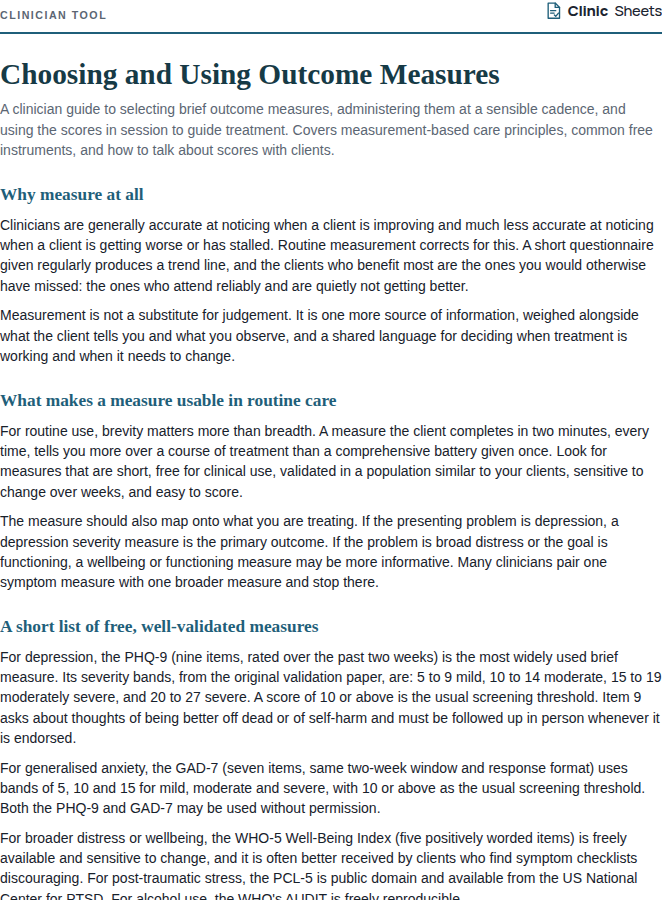
This resource is a guide rather than a copy of the instruments. The ORS and SRS are copyrighted by their authors; they are free for individual practitioners under a licence obtained from the developers, and we do not reproduce them here. The guide describes the format, the scoring by ruler, the published clinical cut-offs for adults, adolescents and children, and the reliable change criterion. It explains what the scores are for: not to grade the client or the clinician, but to open a conversation, in every session, about whether therapy is helping and whether the fit is right, and to flag early the cases that are not on track.
The evidence for routine outcome monitoring, from Lambert's work as well as from PCOMS trials, is that feedback improves outcomes mainly by identifying clients who are deteriorating or stalled, whom clinicians otherwise tend to miss. The measures are only as useful as the conversation that follows them, and this professional version spends most of its space on that conversation.
How to use it
- Obtain the ORS, SRS and (for young people) the CORS and CSRS under licence from the developers. Print or use the electronic versions; the paper lines must be exactly 10 centimetres for the scoring to be valid.
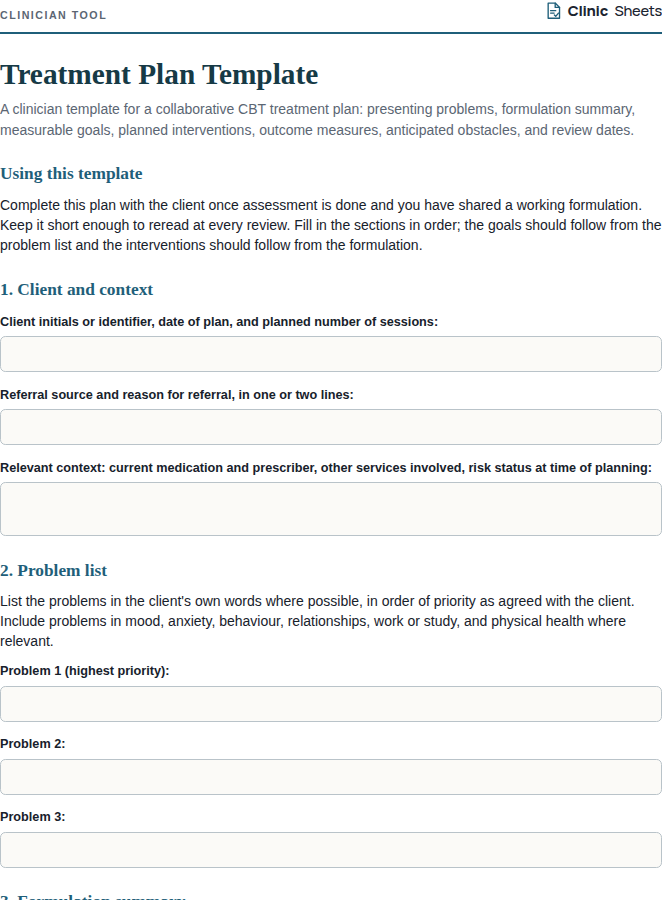
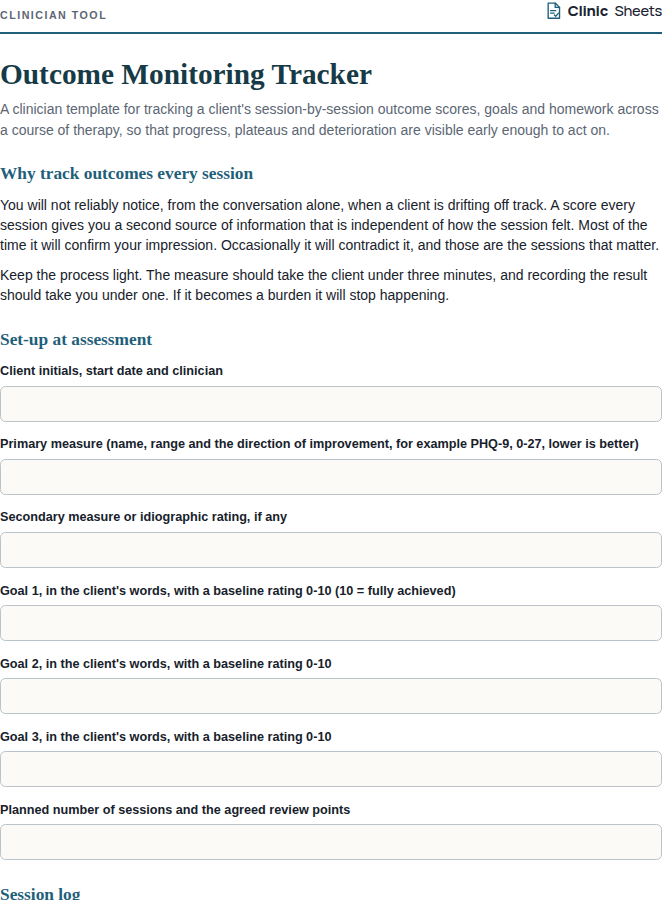
- At the start of every session, ask the client to complete the ORS about the past week. Score each line with a ruler in centimetres to one decimal place and add the four for a total out of 40. Plot it on a graph the client can see.
- Compare the first-session total to the clinical cut-off (25 for adults). Tell the client what the number means and ask whether it fits their experience. Watch for a high first score, which often means the client does not see themself as having a problem, or is there for someone else.
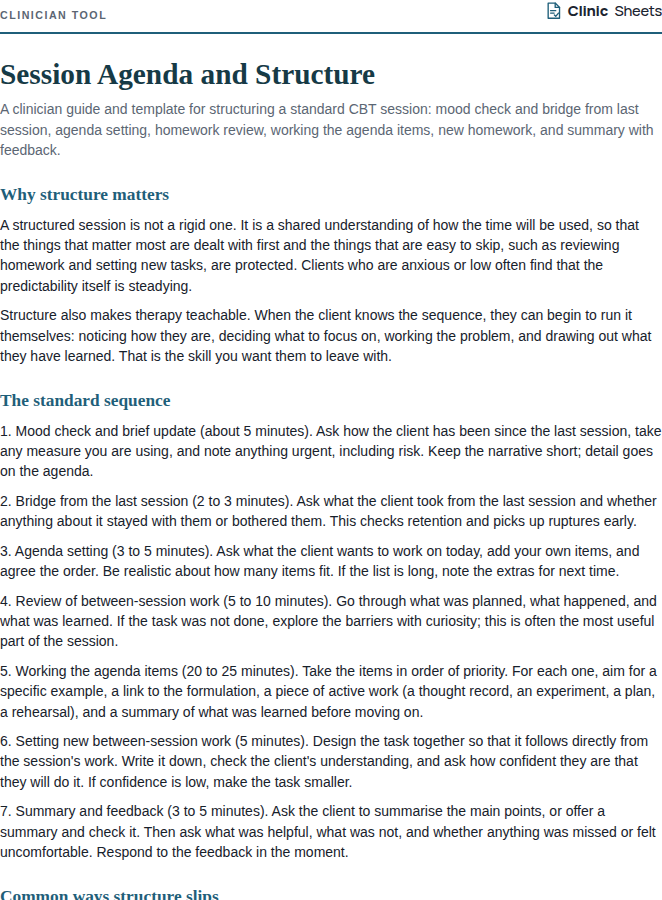
- At the end of every session, ask the client to complete the SRS, score it the same way, and look at it before they leave. Any total under 36, or any single line noticeably lower than the others, is an invitation: 'Thank you for being honest. What would have made this session better?'
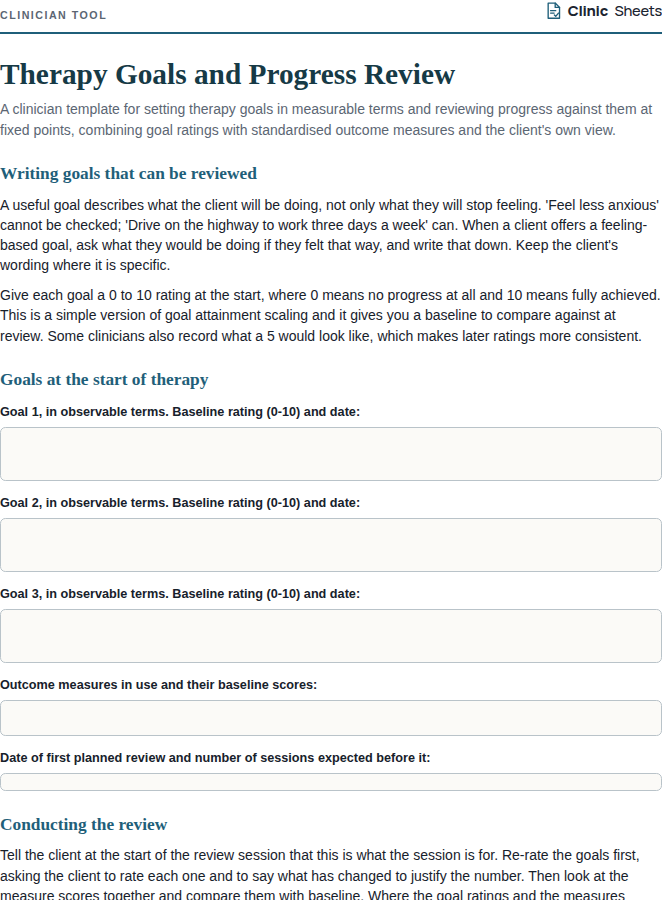
- Track the ORS across sessions. A gain of 5 points or more from the first session is reliable change. No change by the third to sixth session is a signal to review the plan with the client, change approach, or consider referral.
References
- Miller, S. D., Duncan, B. L., Brown, J., Sparks, J. A., & Claud, D. A. (2003). The Outcome Rating Scale: A preliminary study of the reliability, validity, and feasibility of a brief visual analog measure. Journal of Brief Therapy, 2(2), 91-100.
- Duncan, B. L., Miller, S. D., Sparks, J. A., Claud, D. A., Reynolds, L. R., Brown, J., & Johnson, L. D. (2003). The Session Rating Scale: Preliminary psychometric properties of a 'working' alliance measure. Journal of Brief Therapy, 3(1), 3-12.
- Lambert, M. J., & Shimokawa, K. (2011). Collecting client feedback. Psychotherapy, 48(1), 72-79.