Panic Attacks (for Teens)
A handout for adolescents explaining what a panic attack is, why the body produces such frightening sensations, why panic is not dangerous, and how catastrophic thinking keeps it going. Written for teens in direct, respectful language.
About this resource
Panic attacks often begin in adolescence, and teens who experience them frequently conclude that something is seriously wrong with their body or mind, or that they are the only person their age this happens to. Because a panic attack can occur in a classroom, on a bus or at a party, teens may also begin avoiding the places where attacks have occurred, and avoidance quickly narrows their world.
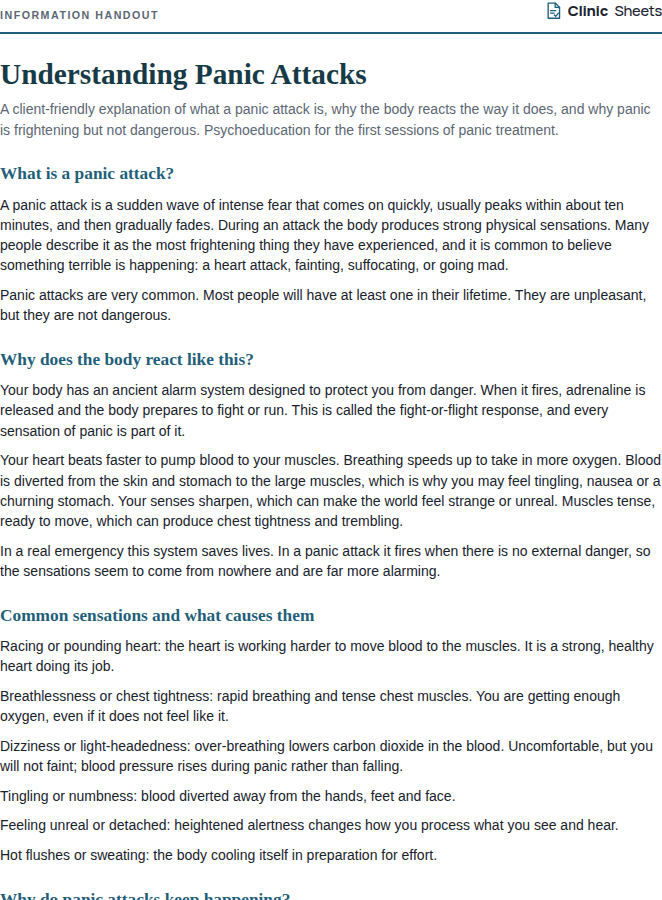
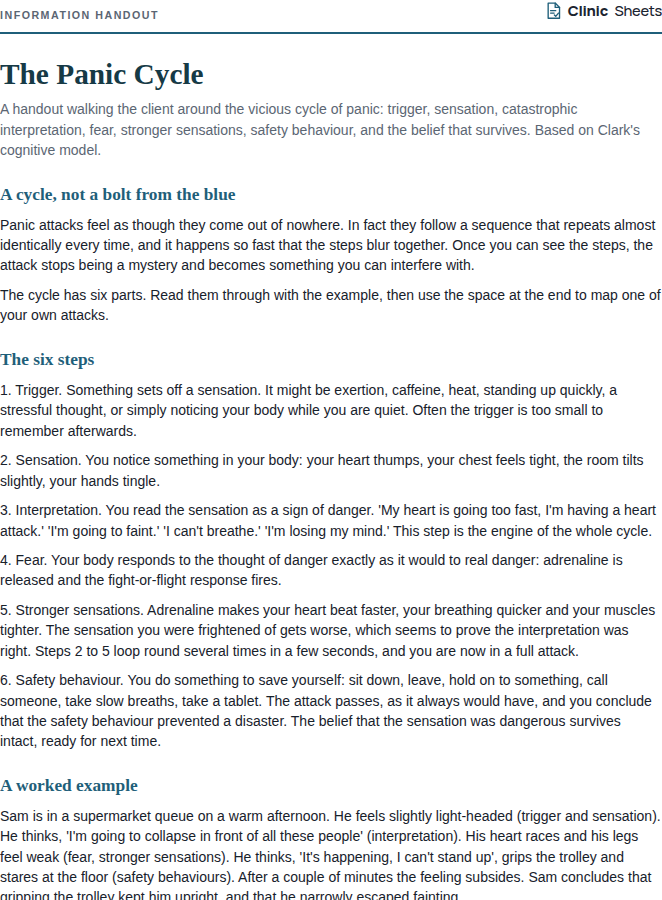
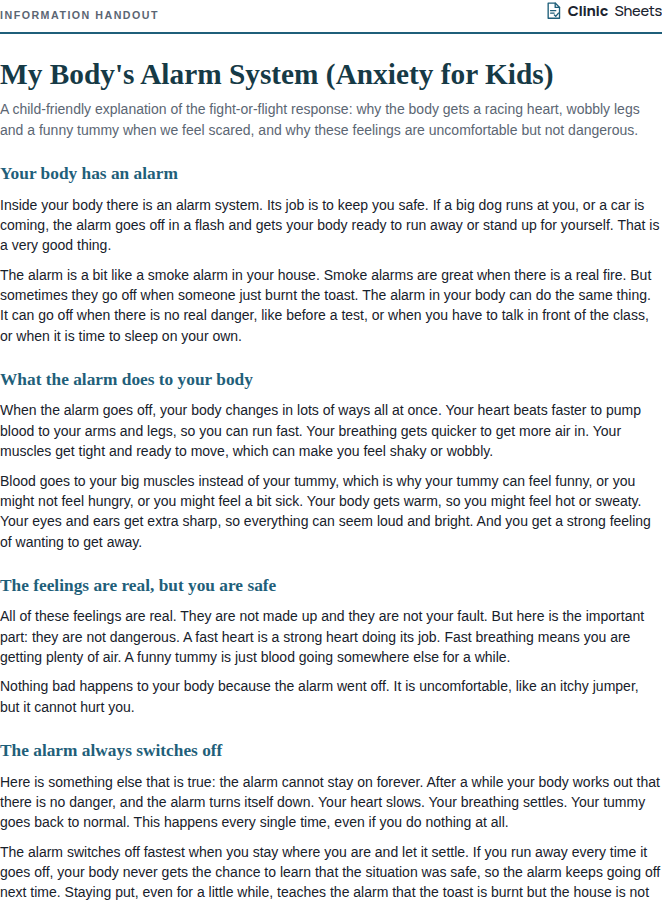
This handout applies Clark's (1986) cognitive model of panic in language suited to adolescents. It explains the fight-or-flight response, links each common sensation to its physiological cause, and introduces the idea that it is the catastrophic misinterpretation of sensations ('my heart is racing, I'm going to collapse') rather than the sensations themselves that drives the attack. It also names the safety behaviours and avoidance that maintain panic, in preparation for interoceptive and situational exposure. Adolescent-specific adaptations are drawn from Pincus and colleagues' panic treatment for adolescents.
The professional version adds guidance on eliciting the teen's specific feared catastrophe, involving parents without increasing reassurance, and coordinating with school for attacks that occur there.
How to use it
- Use early, once the teen has described a typical attack. Ask them to talk you through one, sensation by sensation, and what they feared each meant.
- Read the sensations section together and have the teen mark which ones they get. Ask what they thought was happening at the time.
- Draw the panic cycle using the teen's own example. Keep it concrete: their sensation, their thought, their reaction.
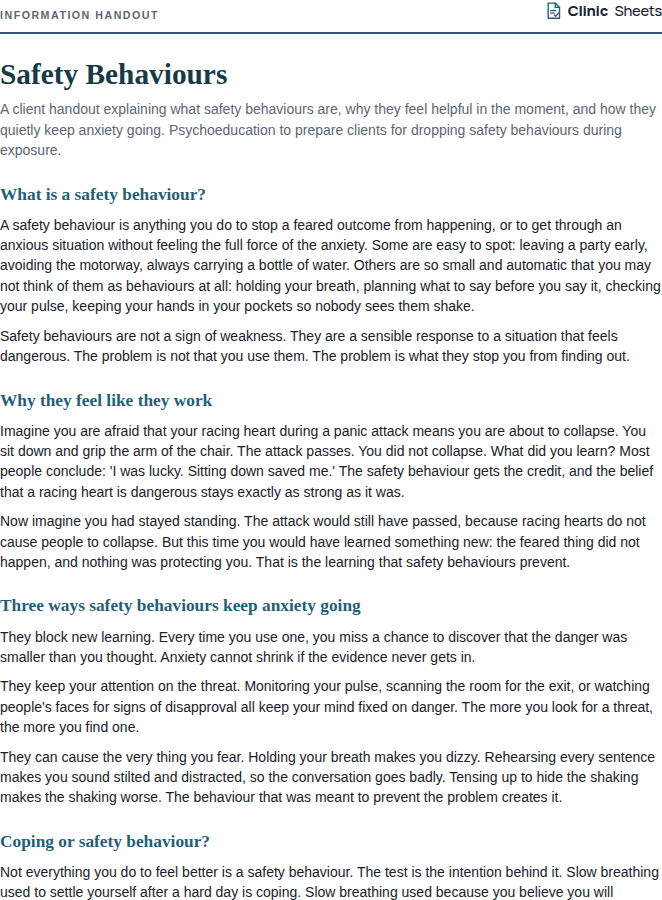
- Identify safety behaviours and avoidance. Ask what the teen does to prevent the feared outcome, and where they no longer go.
- Follow with interoceptive exposure once the model is understood and the teen agrees it fits their experience.
- Involve parents in understanding the model so that they can encourage approach rather than provide reassurance or rescue.
References
- Clark, D. M. (1986). A cognitive approach to panic. Behaviour Research and Therapy, 24(4), 461-470.
- Pincus, D. B., Ehrenreich, J. T., & Mattis, S. G. (2008). Mastery of Anxiety and Panic for Adolescents: Riding the Wave, Therapist Guide. Oxford University Press.
- Craske, M. G., & Barlow, D. H. (2007). Mastery of Your Anxiety and Panic: Therapist Guide (4th ed.). Oxford University Press.