Grounding Techniques
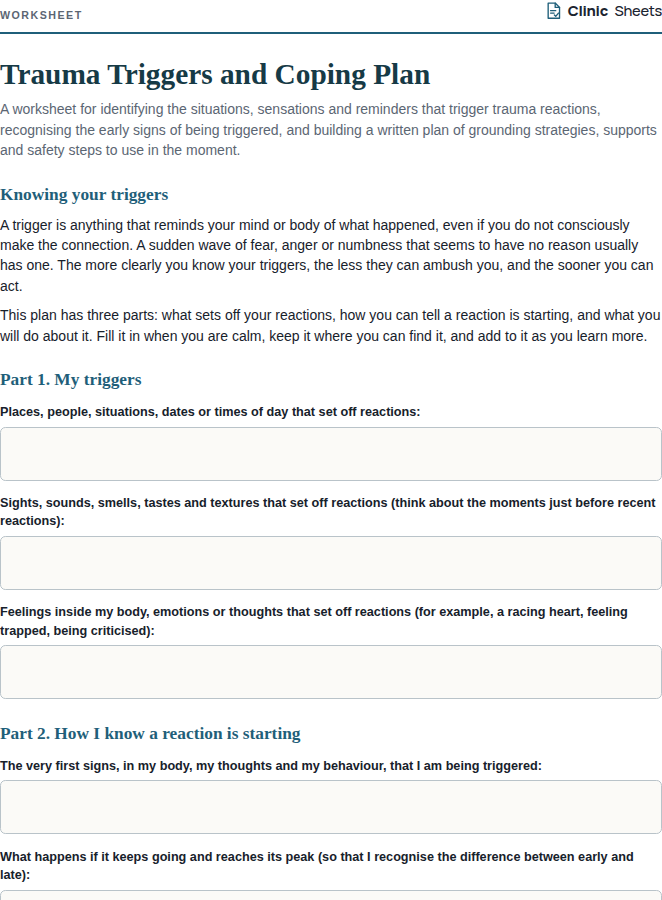
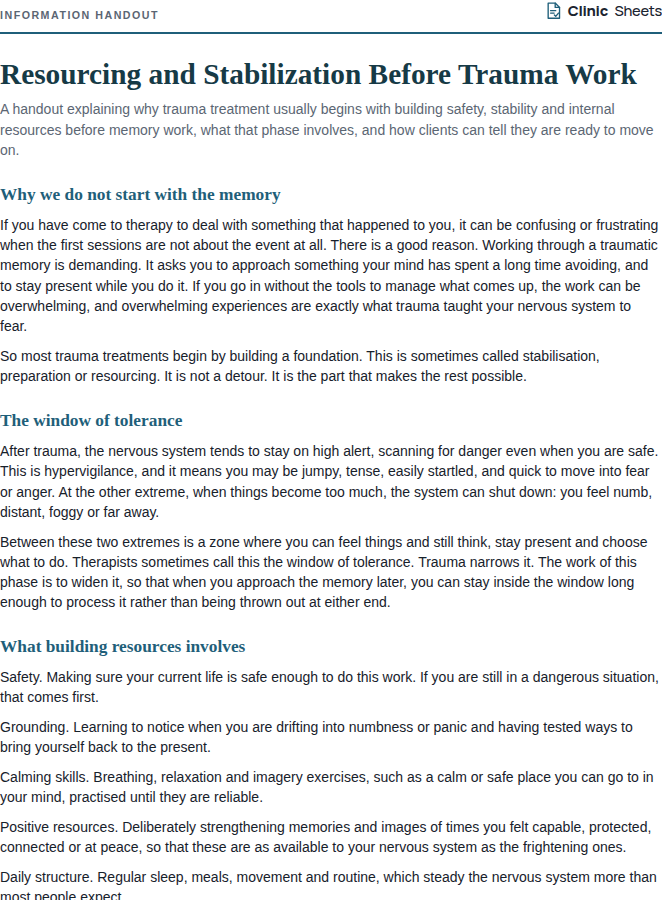
A handout describing a range of grounding techniques (sensory, physical, mental and self-talk) for bringing attention back to the present during flashbacks, dissociation, panic and overwhelming emotion, with space for the client to build a personal list.
About this resource
Grounding refers to a family of techniques that anchor attention in the present moment and the immediate physical environment. They are used when a person is being pulled out of the present by a trauma memory, a dissociative episode, a panic attack or a surge of emotion so intense that thinking becomes impossible. Grounding does not process the underlying difficulty; it restores enough contact with the here and now for the person to be safe, to use other skills, or to continue with therapeutic work.
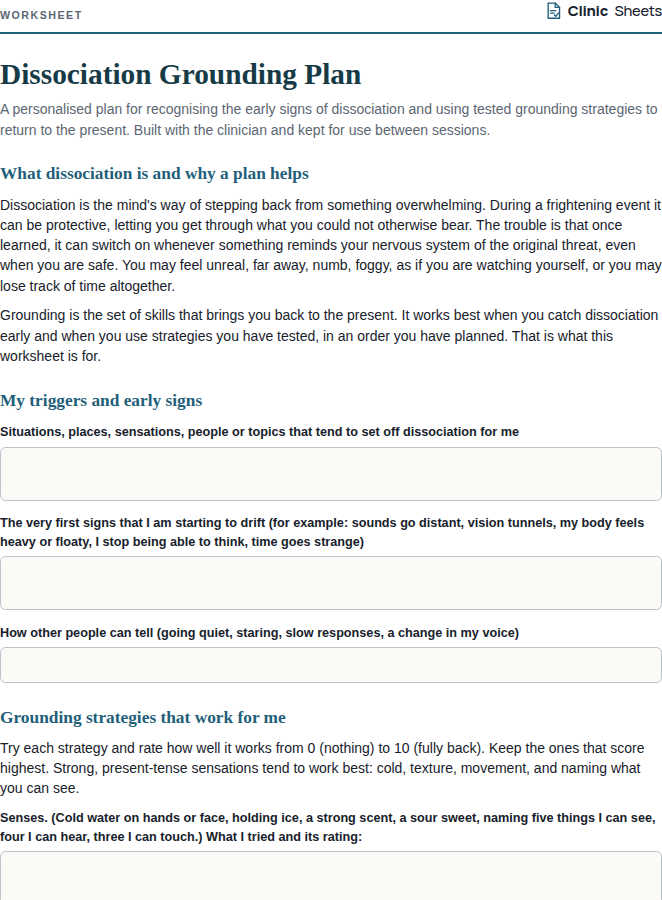
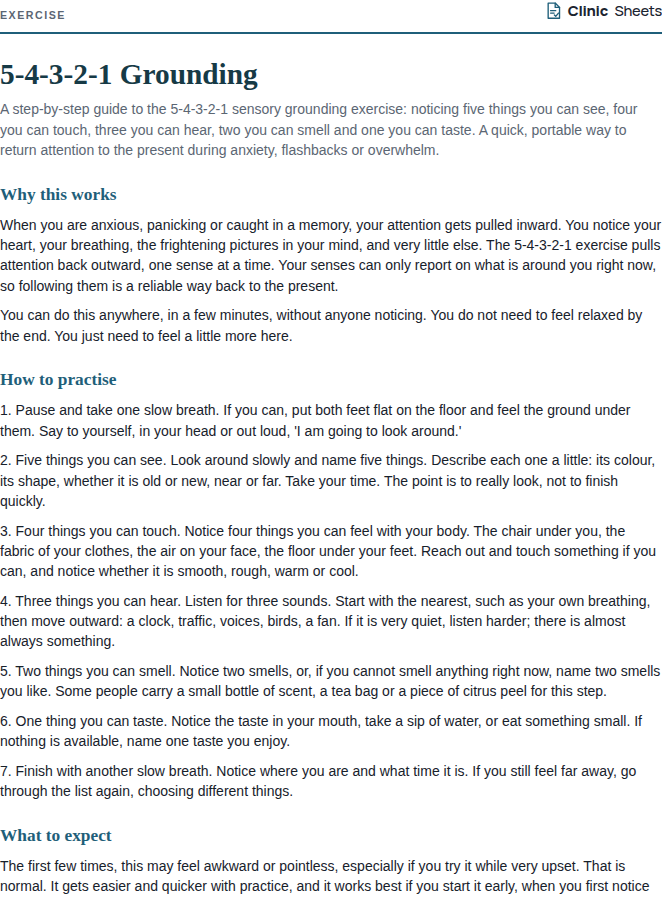
This handout groups techniques into four types: sensory grounding, which uses sight, sound, touch, smell and taste; physical grounding, which uses movement, posture and muscle tension; mental grounding, which uses simple cognitive tasks to occupy the mind; and orienting self-talk, which reminds the person of where and when they are. Offering several types matters because clients differ in what works for them, and because a technique that helps with panic may be useless during dissociation. The handout encourages experimentation and ends with a section for the client to record their own preferred techniques.
It is suitable for adults and adolescents across trauma, dissociative and anxiety presentations, and is often the first skill taught in phase-oriented trauma treatment or in DBT distress tolerance. The professional version adds guidance on coaching grounding in session when a client begins to dissociate, on distinguishing grounding from avoidance, and on adapting techniques for clients with sensory sensitivities or physical limitations.
How to use it
- Introduce grounding early in treatment, before any trauma-focused work, and frame it as a skill for staying within the window of tolerance rather than as a way of never feeling anything.
- Practise at least two techniques from different categories in session while the client is calm. Skills that have only been read about are rarely available in a crisis.
- Ask the client to notice, on a 0 to 10 scale, how present they feel before and after each technique. Use this to identify which types work best for them.
- Agree on a short personal list of three to five techniques and where the client will keep it (phone, wallet, fridge).
- If the client dissociates in session, coach a technique aloud in a steady voice, using their name and the present date and place, and keep the instructions simple and concrete.
- Review which techniques were used between sessions and refine the list over time.
References
- Najavits, L. M. (2002). Seeking Safety: A Treatment Manual for PTSD and Substance Abuse. Guilford Press.
- Linehan, M. M. (2015). DBT Skills Training Manual (2nd ed.). Guilford Press.
- Cloitre, M., Cohen, L. R., Ortigo, K. M., Jackson, C., & Koenen, K. C. (2020). Treating Survivors of Childhood Abuse and Interpersonal Trauma: STAIR Narrative Therapy (2nd ed.). Guilford Press.