Quitting Smoking or Vaping: A Plan
A worksheet that turns the decision to quit smoking or vaping into a concrete plan: reasons, quit date, triggers, substitute actions, support, and a lapse plan. Suitable for adults and adolescents.
About this resource
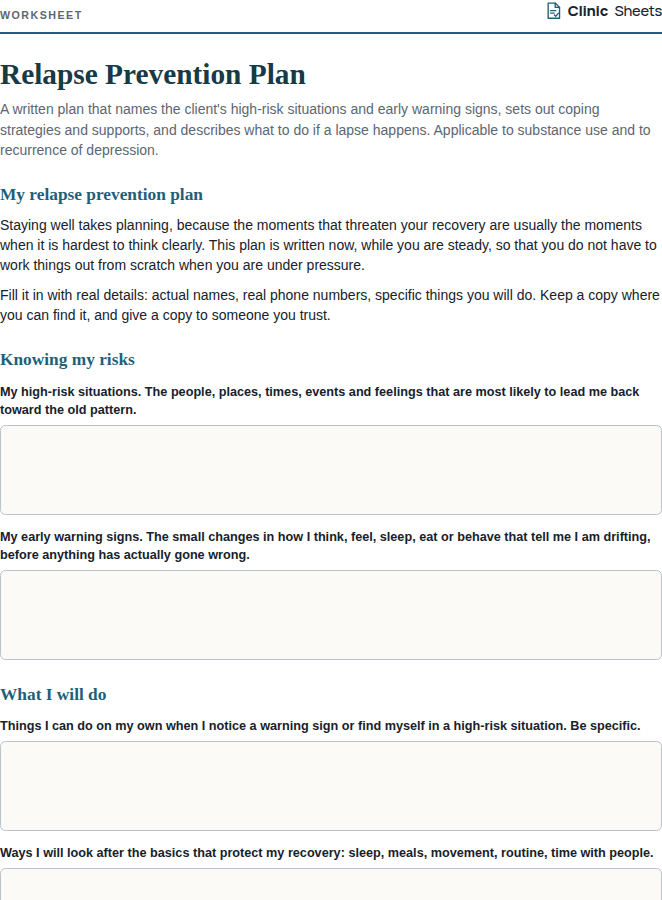
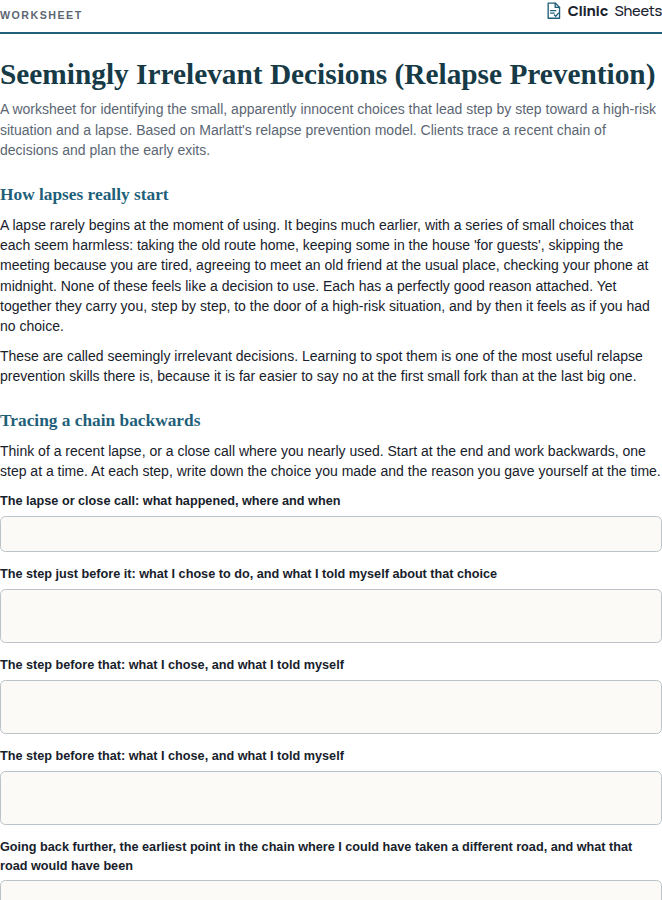
Nicotine dependence is one of the most treatable addictions, and also one of the most relapsing. The clinical practice guideline on treating tobacco use and dependence finds that counselling and pharmacotherapy are each effective and are most effective in combination, and that the content of effective counselling is practical: problem-solving and skills training around triggers and high-risk situations, plus social support. Marlatt's relapse prevention model adds the importance of anticipating high-risk situations in advance, planning coping responses, and preparing for lapses so that a single cigarette does not become a full return to smoking through the abstinence violation effect.
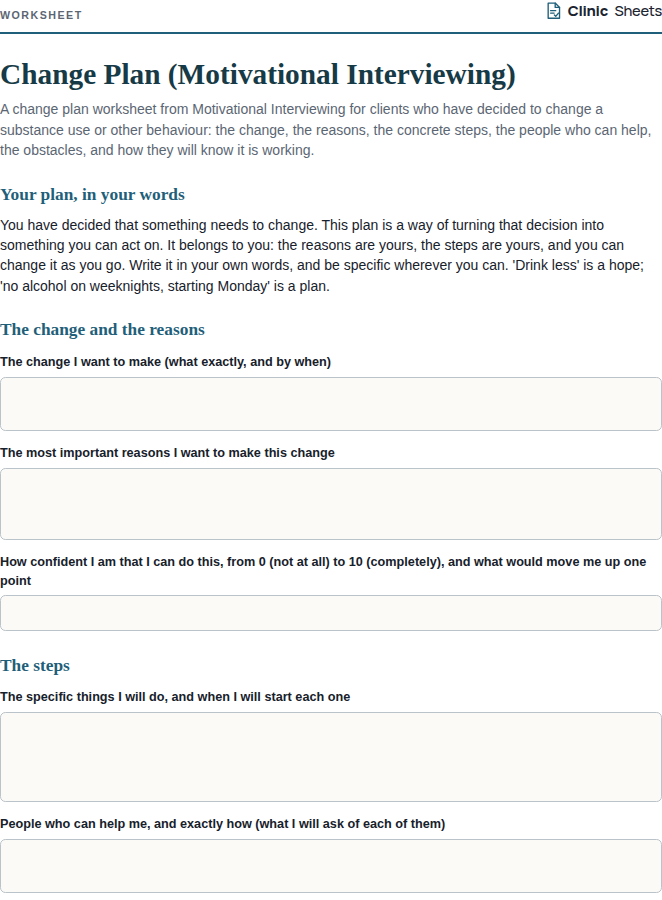
This worksheet operationalises those elements. It begins with the client's own reasons for quitting, expressed in motivational interviewing terms as importance and confidence, and then builds the plan: a quit date, a trigger map, substitute behaviours for each trigger, decisions about nicotine replacement or medication (to be made with a prescriber or pharmacist; no dosing advice is given), a support list, and a lapse plan. It applies equally to cigarettes and to vaping, which for many adolescents is the primary product.
The professional version adds notes on assessing dependence level, on the pharmacotherapy options to discuss with prescribers, on vaping-specific issues including high-nicotine pod products and the difficulty of tracking dose, and on adapting the approach for adolescents.
How to use it
- Assess readiness, dependence (time to first cigarette or vape after waking is a quick indicator), and previous quit attempts, including what helped and what led to relapse.
- Complete the importance and confidence ratings and explore them: why that number and not lower, and what would move it higher.
- Encourage the client to discuss nicotine replacement or prescribed medication with a pharmacist or physician. Do not offer dosing advice; note the client's decision in the plan.
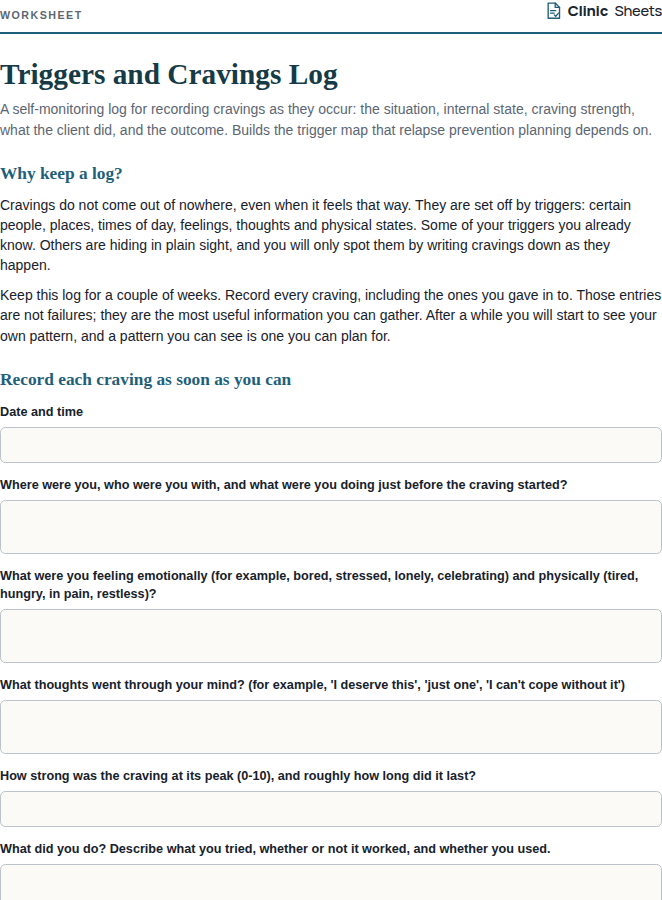
- Build the trigger map from the client's actual routine. Each trigger needs a specific substitute action, not a general intention.
- Set the quit date within two to four weeks, arrange follow-up around it, and review the lapse plan explicitly before the date. Follow up within the first week after quitting, when relapse risk is highest.
References
- Fiore, M. C., Jaen, C. R., Baker, T. B., et al. (2008). Treating tobacco use and dependence: 2008 update. Clinical practice guideline. U.S. Department of Health and Human Services, Public Health Service.
- Marlatt, G. A., & Donovan, D. M. (Eds.). (2005). Relapse prevention: Maintenance strategies in the treatment of addictive behaviors (2nd ed.). Guilford Press.
- Miller, W. R., & Rollnick, S. (2013). Motivational interviewing: Helping people change (3rd ed.). Guilford Press.