Gaming and Screen Overuse
A worksheet for adults and adolescents whose gaming or screen use has grown beyond what they want. It maps current use, weighs what it gives and costs, and builds a specific, self-chosen plan with sleep protected first.
About this resource
Gaming and heavy screen use sit on a continuum. For most people they are ordinary leisure; for some they crowd out sleep, school, work, relationships and other interests, and attempts to cut back fail. ICD-11 includes gaming disorder, defined by impaired control, increasing priority given to gaming over other interests, and continuation despite negative consequences, and DSM-5-TR lists internet gaming disorder as a condition for further study. Cognitive behavioural treatments and motivational approaches have the most support to date, and they share a core: clarify what the behaviour is doing for the person, make the costs visible, set concrete goals that the person owns, and change the environment so that the goals are easier to keep.
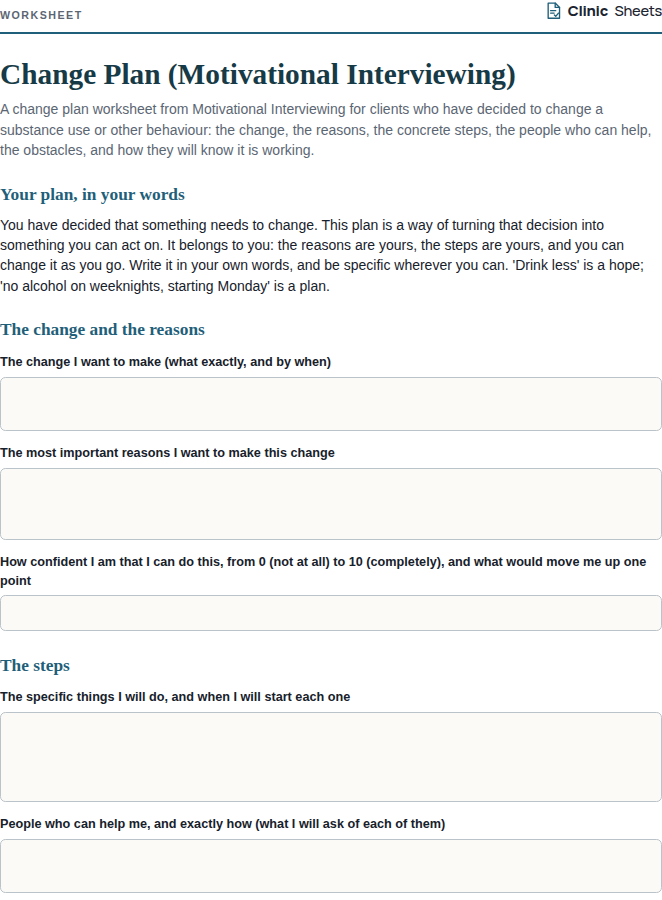
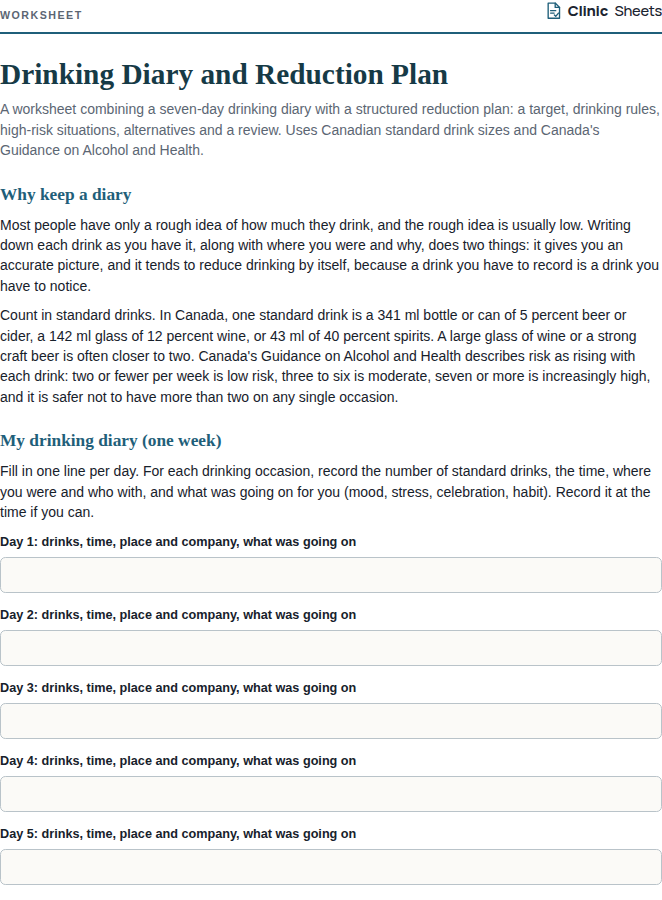
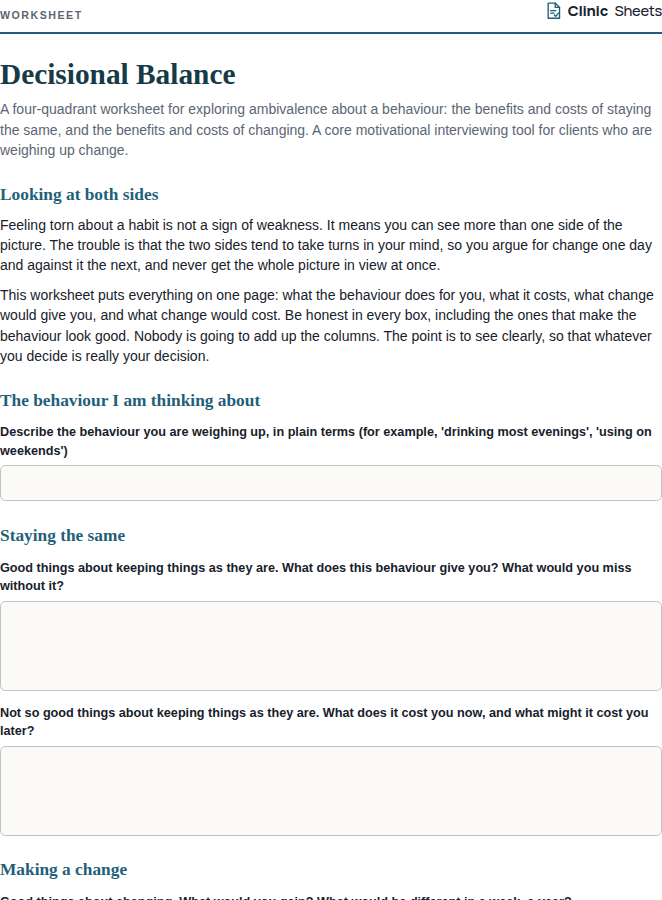
This worksheet applies that core. It is written in a motivational interviewing spirit, which matters especially for adolescents, who typically arrive because someone else is worried. It asks the client to record their actual use, identify what they get from it, notice the costs they care about (not the ones others care about), and then set limits that are specific and time-bound. Sleep is given its own section because late-night use is the most common and most damaging pattern, and because improving sleep often produces the first visible gain.
The professional version adds guidance on separating gaming from the underlying problem it may be managing (social anxiety, depression, ADHD, family conflict), on working with parents without turning the clinician into an enforcer, and on choosing between reduction and time-limited abstinence.
How to use it
- Establish what the client wants from the session before addressing use. If they are attending under pressure, say so openly and ask what, if anything, they would like to be different.
- Have the client complete a week of honest tracking before setting goals. Screen-time reports from the device or console are useful and less contestable than estimates.
- Work through the 'what it gives me' field seriously. Gaming often provides competence, belonging, structure or escape, and the plan must address how those needs will be met otherwise.
- Let the client set the limits. A modest goal the client owns beats an ambitious one imposed by a parent. Negotiate with parents separately if needed.
- Review the plan weekly. Treat lapses as data about triggers, and adjust the environment steps rather than relying on willpower.
References
- King, D. L., & Delfabbro, P. H. (2019). Internet gaming disorder: Theory, assessment, treatment, and prevention. Academic Press.
- Stevens, M. W. R., King, D. L., Dorstyn, D., & Delfabbro, P. H. (2019). Cognitive-behavioral therapy for Internet gaming disorder: A systematic review and meta-analysis. Clinical Psychology and Psychotherapy, 26(2), 191-203.
- Miller, W. R., & Rollnick, S. (2013). Motivational interviewing: Helping people change (3rd ed.). Guilford Press.
- American Psychiatric Association. (2022). Diagnostic and statistical manual of mental disorders (5th ed., text rev.).