Simple Thought Record (3 column)
A beginner-level thought record with three columns, situation, feelings and thoughts, for learning to notice automatic thoughts before moving on to evaluating them. Suitable for adults and adolescents.
About this resource
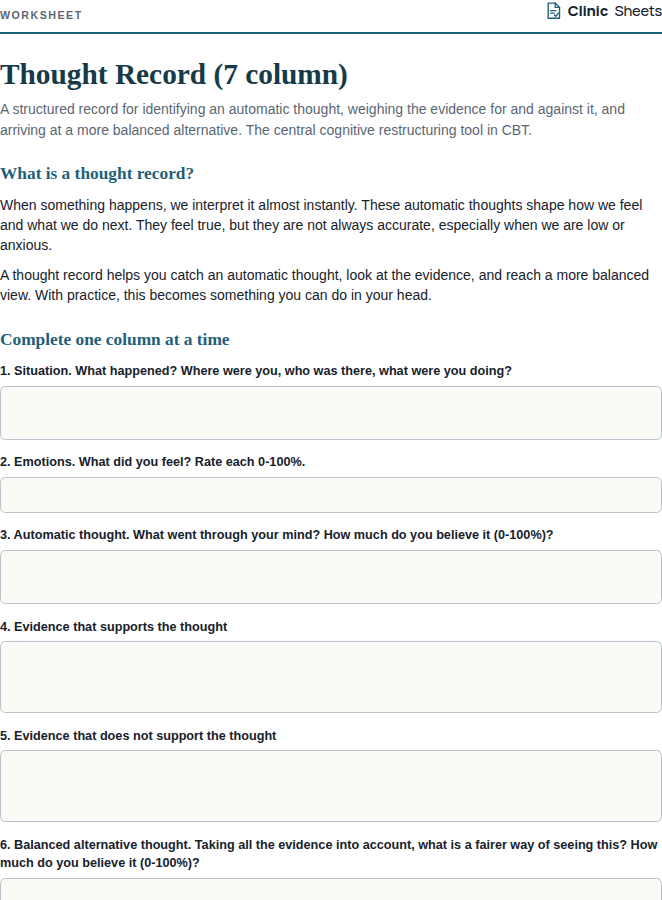
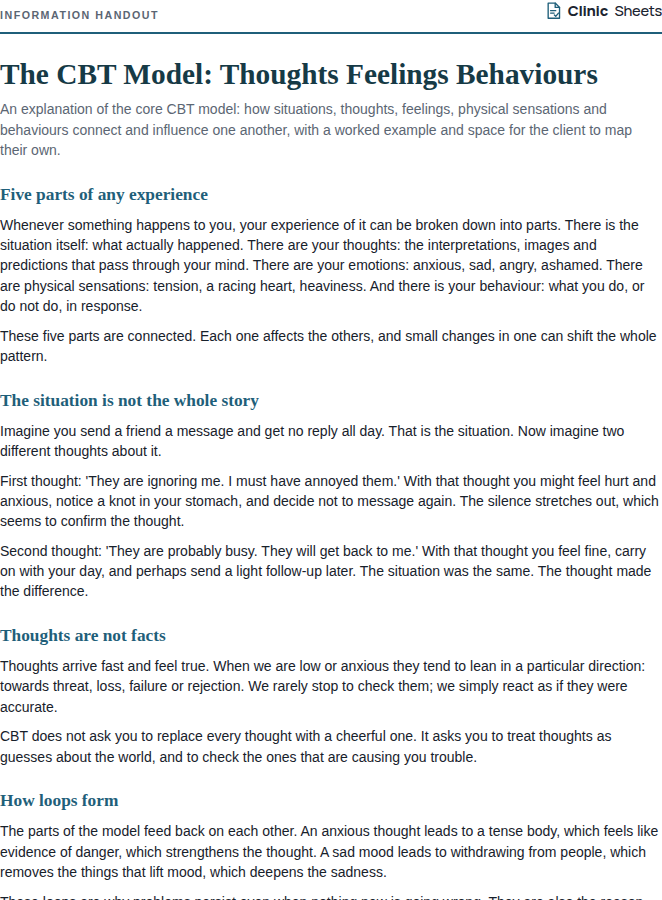
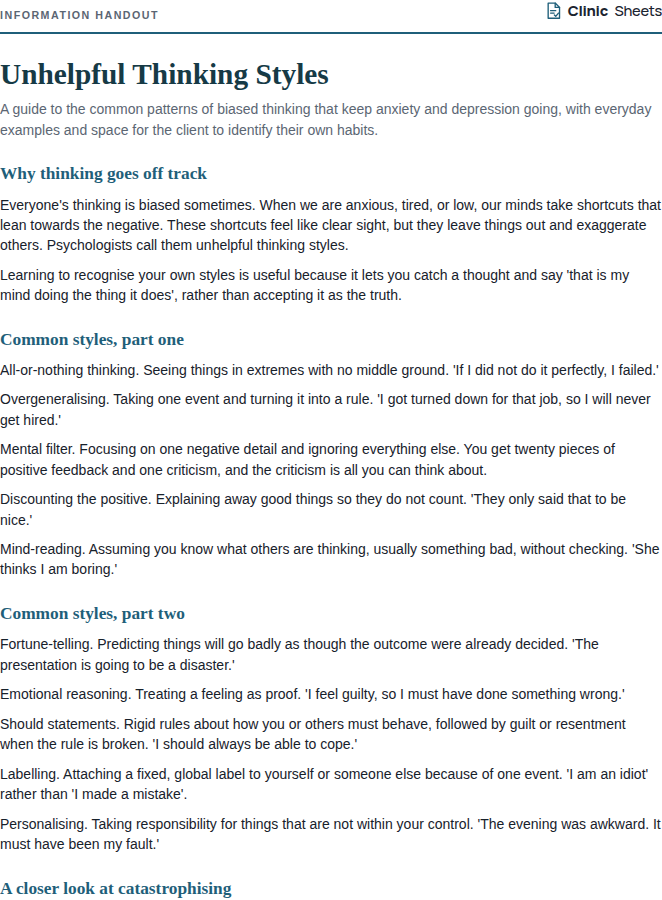
Before a client can evaluate their thinking, they need to be able to catch it. Many people are aware of a shift in mood without being aware of the thought that produced it. The three-column thought record isolates that first skill: linking a situation, the emotion it produced, and the thought or image that passed through the mind at the time. There is no evaluation step, which keeps the task simple and prevents the record becoming a debate before the client has any data.
This version is the natural first step before the seven-column record. Clients typically complete it for one to two weeks, gathering a handful of examples. Reviewing these together often reveals recurring themes, which can be carried into formulation work and into cognitive restructuring once the client is ready.
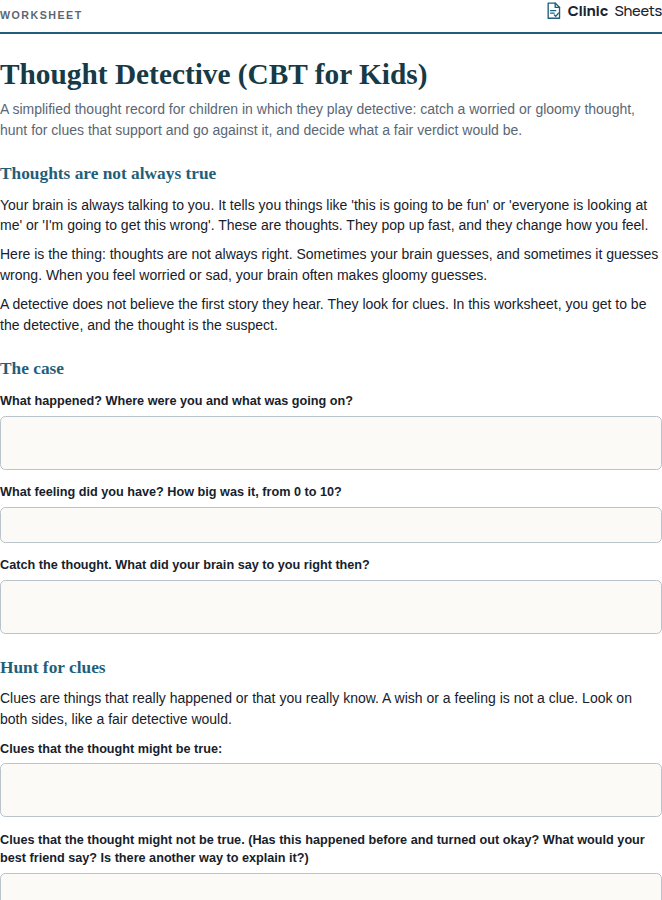
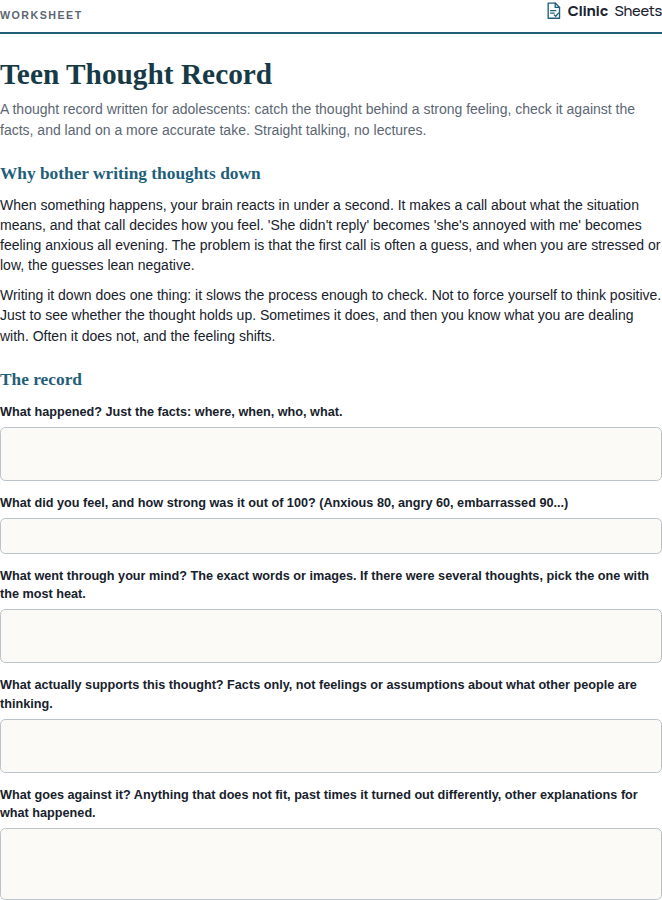
The language is kept plain and the record works equally well with adolescents. The intensity rating for emotions is included from the start so that clients get used to quantifying feelings, which makes later re-rating meaningful.
The professional version includes a worked example, guidance on helping clients separate thoughts from feelings, and prompts for eliciting images and meanings when the client reports 'I wasn't thinking anything'.
How to use it
- Introduce after the client understands the basic link between thoughts and feelings. Complete one example together in session using something from the past few days.
- Emphasise that the goal for now is only noticing. There is no need to argue with the thought yet.
- Suggest the client fills in a row whenever they notice a clear change in mood, ideally within an hour of it happening.
- Review the completed records at the start of the next session. Look for repeated themes and for thoughts the client believes strongly.
- When the client can reliably identify hot thoughts, move on to the seven-column record or Challenging Unhelpful Thoughts.
References
- Beck, J. S. (2020). Cognitive Behavior Therapy: Basics and Beyond (3rd ed.). Guilford Press.
- Greenberger, D., & Padesky, C. A. (2015). Mind Over Mood (2nd ed.). Guilford Press.
- Friedberg, R. D., & McClure, J. M. (2015). Clinical Practice of Cognitive Therapy with Children and Adolescents (2nd ed.). Guilford Press.