Thought Record (7 column)
A structured record for identifying an automatic thought, weighing the evidence for and against it, and arriving at a more balanced alternative. The central cognitive restructuring tool in CBT.
About this resource
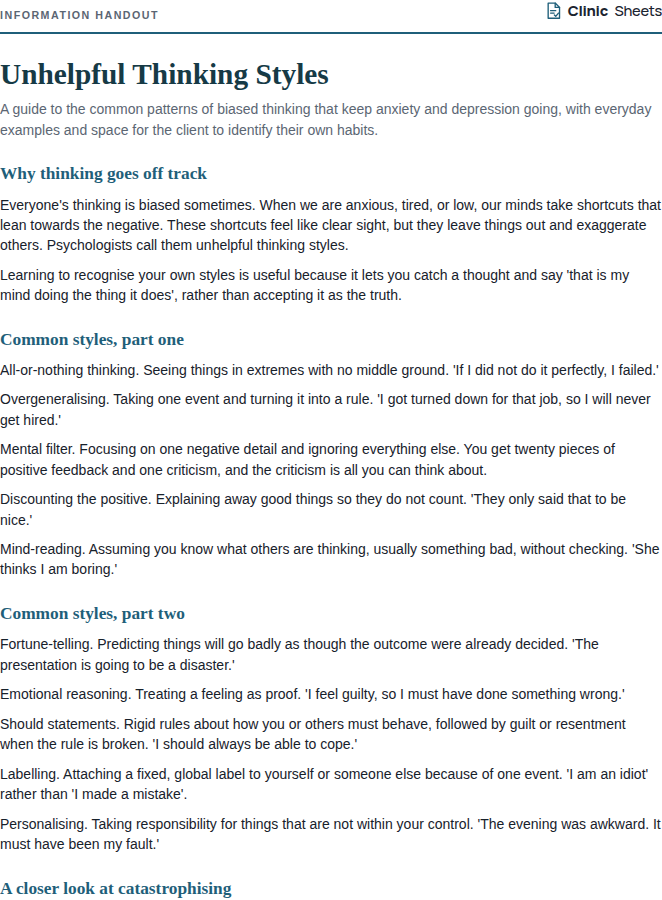
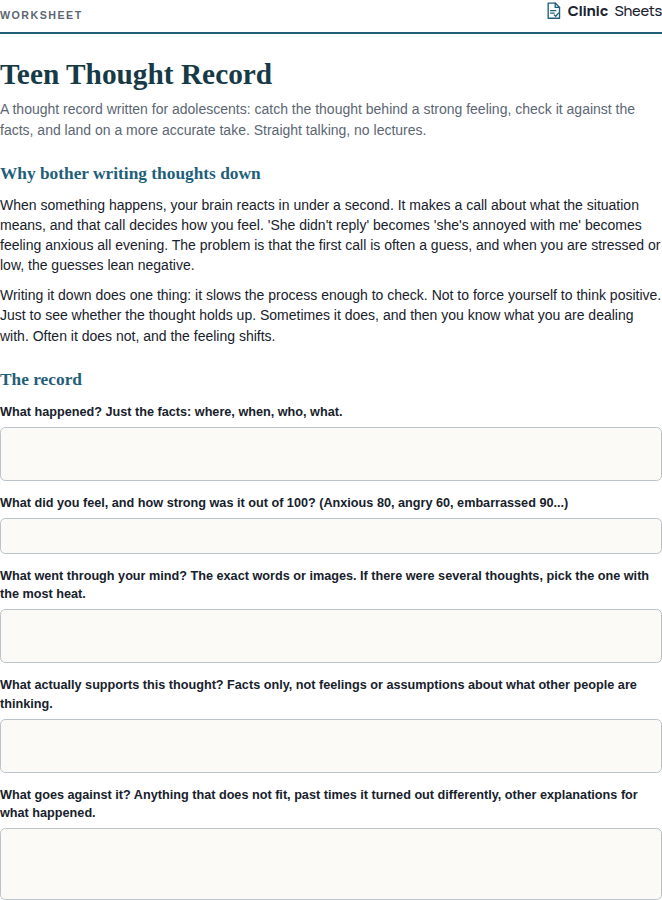
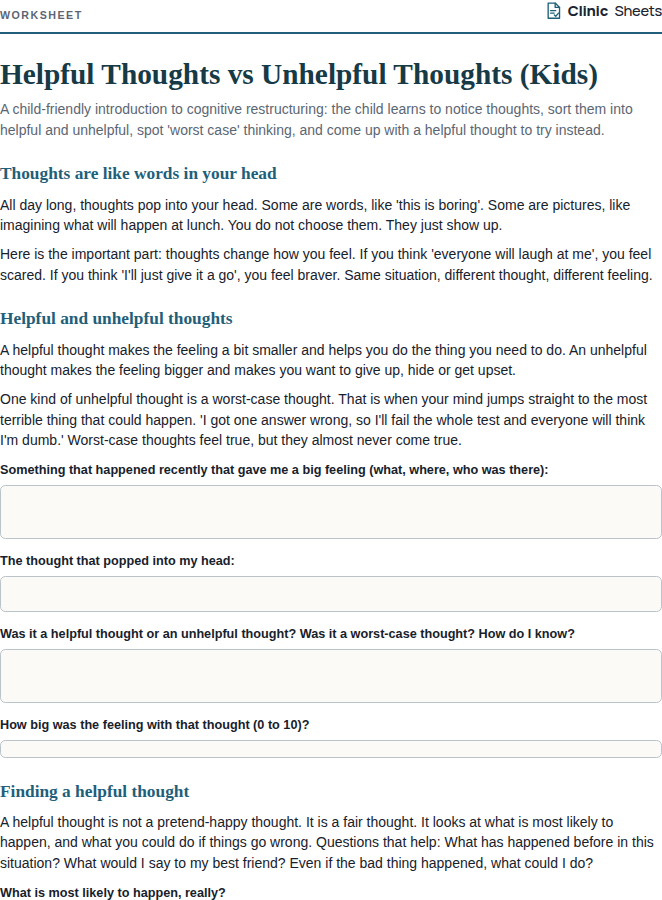
Automatic thoughts are the rapid, often unnoticed interpretations we make of situations. In anxiety and depression these interpretations tend to be biased toward threat, loss or failure, and they drive the emotional response that follows. A thought record slows this process down so that the thought can be examined rather than simply believed.
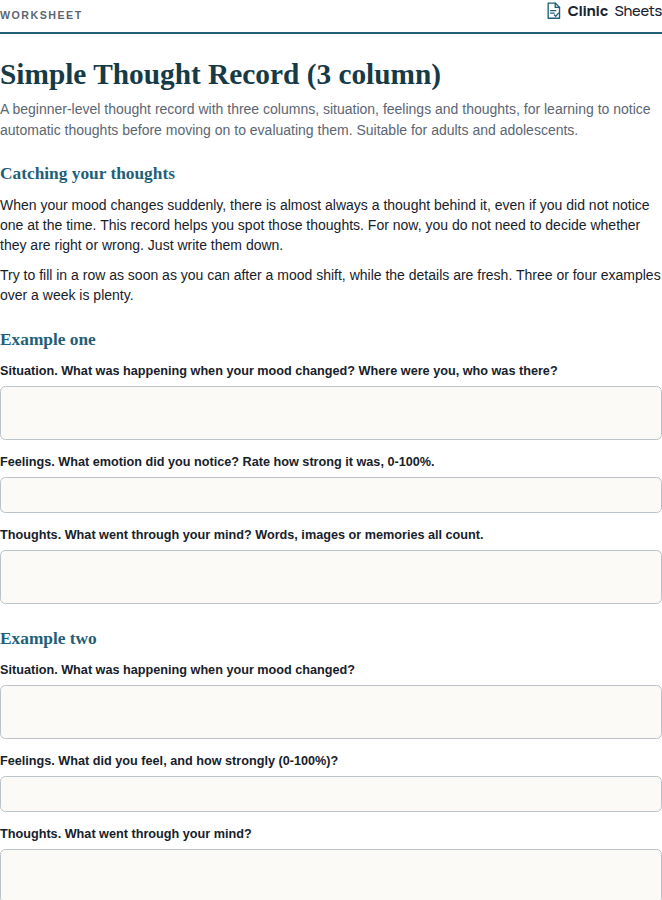
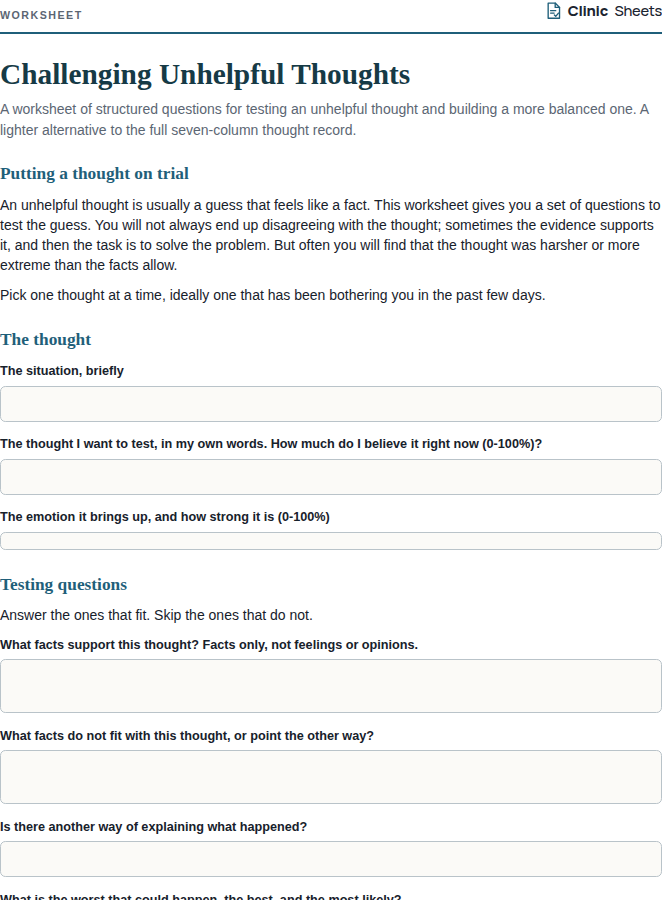
This seven-column version walks the client through the full sequence: the situation, the emotions and their intensity, the automatic thought and how much it is believed, evidence that supports the thought, evidence that does not, a balanced alternative, and a re-rating of emotion and belief. Completing several records over a few weeks builds the skill of catching and testing thoughts in real time.
The professional version includes a worked example and guidance on common difficulties, such as clients who record feelings in the thought column or who struggle to find evidence against a strongly held belief.
How to use it
- Introduce the cognitive model first (see The CBT Model: Thoughts, Feelings, Behaviours) so the client understands why thoughts are being examined.
- Complete the first record together in session using a recent, moderately distressing situation. Aim for a specific 'hot' thought rather than a general theme.
- Rate emotions and belief in the thought as percentages before and after. The change, even if small, demonstrates the method.
- Ask the client to complete one record between sessions whenever they notice a shift in mood. Review it at the start of the next session.
- When evidence against the thought is hard to find, use prompts: What would you say to a friend in this situation? Is there another way of seeing this? What is the effect of believing this thought?
References
- Beck, J. S. (2020). Cognitive Behavior Therapy: Basics and Beyond (3rd ed.). Guilford Press.
- Greenberger, D., & Padesky, C. A. (2015). Mind Over Mood (2nd ed.). Guilford Press.
- Kennerley, H., Kirk, J., & Westbrook, D. (2016). An Introduction to Cognitive Behaviour Therapy (3rd ed.). SAGE.