Thinking Traps (for Teens)
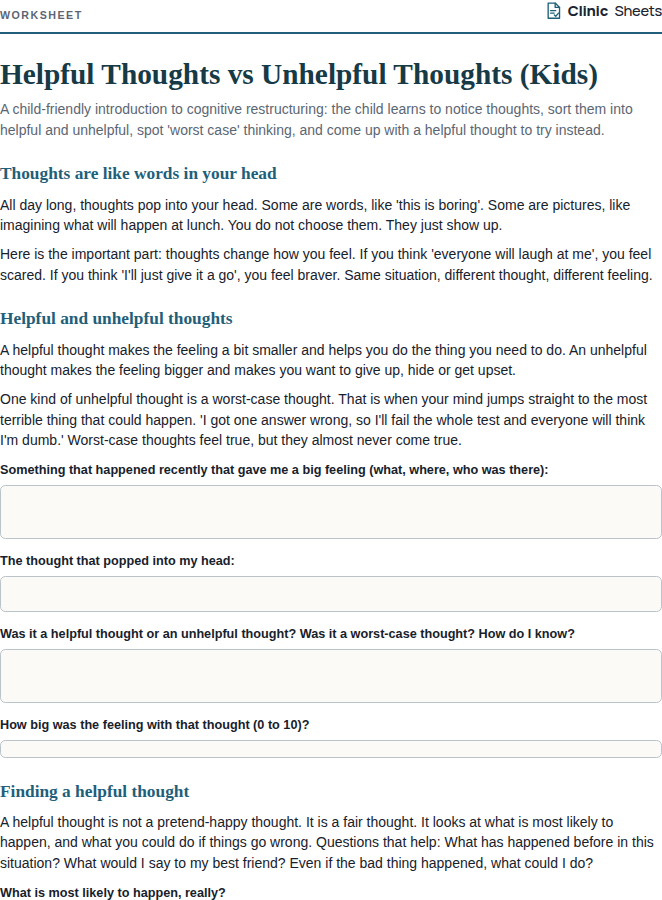
An adolescent-friendly guide to the common cognitive distortions, with school, social and family examples, and a short exercise for catching a thinking trap in a recent situation.
About this resource
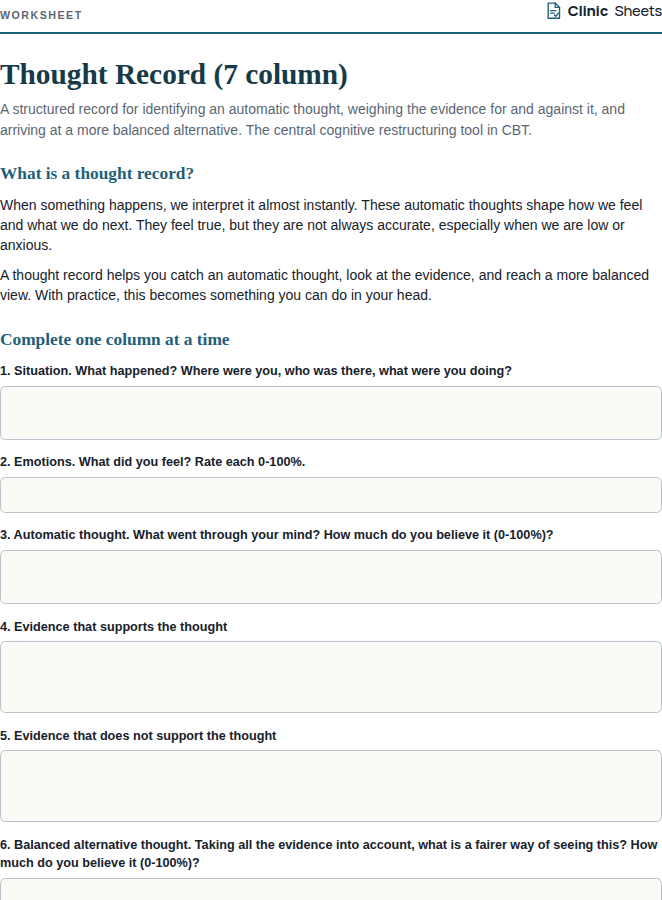
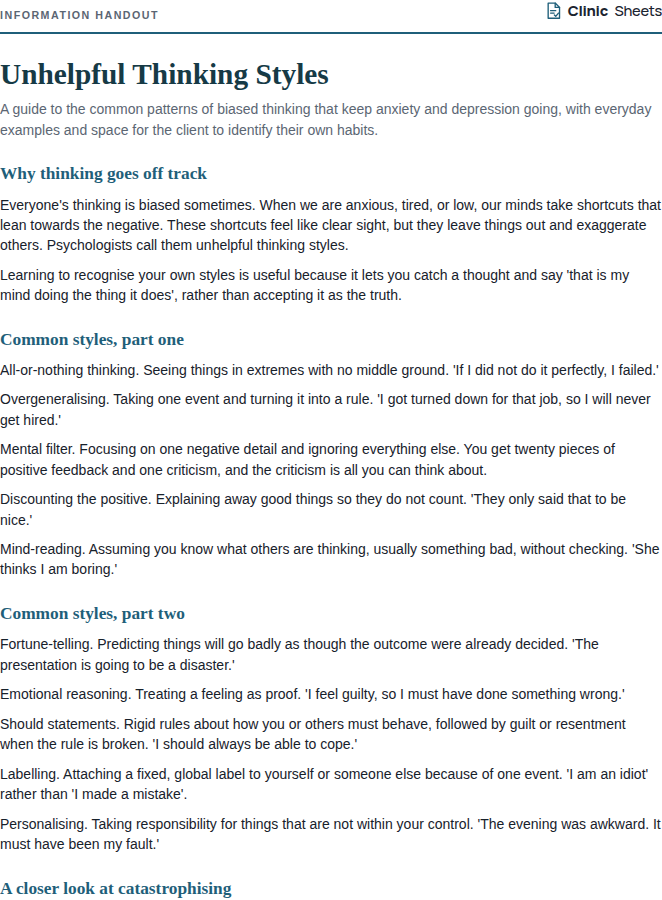
Cognitive distortions, often called thinking traps or thinking errors in work with young people, are the systematic biases that colour automatic thoughts in anxiety and depression. Teaching adolescents to name these patterns gives them a shared vocabulary with the therapist and a first step toward standing back from a thought rather than accepting it as fact.
This handout presents eight of the most common traps in language a teenager can use, each with a brief everyday example. It avoids the long lists found in adult materials in favour of the patterns that come up most often in adolescent work: catastrophising, mind reading, all-or-nothing thinking, overgeneralising, fortune telling, should statements, personalising, and discounting the positive. It ends with a short exercise in catching a trap in a recent situation.
The professional version adds guidance on introducing the concept without implying the young person is thinking 'wrongly', on using the therapist's own examples to model the skill, and on moving from labelling to restructuring.
How to use it
- Introduce after the cognitive model has been explained, so the young person understands why thoughts matter.
- Read through the traps together. Share a mild example of your own for one or two of them; this models that everyone falls into these patterns and takes the sting out of the label.
- Ask the young person which two or three traps they recognise most. Do not aim for all of them.
- Complete the exercise section using a real situation from the past week. The goal at this stage is naming the trap, not yet replacing the thought.
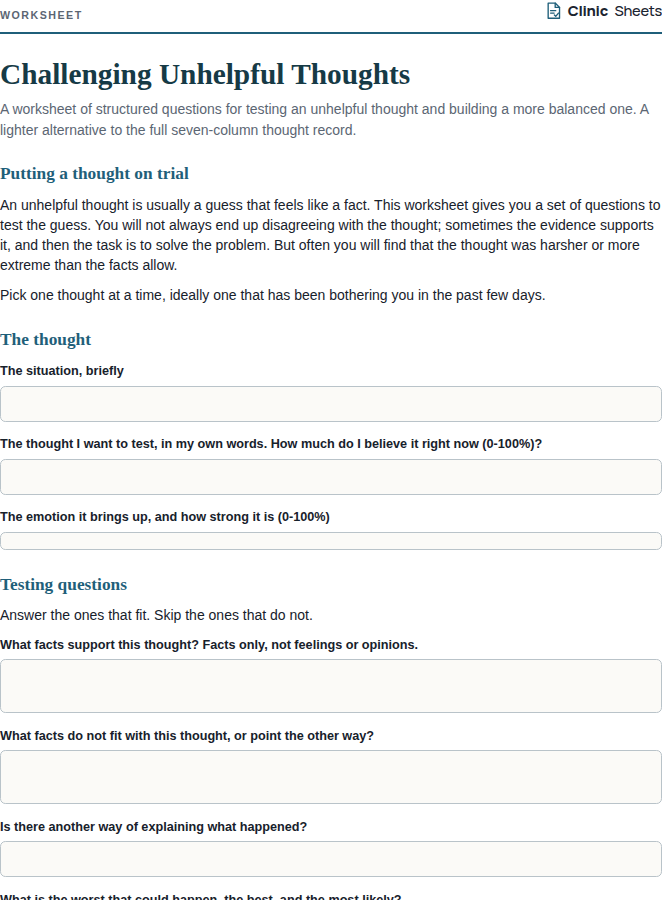
- Follow with a thought record or a behavioural experiment targeting the trap that shows up most.
References
- Burns, D. D. (1980). Feeling Good: The New Mood Therapy. William Morrow.
- Beck, J. S. (2020). Cognitive Behavior Therapy: Basics and Beyond (3rd ed.). Guilford Press.
- Stallard, P. (2019). Think Good, Feel Good: A Cognitive Behavioural Therapy Workbook for Children and Young People (2nd ed.). Wiley.