Tolerating Uncertainty Experiments
A behavioural experiment worksheet for testing beliefs about uncertainty: the client deliberately drops a certainty-seeking behaviour in a chosen situation, predicts the outcome, and records what happened and what it means.
About this resource
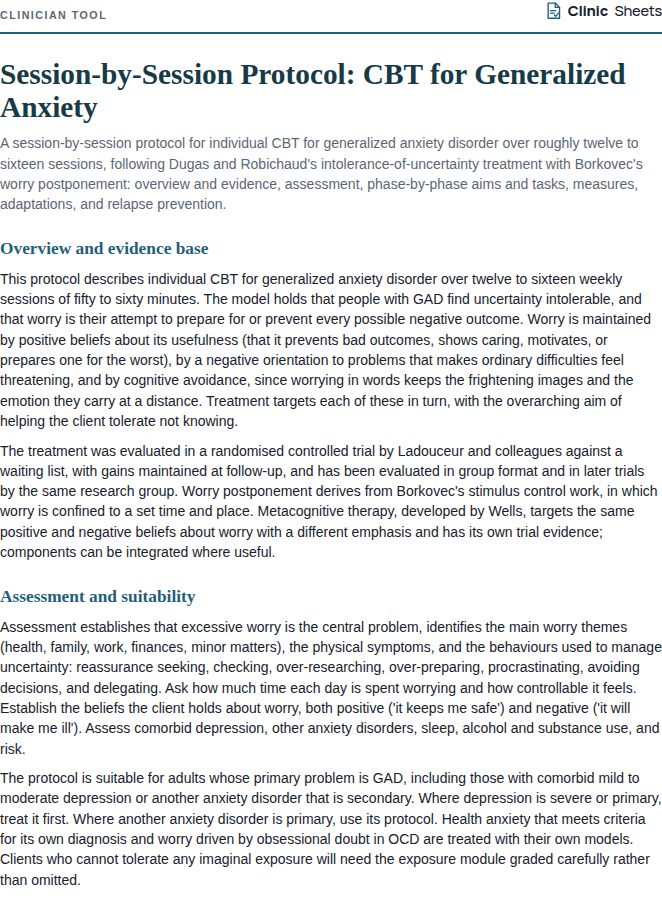
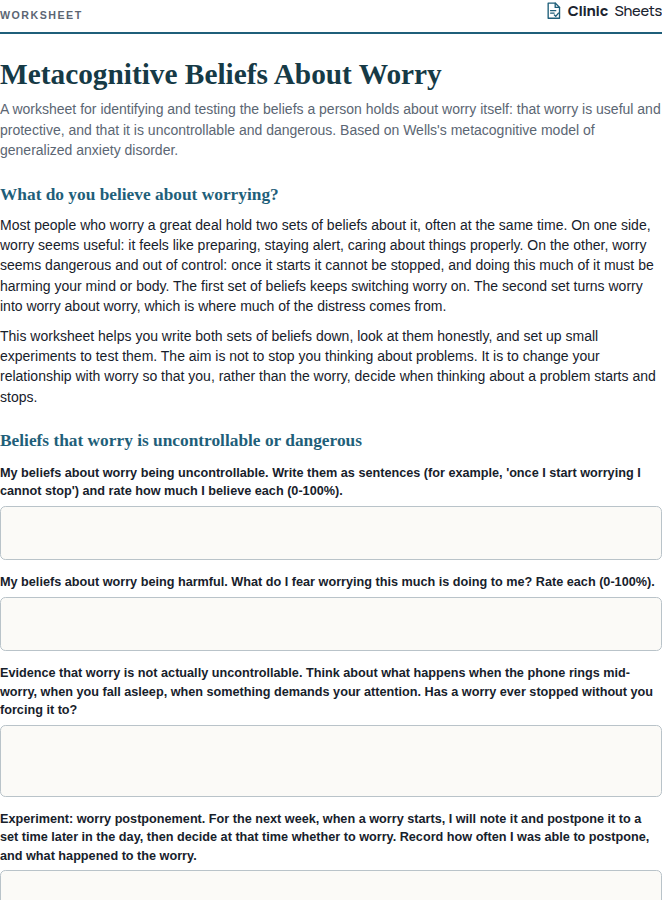
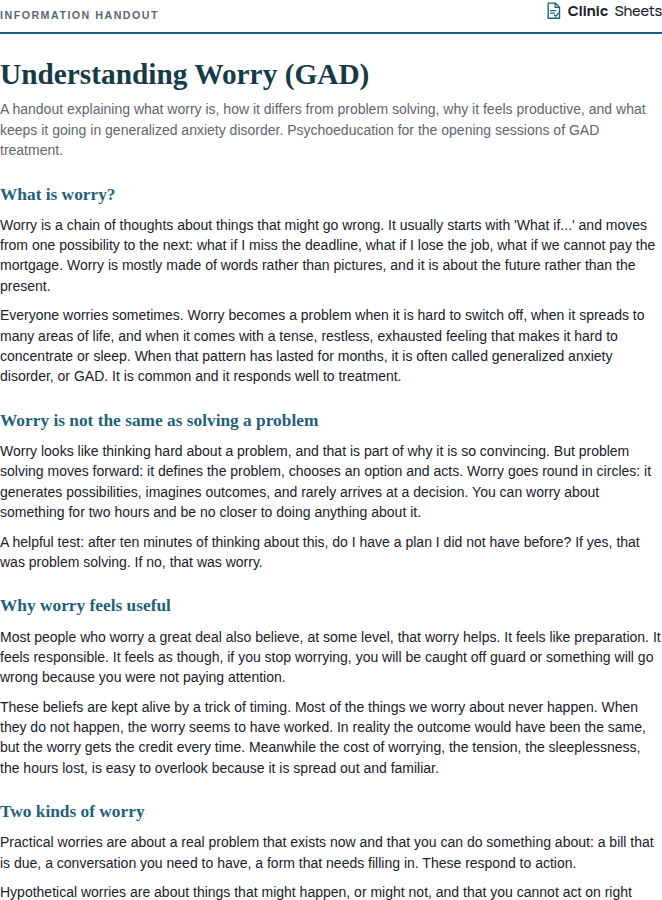
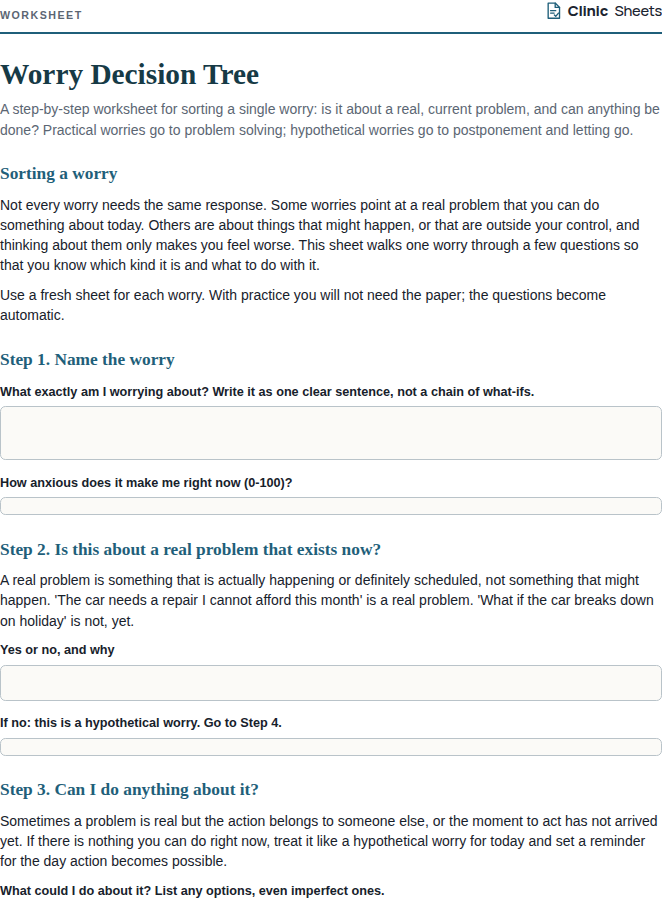
Behavioural experiments targeting intolerance of uncertainty are the active ingredient of the Dugas and Robichaud treatment for generalized anxiety disorder, and are increasingly used across the anxiety disorders wherever reassurance seeking, checking and over-preparation are prominent. The logic is the same as any behavioural experiment: identify a belief ('if I do not check, something will go wrong and I will not cope'), design a situation in which the belief makes a testable prediction, run the situation without the safety behaviour, and compare the outcome with the prediction. Repeated across many small situations, these experiments produce a general shift in the client's relationship with not knowing.
This worksheet takes the client through one experiment: choosing a certainty-seeking behaviour to drop, selecting a situation in which to drop it, writing the specific prediction and belief rating, carrying out the experiment, and debriefing. The debrief asks about the outcome, the client's actual capacity to cope with the discomfort, and what the result says about the broader belief. A closing tips section covers the two most common ways experiments go wrong: choosing a situation with real, serious consequences (start small) and secretly replacing one certainty behaviour with another.
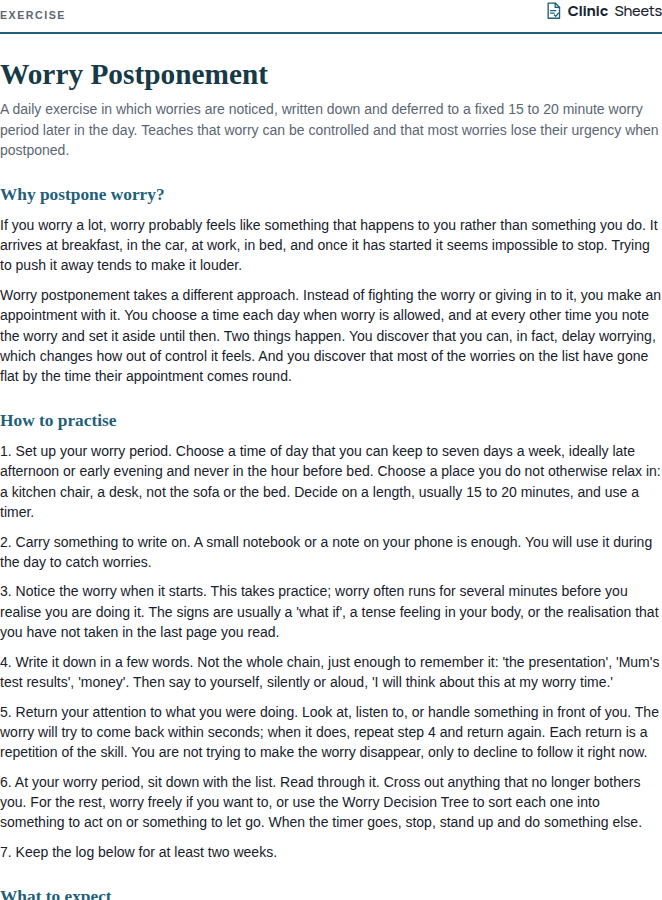
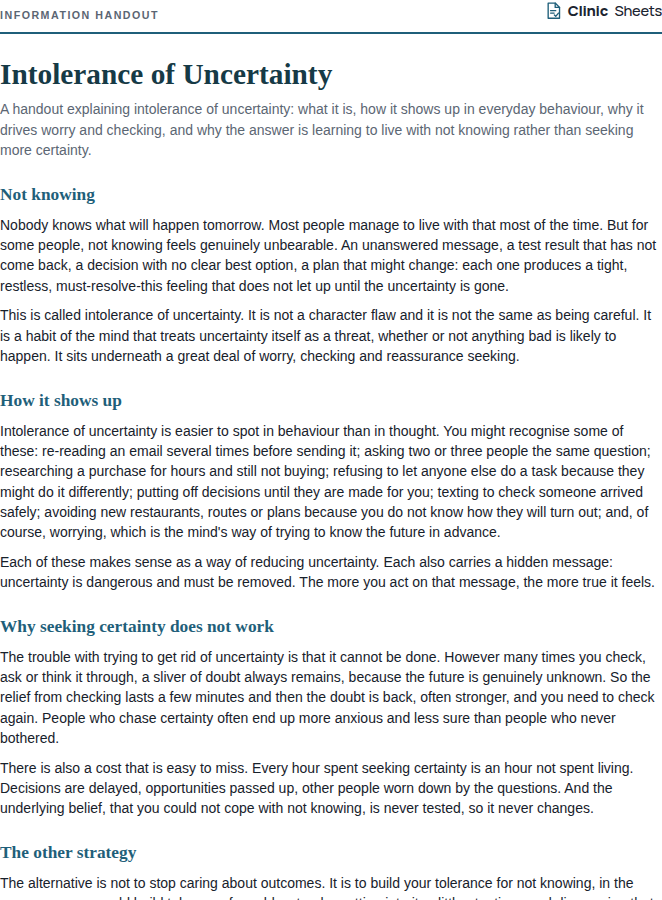
Use after the Intolerance of Uncertainty handout. Plan the first two or three experiments in session, then have the client design their own. The professional version adds a graded menu of experiment ideas from very low to high stakes (sending a text without re-reading it, ordering something unfamiliar, delegating a small task, leaving the house without checking the stove twice, making a plan without a backup), and guidance on debriefing experiments where something mildly negative did happen, which are often the most valuable.
How to use it
- Start with a list of the client's certainty-seeking behaviours from the Intolerance of Uncertainty handout. Rank them by how anxious the client would feel dropping each one.
- Choose a low-ranked behaviour for the first experiment and a specific situation in the next few days where it would normally occur.
- Write the prediction in concrete, observable terms and rate belief in it. Also elicit the meta-prediction about coping: how bad will the discomfort be, how long will it last, will they be able to function.
- Agree what counts as running the experiment cleanly. Name any substitute behaviours the client might be tempted to use (asking a different person, checking 'just once') and rule them out.
- Debrief in the next session using the sheet. Focus not only on whether the bad outcome happened but on what the client learned about tolerating the feeling. Re-rate the belief.
- Move up the list one step at a time. Aim for several experiments a week; the volume matters more than the size of any single one.
References
- Dugas, M. J., & Robichaud, M. (2007). Cognitive-Behavioral Treatment for Generalized Anxiety Disorder: From Science to Practice. Routledge.
- Bennett-Levy, J., Butler, G., Fennell, M., Hackmann, A., Mueller, M., & Westbrook, D. (Eds.). (2004). Oxford Guide to Behavioural Experiments in Cognitive Therapy. Oxford University Press.
- Hebert, E. A., & Dugas, M. J. (2019). Behavioral experiments for intolerance of uncertainty: Challenging the unknown in the treatment of generalized anxiety disorder. Cognitive and Behavioral Practice, 26(2), 421-436.