Understanding Binge Eating
A psychoeducation handout explaining what binge eating is, what keeps it going, and why the usual response of stricter dieting makes it worse. Introduces the CBT view of binge eating for adults beginning treatment.
About this resource
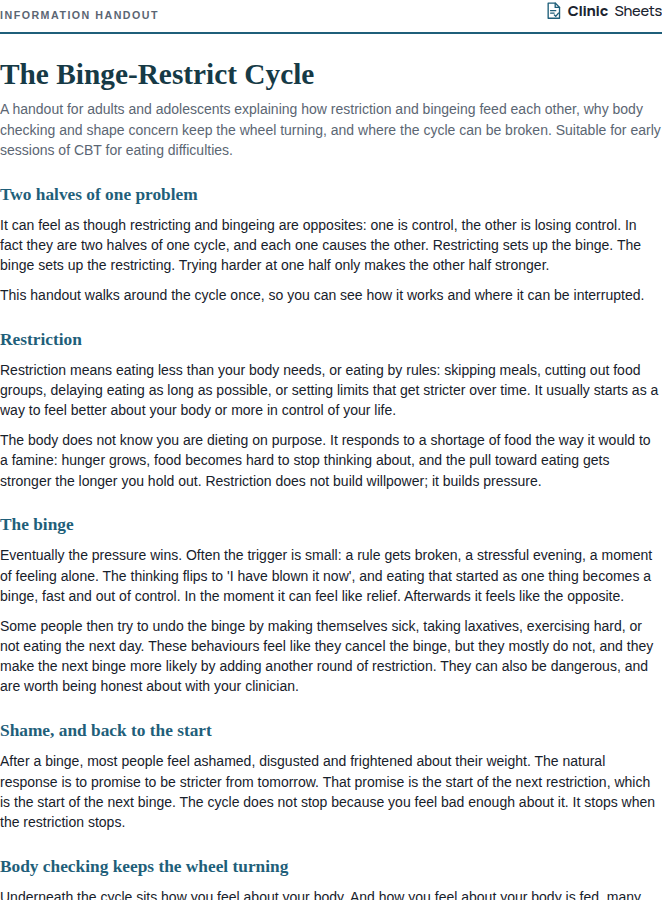
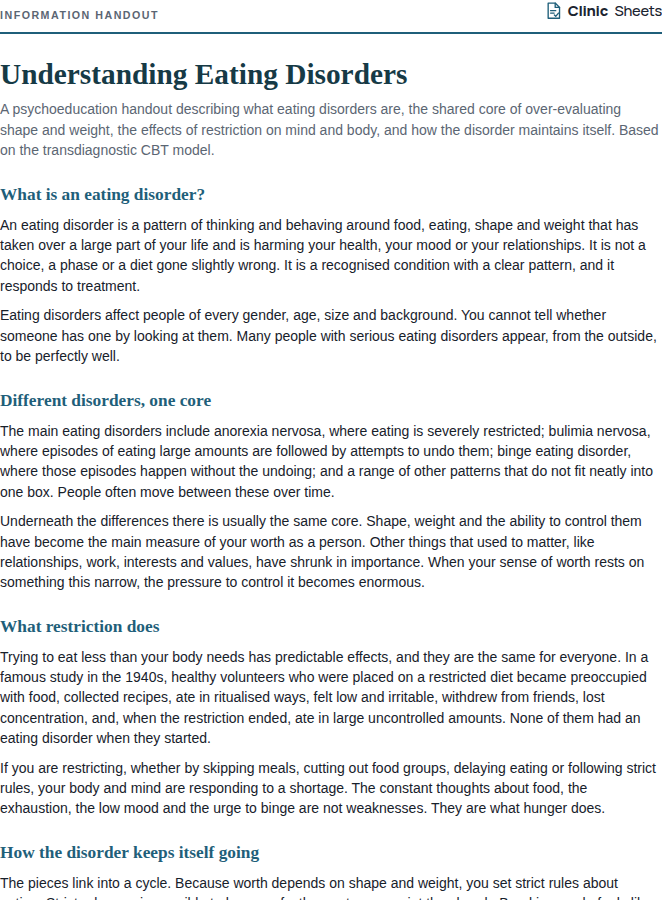
Binge eating is defined by two features: eating an unusually large amount of food in a short period, and a sense of loss of control while doing so. It occurs in binge eating disorder, in bulimia nervosa (where it is followed by compensatory behaviour such as purging, fasting or driven exercise), and in the binge-purge subtype of anorexia nervosa. It is also common at subclinical levels. Many people who binge are deeply ashamed and have never told anyone, so accurate, non-judgemental information is often the first therapeutic step.
This handout draws on Fairburn's cognitive behavioural account of binge eating. In this model, strict and rigid dietary rules make binges more likely through both physiological hunger and the psychological 'all or nothing' effect of breaking a rule. Difficult moods and events trigger binges in people who have learned that eating changes how they feel. Concern about shape and weight drives the dieting in the first place. The binge then intensifies shame and the resolve to diet harder, and the cycle repeats. The handout lays this out in plain language and signals the direction of treatment: regular eating first, then addressing triggers and the underlying concern about shape and weight.
The professional version notes the importance of assessing for compensatory behaviours and medical risk, of not setting calorie or weight targets, and of using self-monitoring from the first session. Where binge eating is accompanied by significantly low weight, purging, or medical complications, coordination with a physician is required.
How to use it
- Give the handout after the assessment, once the client has described their eating pattern. Read the definition together and check that it fits their experience, including the sense of loss of control.
- Use the 'What keeps binge eating going' section to draw the client's own cycle, with their specific rules, triggers and after-effects. This becomes the shared formulation.
- Emphasise the counter-intuitive message that the way out is not stricter control but regular, planned eating. Expect scepticism; it is a common and reasonable reaction.
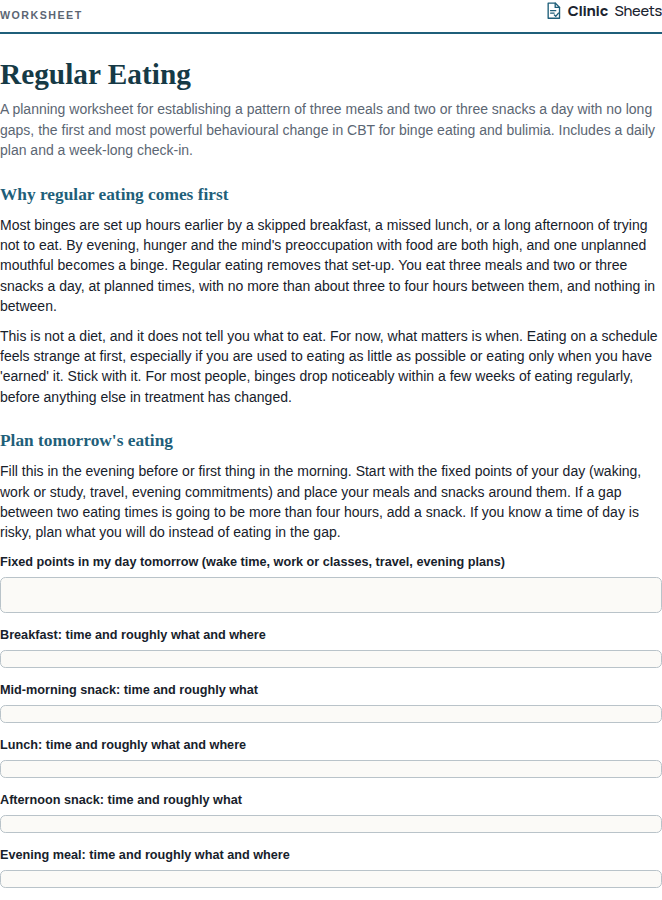
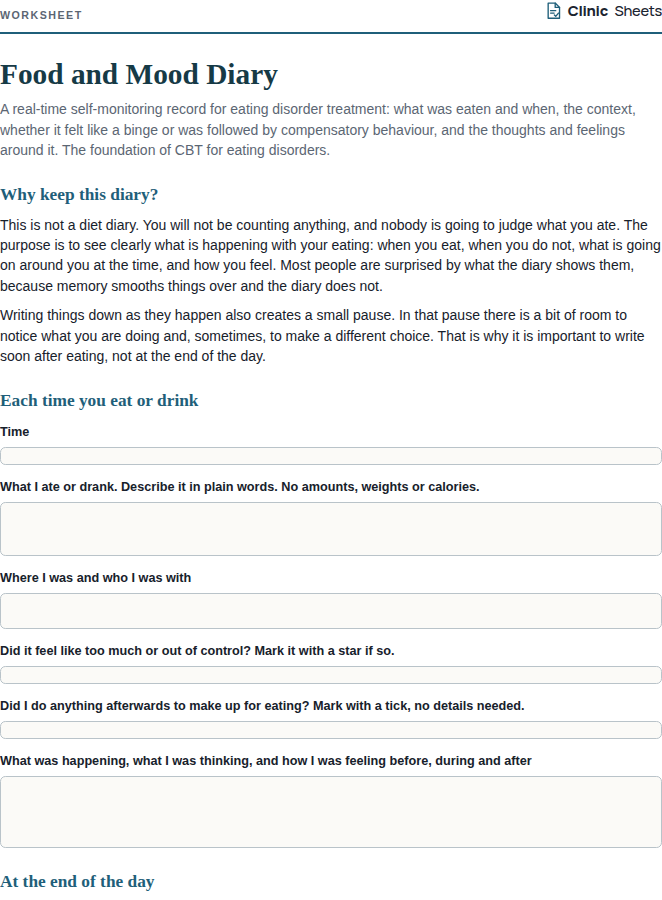
- Introduce self-monitoring (see Regular Eating and the food and mood record) in the same session, so that the handout leads directly into action.
- Screen for purging, laxative use, driven exercise, and medical symptoms, and arrange medical review where indicated.
References
- Fairburn, C. G. (2013). Overcoming Binge Eating (2nd ed.). Guilford Press.
- Fairburn, C. G. (2008). Cognitive Behavior Therapy and Eating Disorders. Guilford Press.
- Fairburn, C. G., Cooper, Z., & Shafran, R. (2003). Cognitive behaviour therapy for eating disorders: A 'transdiagnostic' theory and treatment. Behaviour Research and Therapy, 41(5), 509-528.
- American Psychiatric Association. (2013). Diagnostic and Statistical Manual of Mental Disorders (5th ed.). American Psychiatric Publishing.