The Binge-Restrict Cycle
A handout for adults and adolescents explaining how restriction and bingeing feed each other, why body checking and shape concern keep the wheel turning, and where the cycle can be broken. Suitable for early sessions of CBT for eating difficulties.
About this resource
The alternation between restricting and bingeing is the central maintaining loop in bulimia nervosa, binge eating disorder and many presentations that fall between diagnoses. Fairburn's transdiagnostic model places overvaluation of shape and weight at the top of the cycle: because self-worth depends heavily on appearance, the person restricts; restriction produces physiological and psychological pressure to eat; a binge follows; the binge produces shame and, in some, compensatory behaviour; both intensify shape concern and the resolve to restrict.
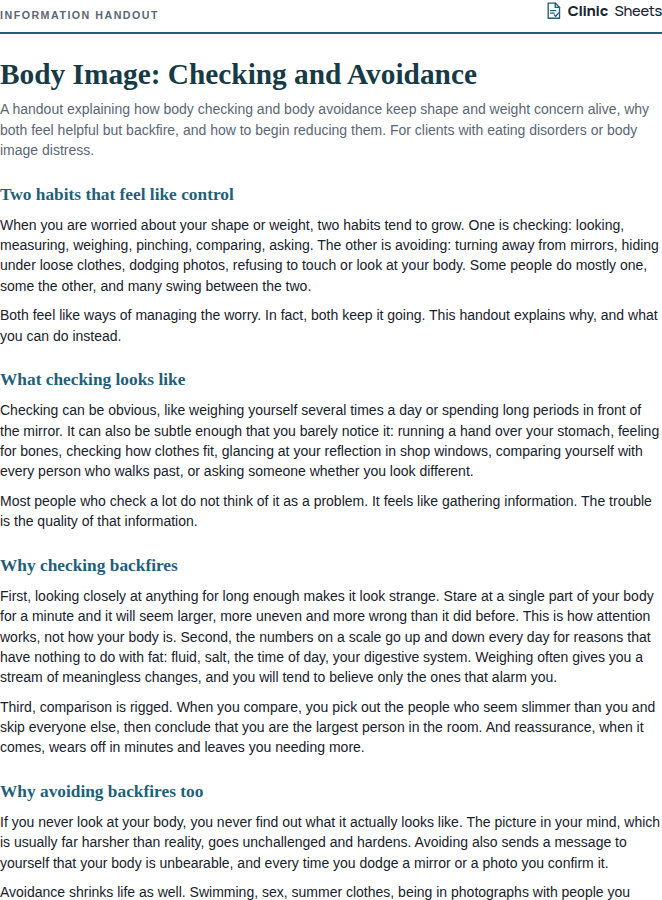
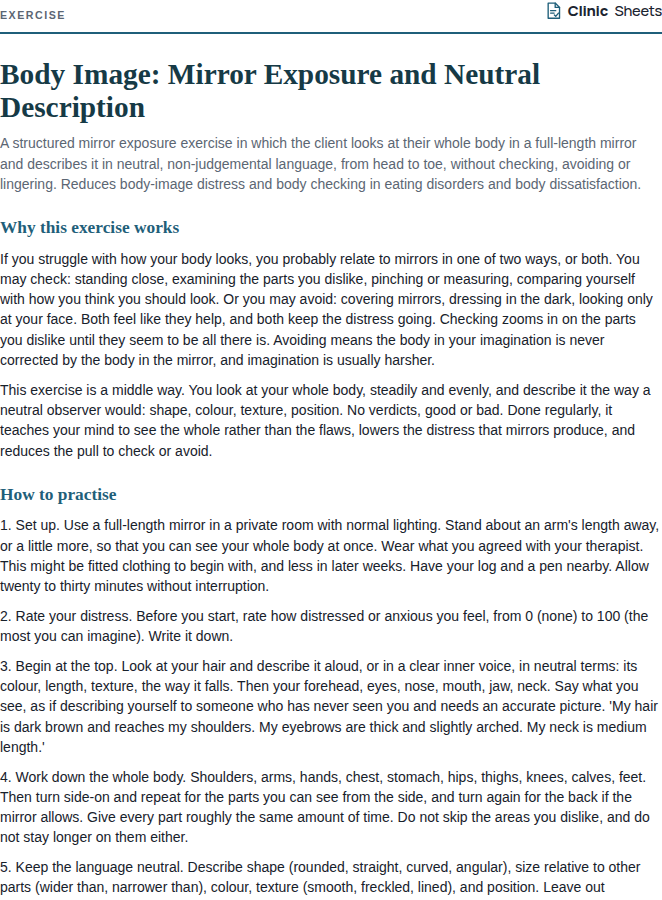
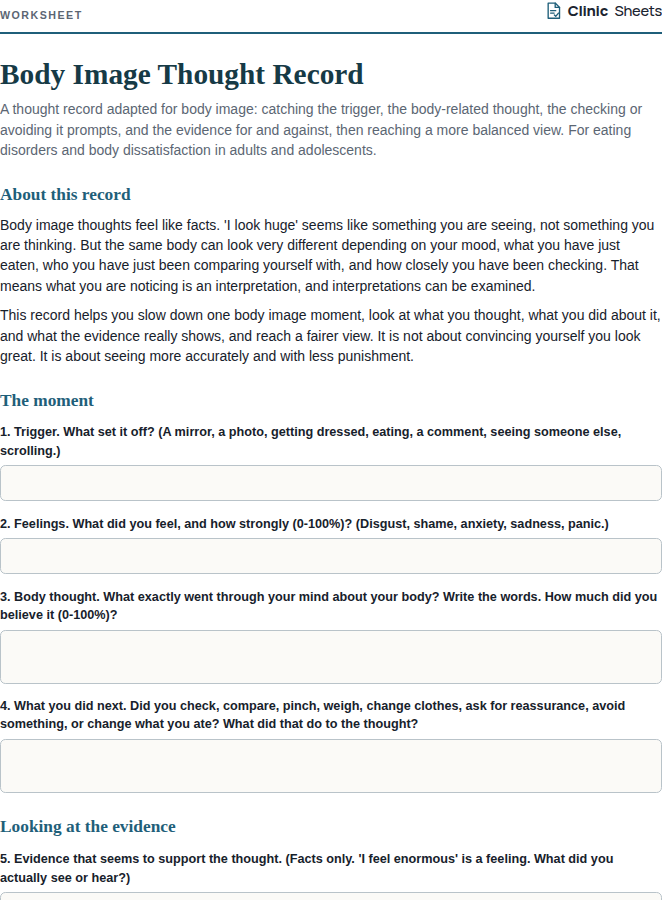
Body checking (pinching, mirror scrutiny, repeated weighing, comparing) and its opposite, avoidance of the body, are highlighted because they are the mechanism through which shape concern is maintained day to day. Checking produces a stream of biased information (a fold of skin viewed close up, a weight fluctuation read as fat gain) that confirms dissatisfaction and fuels the next round of restriction.
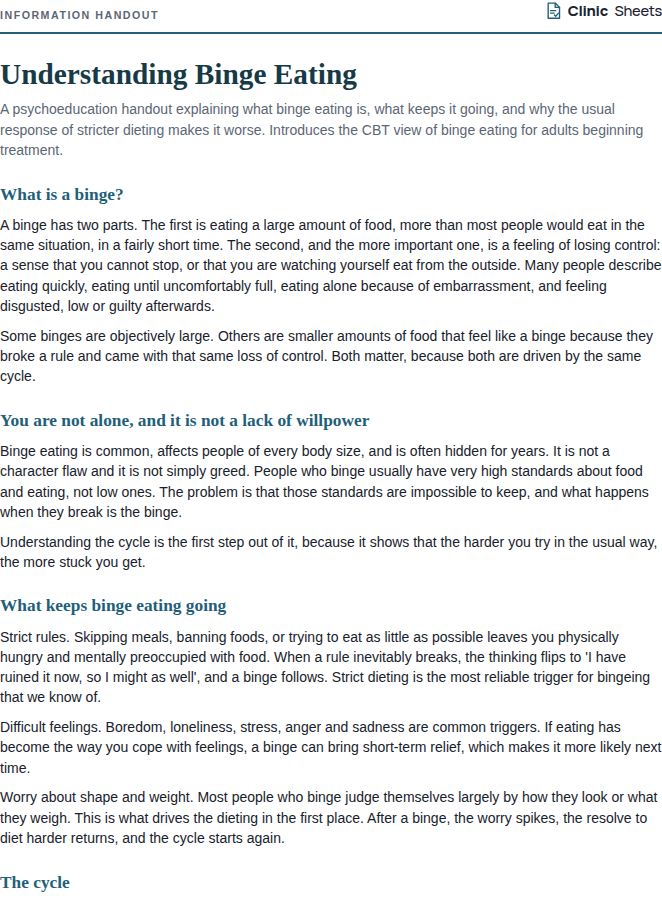
This handout is written for adults and adolescents together, in direct, respectful language. The professional version notes the importance of avoiding any numbers (calories, weights, sizes), of assessing for compensatory behaviours and medical risk, and of using the client's own cycle rather than the generic one. It pairs naturally with Understanding Binge Eating, Regular Eating and body checking reduction work.
How to use it
- Use once the client has described their eating pattern and you have established that both restriction (dieting, skipping, food rules) and binges are present.
- Draw the cycle together, replacing the generic labels with the client's own words for each stage. Ask where they would like to break it and what they think would happen if they did.
- Ask specifically about body checking and body avoidance, which clients rarely volunteer. Normalise it and explain its role in keeping shape concern high.
- Move to regular eating as the first behavioural step. Keep all discussion free of calorie, weight or size targets.
- With adolescents, involve parents where appropriate, particularly around supporting regular meals, and assess medical risk with a physician where there is purging or weight loss.
References
- Fairburn, C. G., Cooper, Z., & Shafran, R. (2003). Cognitive behaviour therapy for eating disorders: A 'transdiagnostic' theory and treatment. Behaviour Research and Therapy, 41(5), 509-528.
- Fairburn, C. G. (2008). Cognitive Behavior Therapy and Eating Disorders. Guilford Press.
- Shafran, R., Fairburn, C. G., Robinson, P., & Lask, B. (2004). Body checking and its avoidance in eating disorders. International Journal of Eating Disorders, 35(1), 93-101.