Willingness and Action Plan
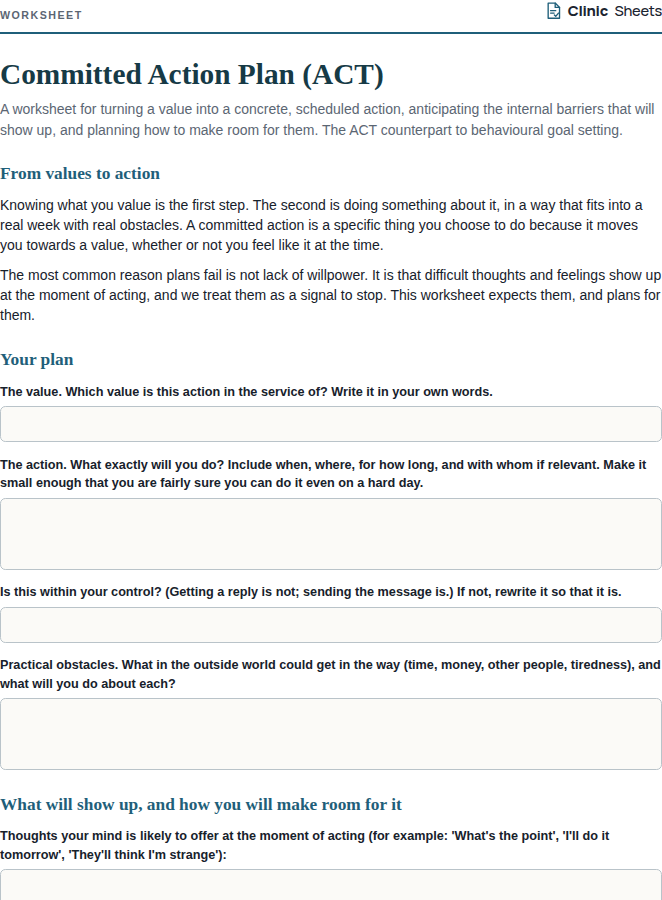
A committed action worksheet from ACT. The client sets a values-based goal, names the thoughts, feelings and urges likely to show up on the way, decides what they are willing to make room for, and plans the specific actions they will take.
About this resource
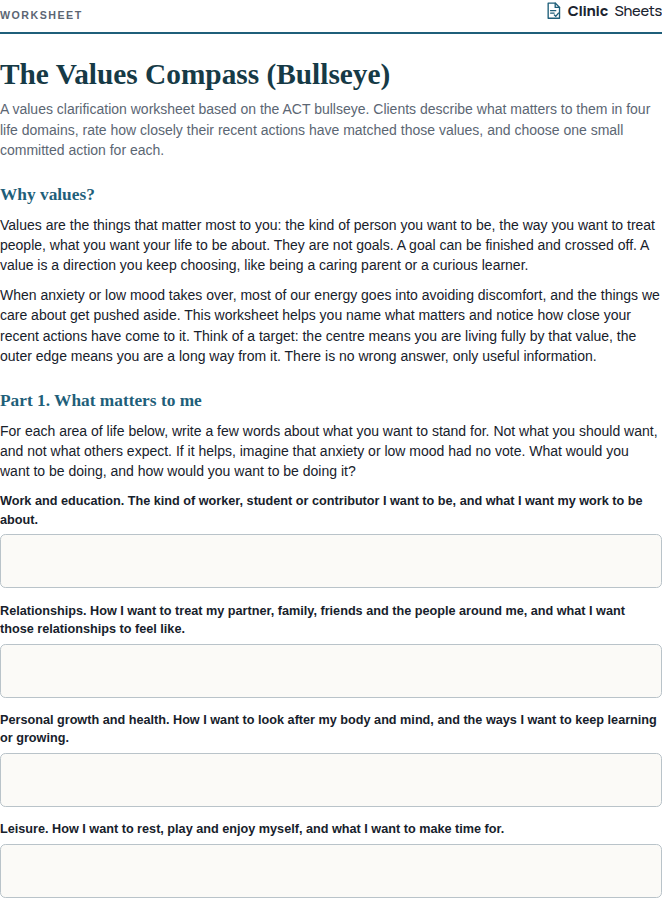
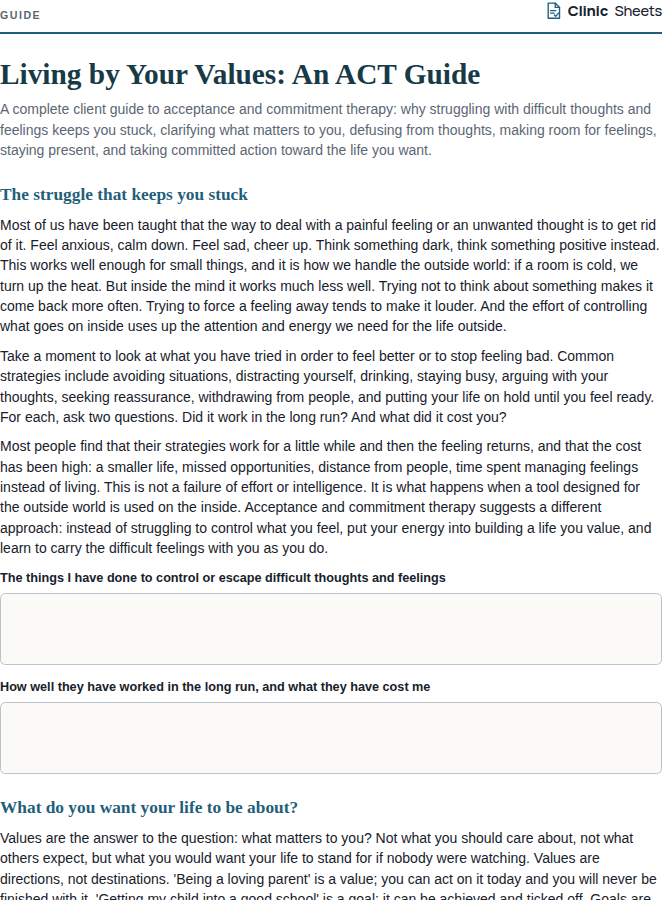
Committed action is the behavioural core of Acceptance and Commitment Therapy: taking concrete steps in the direction of chosen values, while making room for whatever internal experiences arise. In anxiety and depression the obstacle is rarely a lack of knowing what to do. It is that doing it brings up fear, self-doubt, fatigue or shame, and the person turns back. Experiential avoidance wins by default unless willingness is planned for in advance.
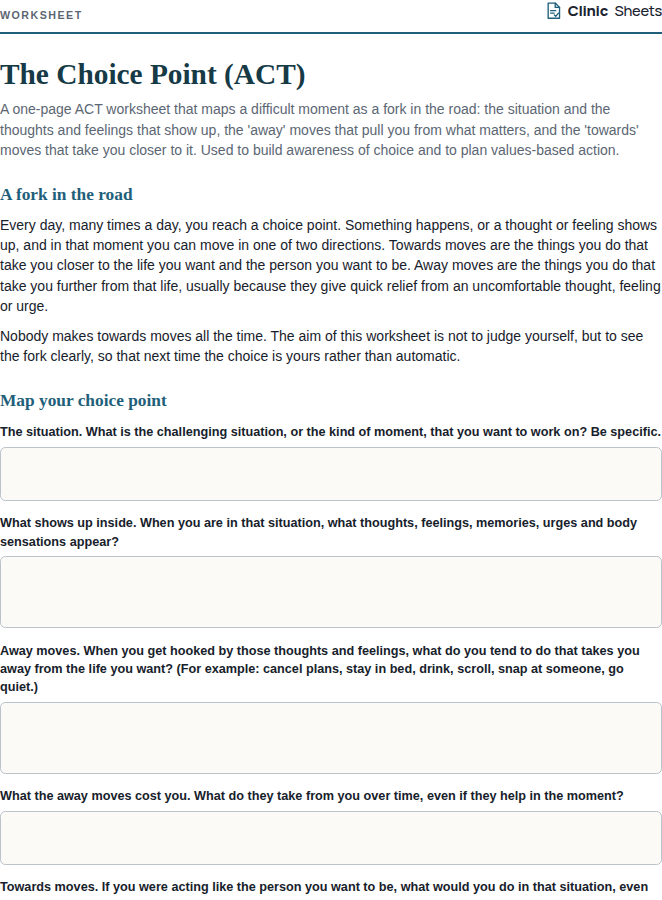
This worksheet joins the two halves. The first half is about action: which value the goal serves, what the goal is, and the smallest first step. The second half is about willingness: what the client predicts their mind and body will produce when they try, and whether they are willing to have those experiences in order to do what matters. Naming the obstacles ahead of time makes them less surprising and gives the client a plan for meeting them with defusion and acceptance rather than retreat.
It is a good fit after values clarification and after at least one experiential defusion or willingness exercise, so that the client has tools to use when the predicted obstacles arrive. It also works well as a repeating weekly sheet in the later stages of treatment.
The professional version includes guidance on shaping goals that are small enough to succeed, on distinguishing willingness from tolerance (gritting teeth is not willingness), and on how to respond when a client reports doing the action but 'it did not work' because the anxiety was still there.
How to use it
- Start from a value the client has already identified. Ask what a goal in that direction would look like over the next week or two, and help make it specific, measurable and within the client's control.
- Break the goal into a first step small enough that the client is confident they can do it even on a poor day. If confidence is below about seven out of ten, make it smaller.
- Ask the client to predict what will show up: thoughts, feelings, sensations, urges and memories. Write them in the client's words. Then ask the willingness question directly: are you willing to have these, in order to do this?
- If the answer is no, do not push. Reduce the size of the step until the answer becomes yes, or return to defusion and acceptance work first.
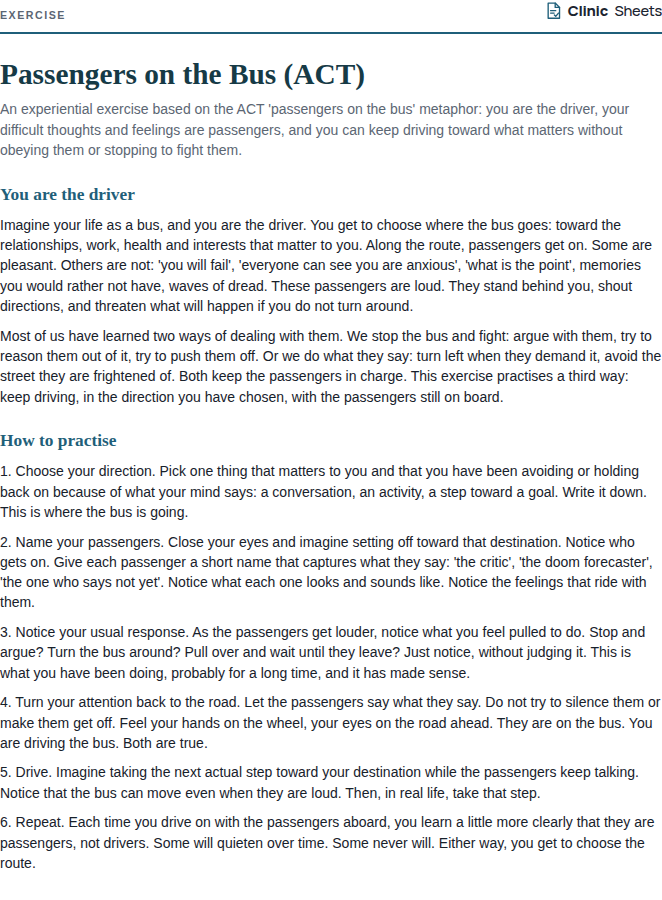
- Agree the skills the client will use when the obstacles arrive (for example naming the thought, dropping anchor, or thanking the mind), and review the sheet at the next session with the focus on what they did, not how they felt.
References
- Hayes, S. C., Strosahl, K. D., & Wilson, K. G. (2012). Acceptance and Commitment Therapy: The Process and Practice of Mindful Change (2nd ed.). Guilford Press.
- Harris, R. (2019). ACT Made Simple: An Easy-to-Read Primer on Acceptance and Commitment Therapy (2nd ed.). New Harbinger.
- Luoma, J. B., Hayes, S. C., & Walser, R. D. (2017). Learning ACT: An Acceptance and Commitment Therapy Skills Training Manual for Therapists (2nd ed.). Context Press.