5-4-3-2-1 Grounding
A step-by-step guide to the 5-4-3-2-1 sensory grounding exercise: noticing five things you can see, four you can touch, three you can hear, two you can smell and one you can taste. A quick, portable way to return attention to the present during anxiety, flashbacks or overwhelm.
About this resource
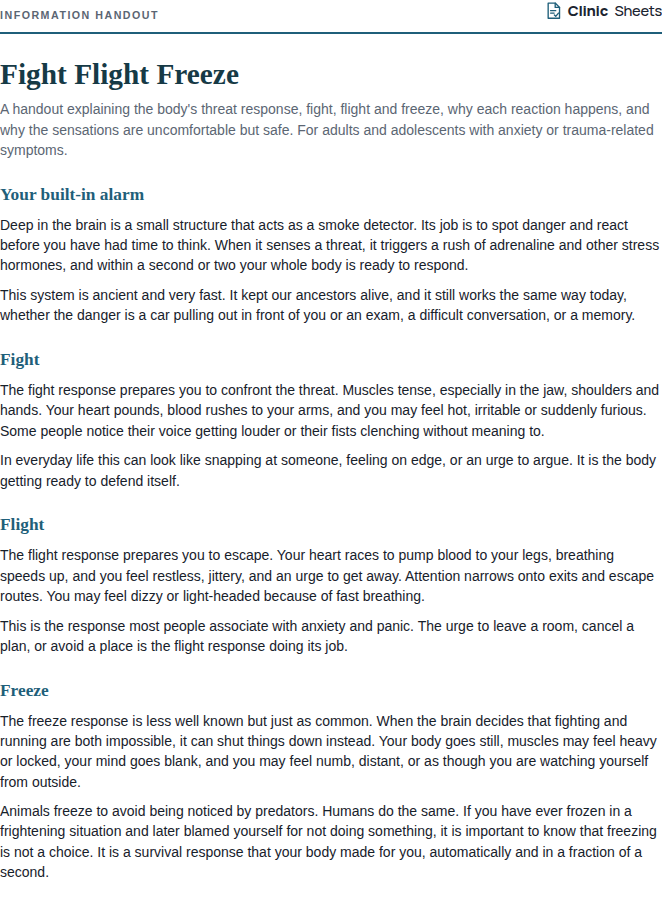
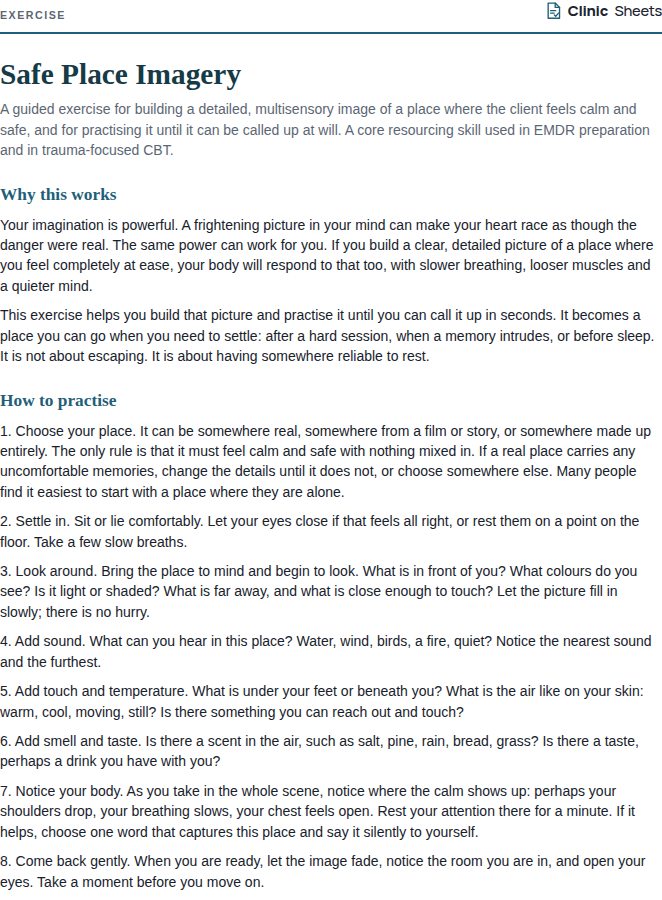
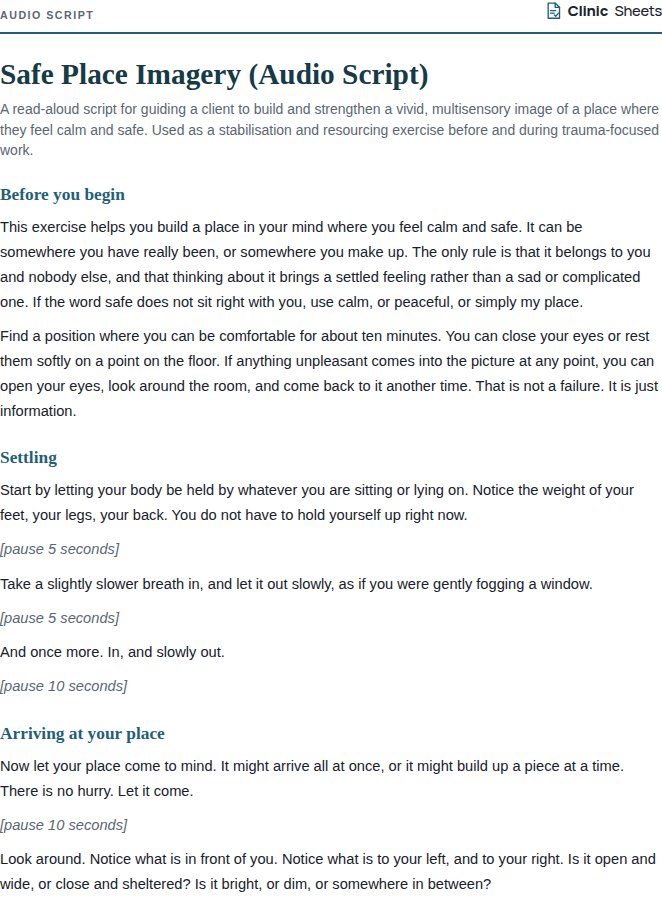
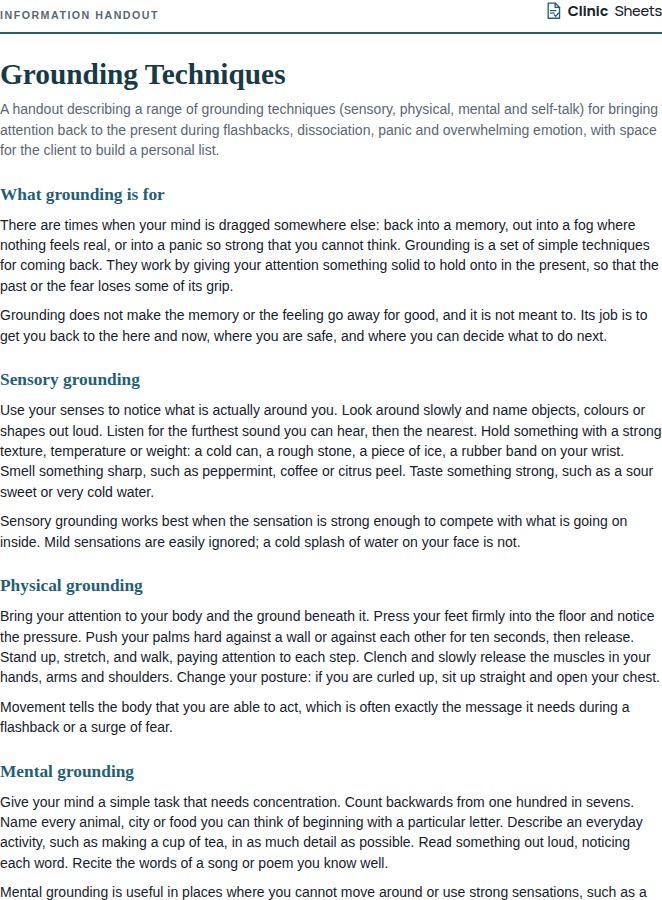
The 5-4-3-2-1 exercise is one of the most widely taught grounding techniques because it is simple to remember, requires nothing but the immediate environment, and can be done silently in almost any setting. It works by directing attention outward through each of the senses in turn. Anxiety, panic and traumatic re-experiencing all involve attention being captured by internal events: bodily sensations, threat images, fragments of memory. Deliberately attending to neutral external stimuli competes with that internal focus, engages the descriptive and naming functions of the mind, and gives the nervous system time to settle.
The exercise is not a relaxation technique and clients should not expect to feel calm at the end of one round. Its purpose is orientation: to establish that the person is here, now, in this room, with these objects. Once oriented, the client is better placed to use other coping skills or to continue with a therapeutic task. It is suitable for adults, adolescents and children, and this version includes simple wording that a child can follow along with a caregiver.
The professional version includes guidance on pacing the exercise aloud with a client who is beginning to dissociate, on adapting it for clients with visual or hearing impairments, and on the common pitfall of clients rushing through the list as a ritual rather than genuinely attending to each item.
How to use it
- Teach the exercise in session while the client is calm. Walk through it aloud together the first time, spending at least fifteen seconds on each sense.
- Encourage description rather than labelling: 'a blue mug with a chip on the rim' rather than 'mug'. Detail is what holds attention.
- Ask the client to rate how present they feel from 0 to 10 before and after. A change of even one or two points confirms the technique is doing its job.
- Agree on the situations in which the client will use it, and ask them to practise once a day for a week in ordinary moments so the sequence becomes automatic.
- With children, practise alongside a caregiver and turn it into a shared game; the caregiver then becomes the person who can prompt it at home.
- Review the practice log at the next session and troubleshoot: too fast, too mechanical, or attempted only when already fully overwhelmed.
References
- Najavits, L. M. (2002). Seeking Safety: A Treatment Manual for PTSD and Substance Abuse. Guilford Press.
- Linehan, M. M. (2015). DBT Skills Training Manual (2nd ed.). Guilford Press.
- Kabat-Zinn, J. (2013). Full Catastrophe Living: Using the Wisdom of Your Body and Mind to Face Stress, Pain, and Illness (rev. ed.). Bantam.