Dissociation Grounding Plan
A personalised plan for recognising the early signs of dissociation and using tested grounding strategies to return to the present. Built with the clinician and kept for use between sessions.
About this resource
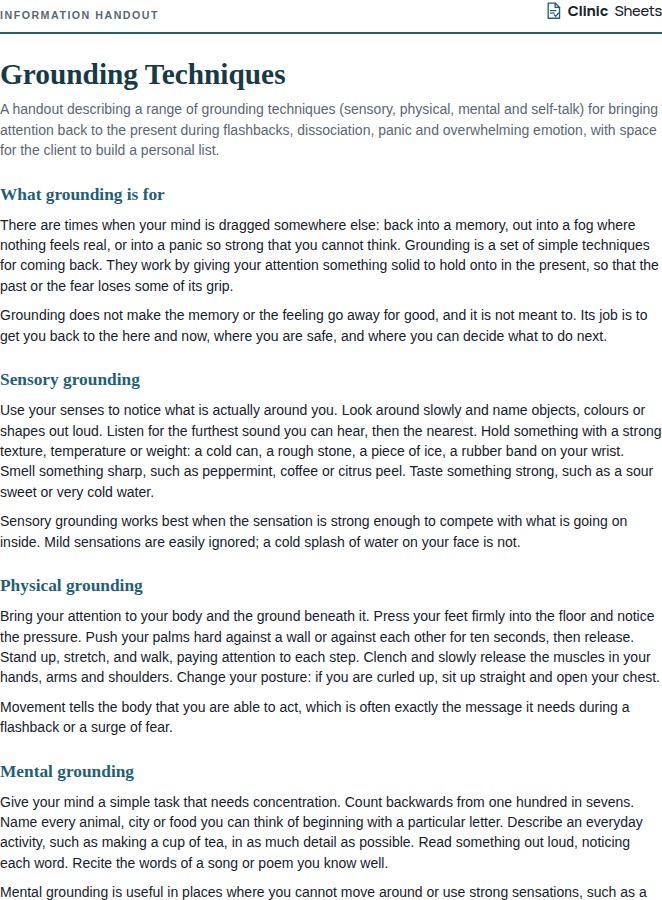
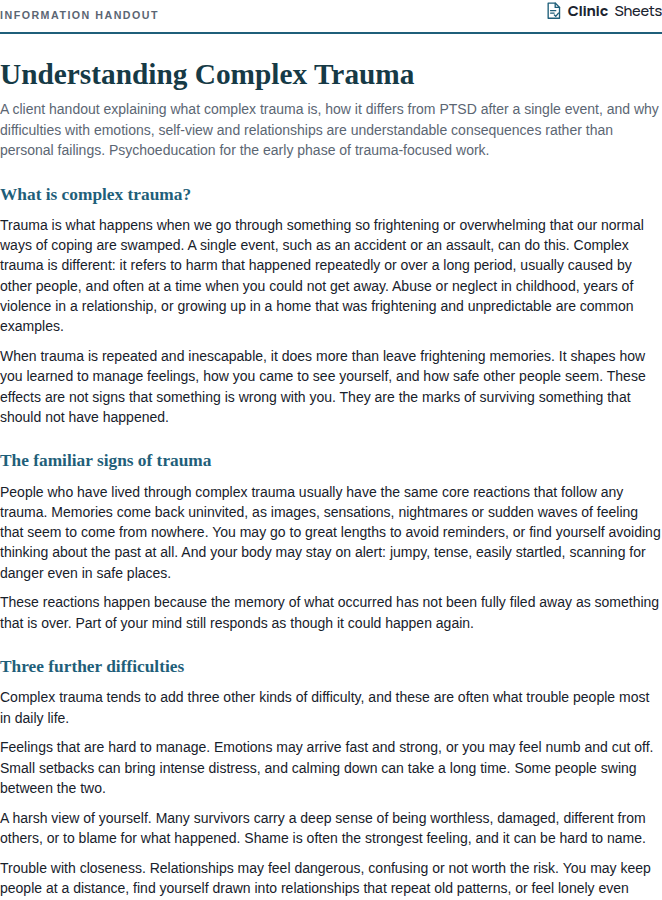
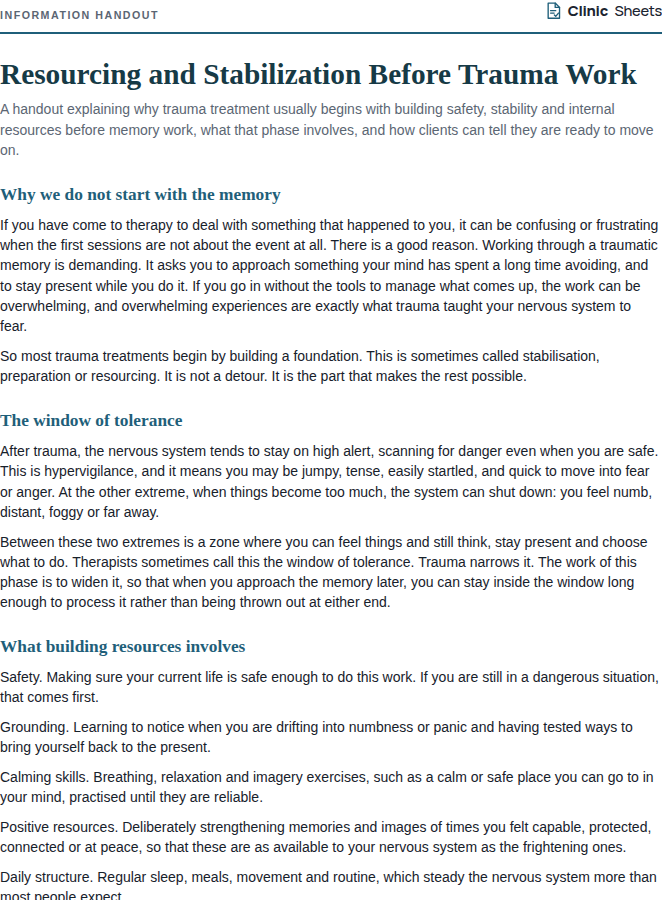
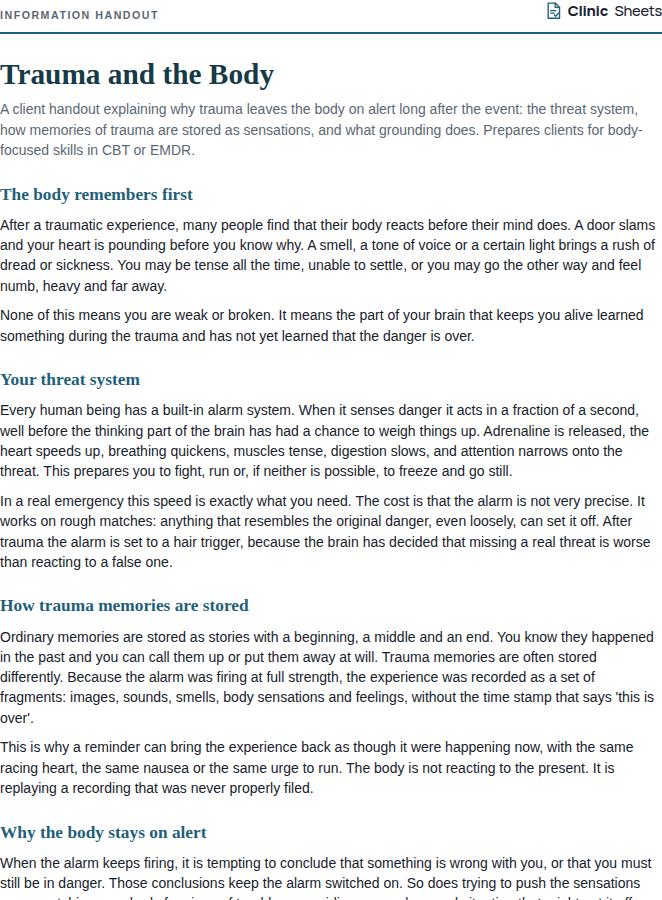
Dissociation, including depersonalisation, derealisation, emotional numbing, 'spacing out' and losing time, is common in trauma-related presentations and is often the biggest obstacle to trauma-focused work. Kennerley's cognitive approach and the phased models of trauma treatment agree that clients need reliable ways to notice dissociation early and bring themselves back before memory work can proceed safely. In EMDR this sits within the preparation phase; in trauma-focused CBT it is part of stabilisation.
This worksheet helps the client build a plan in their own words. It starts by mapping triggers and the first signs that dissociation is beginning, since many clients only recognise it once they are fully detached. It then collects grounding strategies across four channels (senses, body, mind and connection), asks the client to rate which have worked, and writes a step-by-step plan for the first two minutes. A final section records what the client wants others to do, and not do, when they notice the client dissociating.
The professional version adds guidance on trialling each strategy in session while mildly dissociated so that the client learns what actually works rather than what sounds good, on using the plan during sessions as a shared signal, and on the distinction between grounding as a stabilisation skill and grounding used as avoidance of all emotion.
How to use it
- Introduce dissociation as a learned protective response that was useful during the trauma and is now firing when it is not needed. Avoid implying it is dangerous or a sign of severe illness.
- Map the client's early signs carefully. Ask what happens in the first few seconds: changes in vision, sound, body sensation, thoughts or the sense of time. These become the cue to use the plan.
- Test strategies in session. When the client is mildly detached, try a sensory or movement strategy together and rate the effect. Discard strategies that do not work for this client regardless of how well they work for others.
- Write the two-minute plan in the client's words and in order. Ask them to keep a copy on their phone. Agree a signal the client or you can use in session when dissociation is starting.
- Review and update the plan over the first few weeks, and confirm it is reliable before beginning trauma memory work.
References
- Ehlers, A., & Clark, D. M. (2000). A cognitive model of posttraumatic stress disorder. Behaviour Research and Therapy, 38(4), 319-345.
- Kennerley, H. (1996). Cognitive therapy of dissociative symptoms associated with trauma. British Journal of Clinical Psychology, 35(3), 325-340.
- Najavits, L. M. (2002). Seeking Safety: A Treatment Manual for PTSD and Substance Abuse. Guilford Press.
- Shapiro, F. (2018). Eye Movement Desensitization and Reprocessing (EMDR) Therapy: Basic Principles, Protocols, and Procedures (3rd ed.). Guilford Press.