Trauma Triggers and Coping Plan
A worksheet for identifying the situations, sensations and reminders that trigger trauma reactions, recognising the early signs of being triggered, and building a written plan of grounding strategies, supports and safety steps to use in the moment.
About this resource
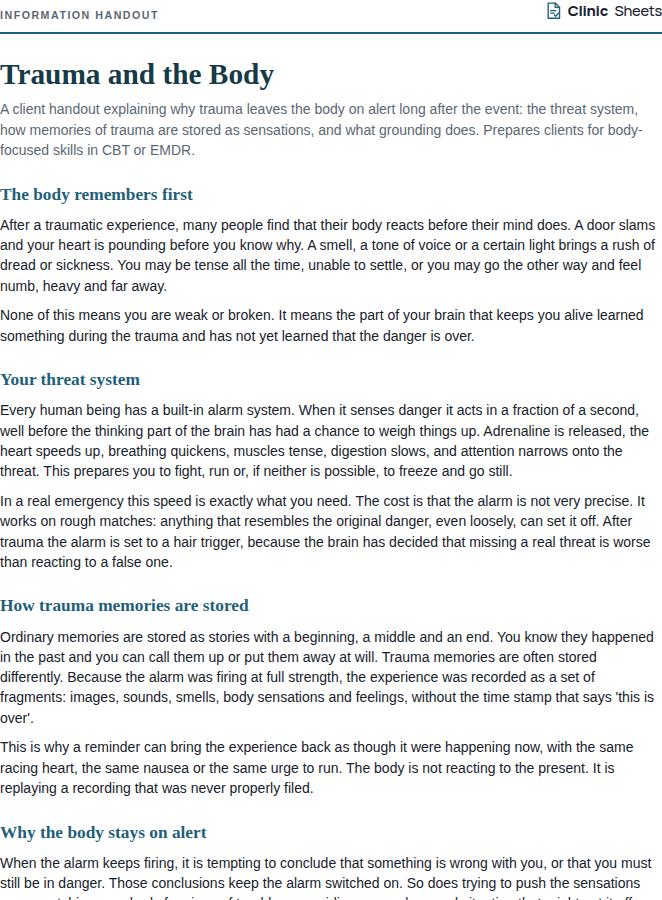
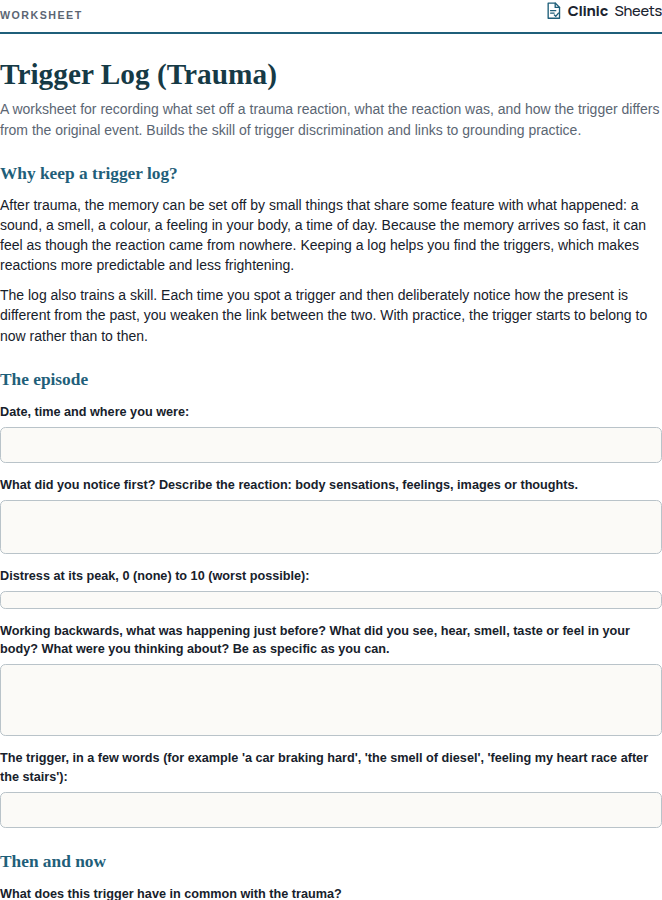
People with PTSD are frequently ambushed by reactions that seem to come from nowhere. In fact they are usually responding to a trigger: a cue that matches some feature of the traumatic memory closely enough to activate it. Triggers can be external (places, people, dates, sounds, smells) or internal (a bodily sensation, an emotion, a thought). Because the matching happens quickly and outside awareness, clients often experience only the reaction, not its cause, which adds to the sense that they are unsafe and out of control.
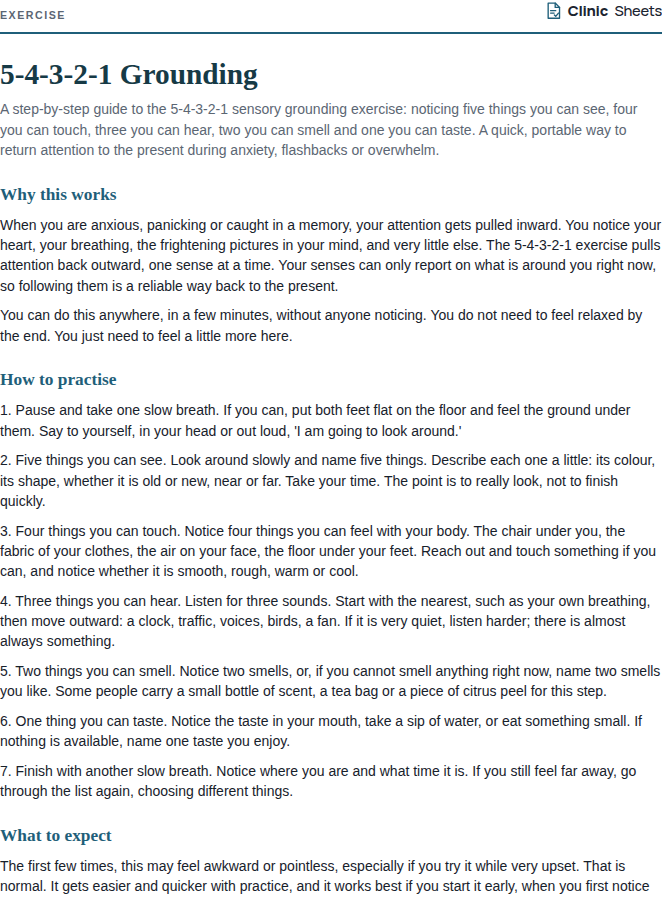
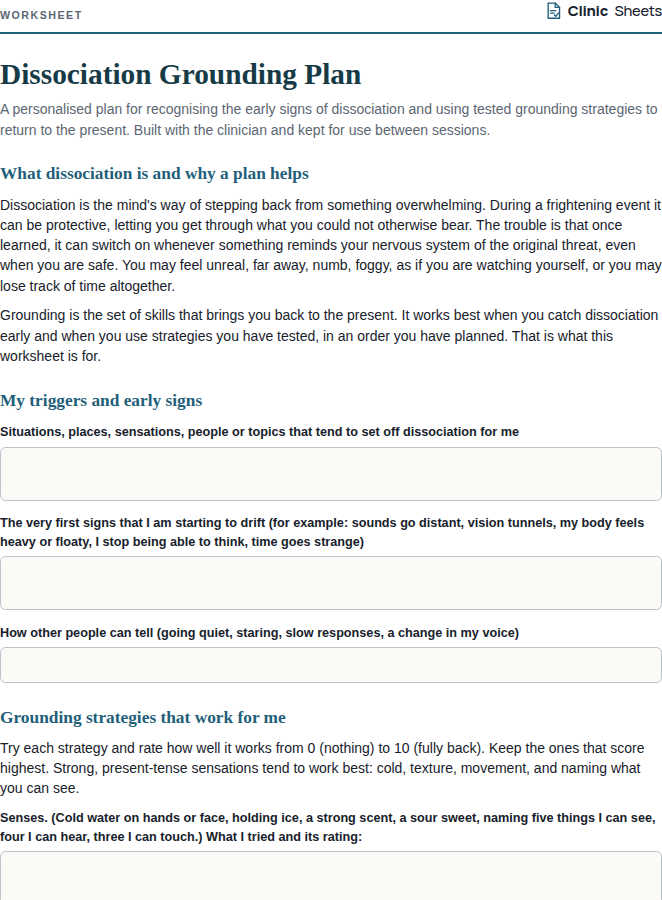
This worksheet helps the client do three things. First, to map their triggers as fully as they can, including the subtle sensory ones that are easily missed. Second, to identify the earliest signs that a reaction is starting, since the window for effective coping is much wider at the beginning than at the peak. Third, to write down, in advance, exactly what they will do: which grounding techniques, which people to contact, which places to go, and what to do if the reaction escalates toward risk. Writing the plan when calm removes the need to think clearly at a time when clear thinking is not available.
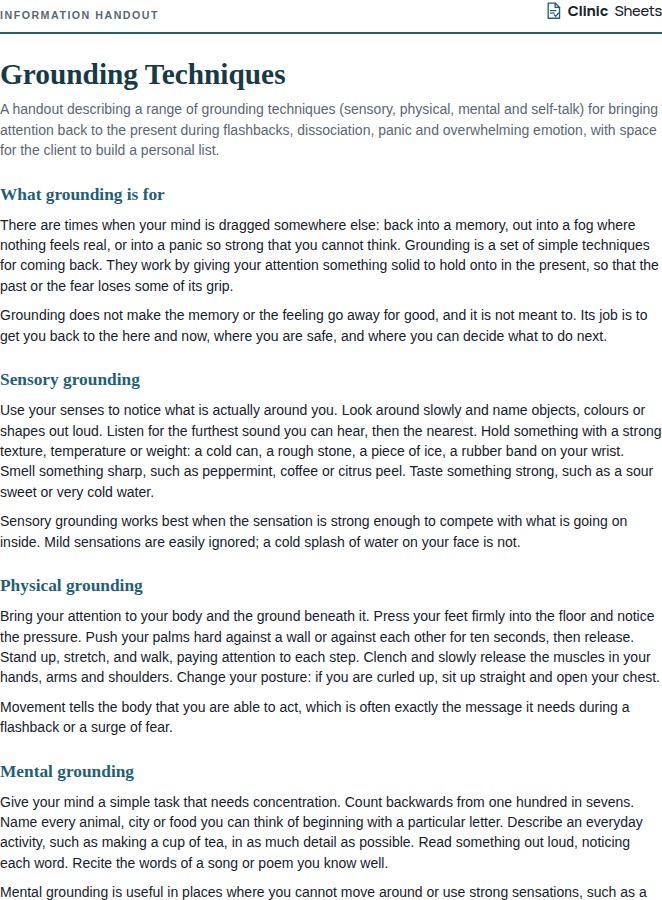
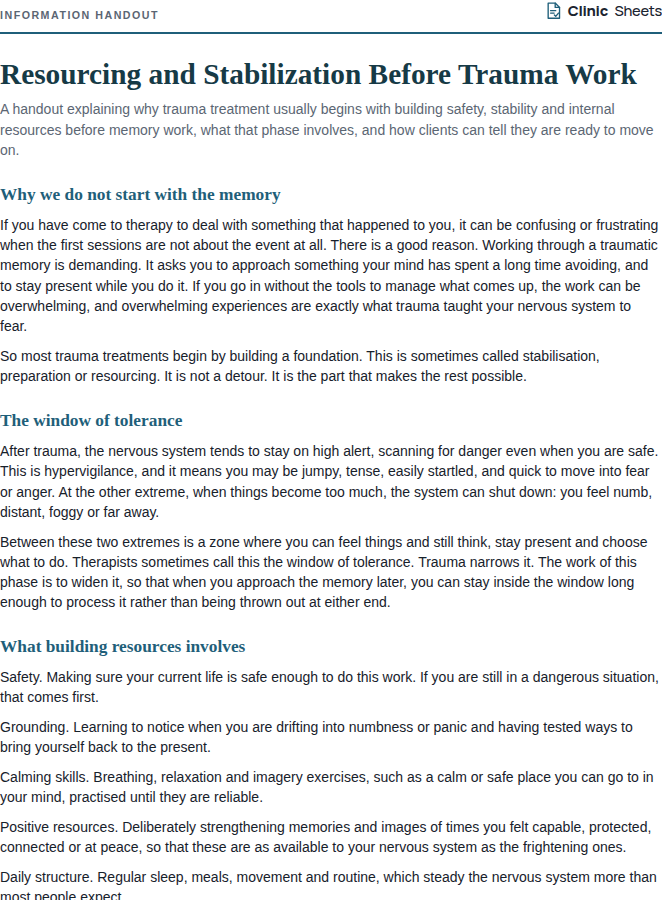
It sits in the stabilisation phase of trauma treatment and is a natural companion to Grounding Techniques and Window of Tolerance. It is not a substitute for a suicide safety plan; where there is risk, complete the Safety Plan as well. The professional version includes a discussion of trigger discrimination training (teaching the client to notice the differences between the trigger and the original event), which turns trigger identification from a purely defensive exercise into a treatment technique in its own right.
How to use it
- Introduce the worksheet once the client has a basic understanding of PTSD and of the window of tolerance. Explain that reactions have causes, even when the cause is not obvious.
- Work through the trigger sections together. Prompt for sensory triggers by asking about the moments just before recent reactions: what could they see, hear, smell or feel in their body?
- Identify early warning signs by asking the client to describe a recent reaction in slow motion, from the first flicker to the peak.
- Build the coping plan from skills the client has already practised. Do not list techniques they have never tried.
- Where there is any risk of self-harm or suicide, complete a Safety Plan alongside this worksheet and include 9-8-8 and 911 in the emergency section.
- Ask the client to keep a copy accessible, use it between sessions, and add triggers as they discover them. Review and update it regularly.
References
- Ehlers, A., & Clark, D. M. (2000). A cognitive model of posttraumatic stress disorder. Behaviour Research and Therapy, 38(4), 319-345.
- Cloitre, M., Cohen, L. R., Ortigo, K. M., Jackson, C., & Koenen, K. C. (2020). Treating Survivors of Childhood Abuse and Interpersonal Trauma: STAIR Narrative Therapy (2nd ed.). Guilford Press.
- Najavits, L. M. (2002). Seeking Safety: A Treatment Manual for PTSD and Substance Abuse. Guilford Press.